
Lauren Clanton on Faith-Based Preventative Care
Lauren Clanton shares how Faith Family Medical Center is expanding access to behavioral health care for Nashville’s uninsured through integrated, compassionate, whole-person support.
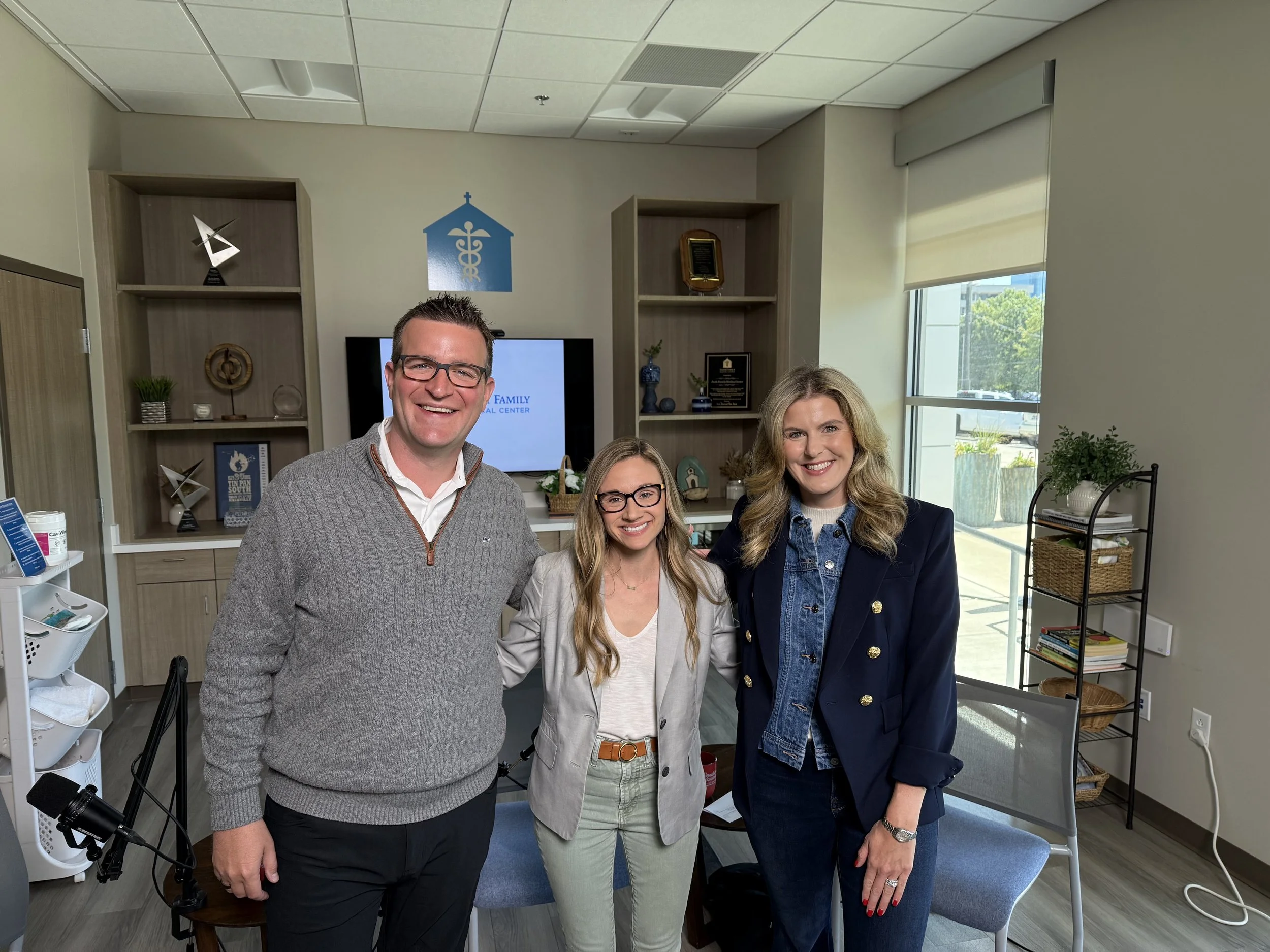
About Lauren Clanton
Lauren Clanton is a Behavioral Health Nurse Practitioner at Faith Family Medical Center, providing psychiatric evaluations, medication management, and counseling for Nashville’s uninsured and underserved. With an MSN from Vanderbilt and clinical experience across psychiatric hospitals, primary care, and hospice, she brings a whole-person approach to treating anxiety, depression, and other behavioral health challenges. Her work supports FFMC’s mission to deliver accessible, integrated care for the 40% of patients who report behavioral health needs.
About Faith Family Medical Center
Faith Family Medical Center was created to fill the gap in healthcare access for Nashville’s uninsured, opening in 2001 as a low-cost clinic inspired by medical mission work. Today, FFMC provides more than 10,000 visits each year, offering primary care, behavioral health, chronic disease management, and wellness services for patients from 40+ counties. With most patients managing chronic conditions and 40% reporting behavioral health needs, the Center provides over $5 million in uncompensated care annually. Guided by a whole-person approach, FFMC partners with community organizations to support long-term health, stability, and dignity.
HealthPass is Faith Family Medical Center’s low-cost program for uninsured patients, providing access to primary care, behavioral health, chronic disease management, and wellness services for a modest monthly fee. By offering predictable pricing and a consistent medical home, HealthPass helps patients stay connected to care, preventing small health issues from becoming larger medical or financial challenges. The program reinforces FFMC’s mission to make whole-person healthcare accessible to everyone in need.
-
Spencer: Lauren Clanton, behavioral health nurse practitioner at the Faith Family Medical Center. Welcome to Signature Required.
Lauren: Thank you so much for having.
Spencer: We're excited to have you today.
Spencer: We're gonna learn all about what you do here and the really important role that you play in the community. Tell us, uh, what you do. where are we sitting right now? Some of our listeners are watching, but some are just listening, so we're not in our normal studio where we record a lot of our content.
Spencer: So tell us where we're at.
Lauren: So we are in the journey to Wellness Wing at Faith Family Medical Center, and uh, this area we have a teaching kitchen. We have, um, our dietician is here and our community health worker slash chaplain is here. And so this is where we get to do a lot of. Nutrition, like teaching classes.
Lauren: We do yoga here. Um, but [00:03:00] yeah, this is a great place. We have our meetings here, so kind of a multi-use space here at Faith Family Medical Center.
Carli: What does Faith Family Medical Center. Do if you're driving down, I mean, I was laughing driving here to meet you across the street is where we had all our kiddos.
Carli: Right, me too. I haven't been back in the medical center really since I've had babies. That's not most people's experience. A lot of people have to be here that don't want to. So what do you do? What's your unique niche?
Carli: Right here in this giant medical center area.
Lauren: Yeah, so Faith Family Medical Center is a nonprofit healthcare center and we are really geared towards taking care of, we say, our hardworking neighbors in need. So you think people like servers and musicians and landscapers and subcontractors where they may not be offered health insurance?
Lauren: Um. By their employer. So they're, you know, and, and they may be living on a, a pretty tight budget. And so they can [00:04:00] come here, they can pay a sliding scale, and they can see primary care, a primary care provider, they can have their lab work done, and that's covered. Um. By their, by their copay, uh, their sliding scale copay.
Lauren: They can, we can help them get, uh, prescriptions through patient assistance programs. 'cause we have a pharmacist here, we don't have a filling pharmacy. Like our pharmacy doesn't fill medicines, but we do patient assistance work and so we help them get, you know, their insulin if they need it for. An affordable or even free mm-hmm.
Lauren: Rate. Um, we have, I'm here. I'm the, uh, psychiatric nurse practitioner here. We have a nutritionist and all of our patients can see our nutritionist. And then we have several volunteer specialists here. So, uh, we have a cardiologist, a, um. We have an orthopedist that comes weekly. He's retired and does a wonderful job with our patients.
Lauren: We have a, uh, gy, we have two gynecologists that both come for half a day per week. Um, and they do a [00:05:00] wonderful job. And then we have, like I said, cardiology, uh, endocrine neurosurgery. They'll kind of come every. Every month for a half day. And then ophthalmology also comes when we have our diabetes day and diabetes day and hypertension day are what we call our chronic disease days.
Lauren: And we get anybody in our population of patients that has diabetes or hypertension is invited once a year to attend a free visit. They don't even pay their copay and they get to see. Everybody in the clinic for kind of a, well, not all the specialists, but they see their primary, they do labs, they see the nutritionist, they, you know, we do a stress station.
Lauren: Um, and so they get an ophthalmology exam if they're diabetic. So
Spencer: it, it sounds like from your demographic of individuals coming in Yep. You're targeting individuals to serve that probably don't have health insurance. Is that right?
Lauren: Yeah. So primarily they don't [00:06:00] have health insurance. We also see what we call underinsured individuals.
Lauren: So underinsured patients are people that may work, you know, again, they live on a pretty tight budget. Um, but they've got like that high deductible plan where it would still be really. Out of their budget to go to the doctor on a regular basis or to especially to pay for blood work, routine, blood work.
Lauren: And so it may not be something that they could feasibly do without help from us here. And these are the people that don't qualify for 10 care, like for Medicaid. Um, they don't qualify for Medicare. They're not old enough. Um, so we, we see patients that have commercial insurance here. Sometimes if they have a.
Lauren: A high deductible plan, or they, they do have to meet an income cap, and that's 400% or less over the federal poverty line. Um, and that's if they have insurance. Now, if it, if it's an uninsured individual, those individuals don't have to meet any sort [00:07:00] of a income cap. There's not really a, a scale for that, but, um, but everybody who comes in.
Lauren: Does pay something, they pay anywhere from 25 to $65, depending on their income. Um, and so, and students, uh, we also see full-time students. So everybody that that sees us either needs to be working 20 hours a week or more, or someone in their household working 20 hours a week or more, or a full-time student.
Lauren: Um, and so full-time students are only $30 per visit too,
Carli: so it sounds to me like you're trying to fill the holes that maybe, I mean, when you look at the government system and all of the aid available, there's inevitably gonna be these pockets, right? Where people make too much but don't qualify for X, but still need help or make nothing and don't qualify for y.
Carli: Um, so is that a good representation? You're trying to kind of find the people that are falling through the cracks and make sure they have what they need? Does that Absolutely, yeah.
Lauren: We [00:08:00] like to say we're filling the gap between, you know, Medicaid and Medicare. Okay. Um, because it's, there are so many people that don't qualify for Medicaid or Tencare here in Tennessee and they.
Lauren: You know, but they still need help paying for their healthcare. Or they just, again, they, they may even have insurance, but that high deductible plan limits them from getting those routine labs that could, you know, be that. Preventative key to diagnosing them early with pre-diabetes and helping them change their lifestyle.
Lauren: And so there's just so many ways that we are trying to really just fill that gap.
Carli: Hmm. Those patients. Can you give us some idea of the scope? Like how many people do you see, we hear you have all of these services. I'd imagine a lot more people come through these doors than we would even guess.
Lauren: Yeah. So we have, um, we have six primary care, uh, PAs and nurse practitioners, and then we have one medical director, Dr.
Lauren: Pvac. And so. Uh, of all of those usually, you know, 'cause some people work part-time, some people work full-time. Of [00:09:00] all of those, I would say about four or five are, are seeing patients daily. So four or five outta the seven. And so, gosh, I would say we're seeing anywhere from, usually it's, it's about it. 80 patients or so a day.
Lauren: And that, and that can sometimes include, you know, the people that I see too. So I'm the only psychiatric provider here. Um, and so, yeah, so I see anywhere from eight to 10 patients on a full day. Uh, one of the great things about being here and, you know, filling that gap for insurance and, you know, not working under.
Lauren: The arm of insurance or the, the schedule of insurance, I guess you could say is that we do get to spend a little longer with our patients. We have some flexibility in how long we can take with patients. So our new patients we see for an hour, um, and our schedule or our, [00:10:00] um, established patients we see for 30 minutes typically.
Lauren: So that does allow us to really be able to. Give them the time that they need and, and get a full idea of, of their needs. Because a lot of these people that we see, when we first see them, they may have not had healthcare in years. Mm. Um, whether it be psychiatric healthcare or physical healthcare. So there's a lot sometimes to uncover, especially in that first visit, um, because we see people who, who just haven't gotten to go to the doctor 'cause they can't afford it.
Spencer: Part of the mission statement that. You talked about earlier is that it's hardworking individuals and that they all pay something.
Lauren: Mm-hmm.
Spencer: And so can you talk about why that's important to have that 20 hours in the household of work and or. That they pay 25 to $65? Like why are those things part of Yeah, the vision?
Lauren: Well, 'cause I think our demographic, again, [00:11:00] we're really that filling that gap between the people that could qualify for Tencare and those people that are, are old enough to qualify for Medicare. So primarily our patient population is of the ages of 18 to 64. Um, generally, we occasionally will see kids or.
Lauren: Or older adults who don't qualify for Medicare or attend care for some reason. Um, but that's pretty rare. And so this is like, you know, the working, the hardworking population. And so I think them, them paying something. I believe, you know, when Faith Family was first founded, you know, it was talked about.
Lauren: How much should patients pay or should we have patients pay? You know, and we're a little different from a free clinic. You know, there are clinics where patients can go if, if they need completely free healthcare or if they're, you know, unable to work for some reason and get help. Getting on, you know, disability or tin care or whatever they need.
Lauren: But, but this is a different population that often gets forgotten because it is that they, like, they sometimes make too much to qualify for [00:12:00] certain things. But I, I think too, from, just from a psychological standpoint, it helps to know that you've got some skin in the game. Yeah. You know, if you pay to come in, you're going to want to follow through and follow up more likely than if it's just a free visit.
Lauren: Yeah,
Spencer: Carli and I's background is in the logistics and transportation space, and I think the demographic that you serve is very consistent with the types of delivery drivers and that industry, uh, that we've spent so long in. And our experience in that space has been that the individuals wait until it's time for emergency room.
Spencer: And it's that crisis moment. You go to the emergency room mm-hmm. Still without health insurance, and you come out with a five figure bill and it is a financial outcome that literally sets them back years. [00:13:00] If not pushes them into a place of collections, their credit score is destroyed. Like bankruptcy, things can snowball quick.
Spencer: Mm-hmm. Yeah. Bankruptcy, all of those different things. Um, so it sounds like part of the strategy here is to make care available before it gets to that crisis moment. Mm-hmm. Like, how is, how is that process even marketed? Because when I think about our employees, usually they're not looking for healthcare.
Spencer: Be until it's an emergency.
Carli: Yeah. Until they really, really need it. Until they
Spencer: really need it. Yeah. Yeah, yeah. So how does that process unfold?
Lauren: Well, I mean, we really are, that is one of our main goals is to keep this patient population out of the emergency room. And a lot of the emergency rooms nearby are, are appreciative that we can help patients avoid that bill.
Lauren: I bet. Or avoid that, you know, visit over and over again just because they can't get their blood pressure under control when really it [00:14:00] could be a, a simple primary care visit with a medication adjustment. Um, so it, that is one of our main. I think outcomes is that we do reduce the uninsured patients in the area that have to go to the emergency room for care.
Lauren: Um, you know, it's not to say that our patients never have to go to the emergency room. There are cases that they do and, um. And we do work closely with the hospitals nearby when that needs to happen. But, um, but we are really focused on that preventive care. Um, and that just has been so unattainable for this population historically, because it's like, well, you know, I could go pay to go for a doctor's visit, or I could pay for my meal.
Lauren: Mm-hmm. You know, or I could pay for a new pair of shoes for myself or my child, you know? So it's like, it, it's just been hard, I think for them to justify in the past if it's. If it's gonna be hundreds of dollars instead of $25 to go for a per a preventative visit. [00:15:00]
Carli: I'm curious too, it sounds like you do a really good job with your sliding scale of trying to make this accessible.
Carli: Mm-hmm. For anybody that would need to come in. How do y'all keep your doors open? Like all you read about healthcare is how expensive it is and the ballooning costs, and you listed off probably 10 different specialists that are coming in here regularly to serve. So how, what magic have you unlocked that other people haven't access to keep your doors open?
Lauren: Yeah. Well, faith, family is, I mean, it's a pretty magical place, I'll have to say. Like I, I worked in healthcare for, gosh, about. 10 years here in Nashville before I knew about Faith family. Um, and so I, I'm, and I'm so grateful to be here now and to be working here. So we definitely are always continuing to, to try to get the word out and to do a better job letting people know, you know, that we are here and we're here to help.
Lauren: Um, but I think one of the biggest ways, you know, [00:16:00] that we get. We get to keep our doors open is through, we have a lot of private donors, um, that have donated and have supported us. Where it may be churches, it may be endowment funds, it may be trust, you know, trusts. Um, it may be individuals. Uh, it may be some of the, the nearby healthcare organizations that do donate to us.
Lauren: Um, for example, Centennial Medical Center donates the lab work. To us and that that helps us, but that does actually help them too because it does help there to be less of that ER traffic that may be. Preventative care really. Um, so we're, we're very grateful for all of our donors. Um, about 70%, I believe, um, of our funding comes from, from private donors.
Lauren: So that is, the copay is a very small percentage of what keeps our doors open. And then we're also funded, we're not federally funded, but [00:17:00] we are funded by the state, uh, through something called safety net. So when we see a patient. And they pay that copay and we document that. We've seen that patient and bill the service.
Lauren: It's, I mean, we're not billing insurance, so it's a different kind of billing. It's just, you know, documentation and letting, letting everybody know that we've, that we've seen the patient, then the state will reimburse us for a certain portion of that. It's a small portion, so it's not enough to where that and the copay could ever keep our doors open, but it.
Lauren: It is a little bit, and it does help in addition to the donations that we get.
Spencer: Hmm. So let's talk about your specialty some Yeah. And psychiatric care. So just walk us through some of the history of, I could imagine sitting in, you know, the medical field. With every choice out there to say, I could go do this.
Spencer: I could go do this. Now I could choose some that I know that I wouldn't want to do, and I could [00:18:00] choose some that I know I would never be capable of doing. But walk us through that moment when you're looking at everything that you could do. What influenced you to go down? This pathway.
Lauren: So I actually initially did my training as an adult and geriatric nurse practitioner.
Lauren: So I graduated from Vanderbilt in 2012 with my adult and geriatric np, um, and went and worked in the nursing home area and then. I ended up working at the psychiatric hospital as a primary care nurse practitioner, so I was doing the medical history and physicals for the psychiatrist. When the patient would come in, we would have to get their medical history and physical within 24 hours to make sure that they were okay to stay.
Lauren: And if they had, like if they had diabetes, you know, I would manage their insulin. I would manage their blood pressure medicines if they had high blood pressure, if they had anything while they were in there, because we were not. Connected to a hospital. I worked out in Madison at Skyline, Madison, and we were not connected to a hospital.
Lauren: Um, [00:19:00] the, if they had anything from a hangnail to a heart attack, you know, I would come and, and if I was on call, that's a broad spectrum that day. Have you used that line before? Yeah.
Spencer: That's a, that's a classic line for you. And, um,
Lauren: we, they would call us, you know, me or the other nurse practitioner that was on call, and we would, uh, come and take a look at the patient for like a, you know, just a.
Lauren: A quick visit and see if they needed to be sent back out at the hospital or if it was something we could stabilize them for in-house. And so I did that for about three, four years and then I decided I was working seven on seven off and I decided I'd really, you know, like have, what does that mean? Seven
Spencer: on seven off.
Lauren: So seven days on, seven days off. Okay. So I would work like 84 hours and seven days, you know, kind of about a sometimes 12 hour shifts for seven days in a row, and then I would've seven off, um, which was great in theory, but I, I kind of like the traditional schedule a little more, so.
Spencer: Wow.
Lauren: Yeah. Yeah.
Spencer: Probably for the first three days off, you're like dead for three days. Yeah. And it's like,
Lauren: and if I, you know, and I, that was well before I had a family, so that, that would've been really [00:20:00] difficult to manage with children, young children at home. But, um. But yeah, so I ended up working in more traditional primary care, uh, from, you know, eight to five schedule.
Lauren: And so I, I left, left the hospital setting and went into the, the outpatient primary care setting. And I would say it was really in the outpatient primary care setting where I saw so much more of a need for. Outpatient psychiatric care. I saw so much anxiety, so much depression, you know, A DHD and even some untreated bipolar disorder.
Lauren: I mean, it was just, and it was so hard to manage that along with everybody's diabetes, high blood pressure, high cholesterol in a 15 minute visit. Yeah. And it was just, you know, and I think that's something that every primary care provider struggles with. And so having had that experience, I decided that back in.
Lauren: Right before the pandemic hit, actually 20, it was 2019, I decided, you know, I'm gonna just go back and get my [00:21:00] psychiatric nurse practitioner certification. I really wanna focus on this because I think. Coming from the background of working in the psychiatric hospital, I had a lot of psychiatric patients that I ended up seeing in that primary care setting, or maybe I just recognized it more or something and just wanted to spend more time with it.
Lauren: But I did, I did enjoy treating it. I just didn't feel like I had adequate time and I feel like I wanted, felt like I wanted more training, so I went back and did that while I was working and actually. Ended up having a baby, deferring the program for a year. And then, uh, when I went back, it was the start of the COVID Pandemic and I had a toddler and then I was pregnant.
Lauren: Oh my gosh. And then finish the program somehow. But it was, it was wonderful. I mean, I, I worked part-time and did the program part-time and it, you know, it was, it was a good experience. That does not sound wonderful.
Carli: Like not to push back. Wonderful. But that sounds, it sounds wonderful that it's over, that, that, that's what I mean to say that you, that I was able to do.
Lauren: It was wonderful that I was able to. Able to [00:22:00] finish it, but it was, it was tough. Um, and so I did that and I was like, you know, I really would like to focus just on psychiatric care and really focus on this one system because I just want to be able to be a part of, you know, one little part of helping, you know, people that need psychiatric care.
Lauren: Um, in the outpatient setting, get it, because again, it's about prevention. It's preventing that hospital stay. Because when I worked in the psychiatric hospital, I saw so many people that were hospitalized. They got out, they couldn't get the outpatient care that they need to continue their meds, and so they ended up right back in and it was like a revolving door.
Lauren: And it's just like the emergency room situation. Like if you get your blood pressure managed for, you know. A 14 to 30 day script of blood pressure medicine. When you run out and you don't have a primary care provider to go to, where do you have to go? Hmm.
Carli: It does seem, when you think about healthcare, everything feels like it's kind of in its own bucket, right?
Carli: Yes. Like if your heart. Is bumming you out, you go over here, right? Mm-hmm. And if [00:23:00] you have diabetes, you go over here and, and I think mental health is treated that way too. It's, you know, if you've got an issue there, you gotta go see those people, which is you. Yeah. You gotta go see those people. And my guess is it's so informs every other type.
Carli: Of illness because Absolutely. I mean, you're the expert, but help me understand. I would imagine when you're struggling with your mental health, whether it be chemical, whether it be experiential, all the spectrum of that, I would imagine that manifests in your body in such a way that they are more prone.
Lauren: To
Carli: illness and other issues too.
Lauren: Absolutely, and that's why I am grateful that I took the path that I did, you know, that I was able to do primary care for a time before going back and getting my psychiatric nurse practitioner certification just focusing on psychiatric care because I feel like I am able to kind of make that connection a little bit better through my experiences and through my treatment of primary care and now into psychiatric care.
Lauren: I also feel like this is a really [00:24:00] wonderful place in that we have primary care providers, or I have primary care providers in the same building, and so I get referrals from the primary care providers to see a patient. It's not like just. It's not through a fax, you know, I get a referral, I can go down the hall and talk to them about the patient.
Lauren: Mm-hmm. Mm-hmm. You know, or say they wanna start somebody on an antidepressant or a mood stabilizer that they see first. But, you know, they don't, that patient maybe can't wait the three, four weeks to get in with me. So they, they get them started and they consult me on what would I start, you know, and we go through like, I was on my way.
Lauren: Out yesterday and one of the nurse or one of the PAs was like, okay, what can I give this patient? You know, I started him on Fluoxetine. He's having sexual side effects, he's got diabetes. Um, and so I was like, does he have high blood pressure? We talked about that, and then I gave her an idea of another medication [00:25:00] that.
Lauren: Would potentially be less likely to have sexual side effects. And so it's like, and we can just have those quick conversations and it's, I've never really worked anywhere like that before where I think all of us are under one roof. And I've always wanted that. And so I'm really grateful to be in that position now where, you know, even our gynecologist, you know, we can.
Lauren: Ask them if we've got, you know, a question. In fact, it's also connected that I was in the room, um, with one of our gynecologists for a patient with chronic pelvic pain the other day. Like, because it's just, it truly is, the brain is an organ, just like your stomach, just like your heart, just like your lungs.
Lauren: And I tell patients that all the time, who. Are a little bit nervous to take anything for psychiatric illness because, because of the stigma or because it's just kind of, you know, it's the only system that we can't, like, I can't palpate your brain and say, mm-hmm. Yeah, hey, you've got depression. So it, it's hard to conceptualize sometimes.[00:26:00]
Spencer: Lauren, I heard you say a second ago that sometimes people have a three or four week wait to see you, and I could imagine. In your shoes that you see a lot of cases that are desperately sad things that, you know, if you could just be with them, you could help get them on the right pathway. But there's an inability to help everybody every day, all the time.
Spencer: And I just wonder how you balance those things knowing that you and the skillset that you have will. Meaningfully set someone on the pathway to health, but you just don't get to see 'em all every day. You can't, you don't have the time in the day. So how do you balance that? Because I just could imagine sitting in your seat, like maybe it's just, you know, having.
Spencer: Too much of a, of a [00:27:00] heart, but like I just would be like, if they need to see me, I will be here until I run out people that need the help today. Right. But that's not sustainable. So how do you, how do you balance that being someone that could help so many people, but you know, you're only human?
Lauren: Absolutely.
Lauren: I mean, I think boundaries are one thing that's gotten easier to set over time. The longer I've, I've been in healthcare, um, and sometimes it's still hard, but I will say, you know, it is really comforting again that. I am not, I mean, even though I might be the only psychiatric nurse practitioner here, I'm not the only person here that can help get patients started on medicine.
Lauren: And so we just take such a teamwork approach here that I feel like, I mean, every nurse practitioner, physician's assistant, Dr. Beck, our medical director, I mean we, like I said, we can talk. Very easily through the day. And so if that person can't get in with me right away, I think that we do a really good job at at fostering that communication [00:28:00] to get that person on what they need to start on and get them.
Lauren: You know, refer to a counselor. Um, 'cause we, we don't have a counselor in house, but we do have like a, a network of counselors that we refer to that also do sliding scale. Um, refer to community resources. We have a, we have an awesome resource here. Um, I'm pointing this way 'cause. Betos office is back here, but Roberto Santiago or Beto, he is our chaplain, our community, and he's also a certified community health worker, so he is a really great resource that can do some spiritual counseling with our patients.
Lauren: Now, he's not like a licensed professional counselor, licensed clinical social worker. But he does spiritual counseling with patients. Um, he also can meet them where they are in the community. Like, you know, if we have patients that have trouble getting transport, transportation here, he will. Find out what that issue is and see if there's a way that we can make that happen.
Lauren: Should we set up [00:29:00] a virtual visit or should we try to schedule them at a different time? So, so I think we just lean on each other, um, a lot in this setting particularly, and we're really lucky to be able to do that.
Spencer: Lauren, can you talk about the intentionality of it being the faith Family Medical Center? Yeah. Is there intentionality behind having faith first as part of the name and the mission here?
Lauren: Faith is definitely the root of what we do here, and the people that founded Faith, family, the physicians that founded it, were inspired by faith, inspired by their faith to help those that. We're underserved to help an underserved population, to help a vulnerable population that couldn't otherwise get care.
Lauren: Um, but we do wanna make it clear to everyone in the community that just because we are faith, family medical center, we are gonna see everyone from any faith background. You know, we do not discriminate for against who we see. Anyone can come and see us and [00:30:00] get care from us. You know? Yes, we are rooted in our faith.
Lauren: And faith has a lot to do with. The way that we give care and, and even, you know, faith inspires us to, to have hope and to have courage, to give care every day and to trust that we are gonna be supported financially, to be able to give care. And a lot of the people that give us financial resources to be able to continue the care that we can.
Lauren: Here are churches, you know, and faith-based organizations. But just the fact that we are faith family doesn't mean that we. You know, have any specific faiths that we serve and don't serve. We, we are here and we are open for, for everyone.
Spencer: Can you talk a minute about the chaplain role here? Mm-hmm. I think that's a really interesting aspect, and maybe just as a part of that, if you can dive some into the answer that you treat as much spiritually [00:31:00] as anything too.
Spencer: Can you just talk about that? 'cause I think that's unique in especially the psychiatric space.
Lauren: Yeah. I am very grateful to be able to have, uh, Roberto Santiago here. I mean, he is a very valuable resource to many of my patients, I would say. We, one thing I don't think we have mentioned is that about 50% of our patient population is Spanish speaking.
Lauren: Hmm. So about half the patients that we, that walk through our doors are Spanish speaking and, and many of those people do not speak English at all and have, you know, we need an interpret. I will say I am a minority, that I do not speak Spanish. I need to be learning it. I want to learn it. Um, many of our providers speak Spanish and are able to see patients without an interpreter, but Beto is a great interpreter for me and he, um.
Lauren: It. It's not only interpretation though, when he comes and does the visits with me with a Spanish speaking [00:32:00] patient, again, he like, he knows those community resources so well. For example, if we have a patient who's here and they're from Guatemala, he might say, Hey, I know a Guatemalan that is at this church.
Lauren: You need to connect with this person in the community. And so he just has those things. He just has this Rolodex that he, in his mind and he's able to access it. He also, you know, we pray with patients. If we ask patients if, if we can pray with them, we pray with them. We, you know, we are trying to instill hope.
Lauren: I think especially in them. When they're mentally down because it is, it is hard. Um, and so prayer is a big part of that for us. And they get spiritual counseling through Beto and he really is, is a good resource for them to lean on. And he calls patients and checks on them. Mm-hmm. You know, I mean, he's not just gonna see [00:33:00] him once and.
Lauren: Not follow up unless they do. He's pretty. He's pretty good. He'll call you if you're not at your appointment and say, Hey, where are you? Why aren't you here?
Spencer: Uh, will you talk for a minute further about praying with patients? 'cause I just think this is such an important. Aspect,
Lauren: mm-hmm.
Spencer: Of medical care is that there's one aspect of just addressing the pre presenting symptom and prescribing, but, uh, when you offer to pray for patients, how many, did you say?
Spencer: 80% say Yes. 50% say yes. Like almost all. Like, have you had people say, no, you can't pray for me. I don't think
Lauren: I've had, but like, I mean, it is super rare when someone says no.
Spencer: Mm-hmm.
Lauren: Yeah. I mean, it is. Most everyone will welcome a prayer. And I think it's really powerful in those moments. Like there are, there are things that people come to me with that medicine is not the answer, you know?
Lauren: And, and I always tell people, medicine is never the only [00:34:00] thing that's gonna fix something, and medicine alone is not gonna fix everything either, you know? Um, so I, I think that it's just really powerful in those moments when people are sharing, you know. Real trauma and it's, it's sometimes hard, you know, even as a mental health professional to know what the best treatment would be initially.
Lauren: So. We stop, we pause, we pray, and then we kind of talk through, you know, what, what kind of counseling might we be able to, to look into, you know, how can we further unpack this and help you? A lot of times it's, it's something grief related, you know, how can we help you process your grief in a healthy way?
Lauren: Um, so I think the prayer is, is as good of a pause. You know, not only for the patient, but also for us as the provider. Sometimes when we are, you know, when we need a little help. And a little hope,
Carli: as I'm reading the stats about Faith Family Medical Center, [00:35:00] it's astounding. Really. So you guys see over 10,000 patients per year as you're going into your 25th anniversary.
Carli: Next year, you're seeing 10,000 patients per year. You're seeing patients from over 40 counties. Yeah. In this state each year and 40% of your patients report behavioral health needs highlighting. Your integrated services, how they're not just here for one thing, they're here for kind of a menu of things.
Carli: Mm-hmm. And um, you're busy and there's a lot going on and there's a lot in the numbers. But I wonder are there any stories that you could share with us about your patients or how they've impacted you? Because the numbers are great, but I'd love to know. Yeah. The heart behind it.
Lauren: Absolutely. Yeah. I mean, I feel like, you know, patients often teach me things, you know, I am, you know, yes.
Lauren: I might be the. The psychiatric nurse practitioner, but it is, it's amazing that, you know, sometimes it's, it's really eye-opening. Um, when I talk to patients, how much they, they do, they teach [00:36:00] with their stories and their experiences, um, I would just say one of the, the main people that I think of, uh. With, with faith, family, and just how we have come together as a community to treat patients.
Lauren: Um, I have a patient who I've seen for probably about a year now, and I actually see him and his wife and they both are seen by primary care for multiple chronic issues and they, um. They've really struggled the last year they've had to file bankruptcy. They, you know, he's having trouble working due to his mental health.
Lauren: She's kind of carrying the bulk of the, you know, the income for the household. They have an adult son living in their home who, you know, is also disabled, not able to work, um, much. I think he's able to do little things. And so I think it's really, it would be really easy in that situation to just be like, I'm sorry, I can't help you.
Lauren: You know, I, because it's, [00:37:00] we've had to try multiple medicines. We've had, you know, we've had several, um, you know, he's had to follow up pretty regularly, both with me and with primary care for multiple things. But it was really touching, you know, this Chris, this past Christmas. Um. Him. He came in and was just telling me about how part of his electricity in his house was out, and I think something had happened and some type of animal had chewed a wire, and so part of the electricity was out and it was of course cold outside and that kind of thing.
Lauren: And so. You know, we just, we all were able to come together, and this was not like our donors, this was not anybody from the external community, but this was our staff and we were able to put together a Christmas basket for this family and present it to him. And it was, you know, Walmart gift cards. Gift cards for, you know, where he gets his medication, because that's another barrier that a lot of our patients face.
Lauren: But [00:38:00] even he was having even trouble at this point. Like filling his generic medicines because without insurance, some generics are not cheap. It's kind of crazy. There's really not a great $4 list anymore. Like that's a thing of the past, and there's not a lot of meds that are free. You know, no matter what the insurance.
Lauren: Or, you know, without insurance especially, um, so, you know, paying for multiple meds, even if they're just $10, $15 a month, you know, that was a stressor for this family. So it was just really a blessing that we could have, you know, present this to him and his wife and give them a little comfort, um, in this time of need.
Lauren: And they still see us as patients and we're still, you know, helping care for them. And like I said, they've recently filed for bankruptcy and he is in the process of, of. Filing for disability so that he can get some, some income, but, and he is, he is getting better. Um, it's just been a process and I think it, it just speaks volumes of the way that [00:39:00] we care for patients, not only with their chief complaint, you know, they're presenting problem, but we're really like trying to figure out what they need to improve their quality of life.
Lauren: And so I'm grateful to be a part of a community where we can do that.
Carli: Hmm. I just think it's special. You know, all those details. You know, it just shows, it speaks to the amount of time you get to spend with these families. How deep you go with them. How, yeah, comprehensive. I would, I would imagine there's a lot of of caregivers out there that would love to have that knowledge.
Carli: Mm-hmm. And they just don't have the time or the ability in their practice to do it. And that really is special.
Lauren: Yeah, it is special and I'm, like I said, I'm very grateful for that time that we get with people and yeah, it's, it's one of the things that I think really separates Faith family from other places where I've practiced and yeah.
Spencer: Lauren in 2023, almost 10% of [00:40:00] Tennesseans did not have health insurance, which is basically 700,000 people, uh, that are not covered. And faith, family is trying to be innovative in ways to be able to deliver care and reach. People all across the state. So one of the programs that I've heard about is Health Pass.
Spencer: Yes. And so can you take a minute to just talk about that and hopefully educate our audience that very well could benefit from exactly what. Uh, you're about to describe.
Lauren: So Health Pass is kind of our, another way that patients come to our clinic. Um, employers can purchase a Health Pass plan for their employees, and it's important to say Health Pass is not a replacement for insurance.
Lauren: It's not insurance, but it does give patients access too. All of the services here at Faith Family. So it allows them to see us for primary care. They can see me, they can see our nutritionist, they can get lab work done, they can see our specialists, all of [00:41:00] those things. Um, but what, how it works is. The, there's a few different plans.
Lauren: The main standard plan is about $38 a month, and either the employer can pay that all for each employee who wants to be on the health pass plan, or the employer could say pay 20 bucks of it and the employee pay the other half monthly. The really neat thing though about Health Pass is that they are.
Lauren: Those patients get to come see us for an even lower rate. They can come see us for $10 a visit. So if their employer is taking care of the full Health Pass plan, you know, they're just paying $10 every time they come in here and they're getting their. Lab work done, they're getting their primary care visit.
Lauren: They're coming, they might be getting, you know, go, coming to our cooking class or getting nutrition counseling. Um, they might be coming for visits with me and you know, sometimes I'll see [00:42:00] patients and then I'll have to see 'em back in a month if I'm starting a new medication for follow up. And I might have to do that a few times, you know.
Lauren: When I'm starting something new and getting it titrated up. And so having to pay $10 a month ver versus 25 to 65, depending on where they fall on that scale, can really help some of those people. So we've got businesses, um, in the area. They're usually smaller businesses who otherwise, you know. Purchasing a full insurance plan for those patients, or for not patients, but for those employees would be not feasible just to, due to the size of the business.
Lauren: So, um, some of the community organizations here, um, the Fanny Battle Day home, um, the Woodmont Christian Church preschool, my church preschool. They, they use Health Pass. Um, and then we have a few other preschools actually that are in there. Uh, we have some of the, one of the Southern, I think it's southern landscapes, [00:43:00] um, several of the.
Lauren: Uh, landscaping places or, you know, other small businesses that, again, they might, they might just have 10 employees that they buy Health Pass for monthly, or they may just have three or four compost. Nashville is one. Um, that, and they can come and see us for 10, do $10 and get full access. So it, it just brings those, those employees access to preventative care when they wouldn't necessarily have it otherwise.
Lauren: So,
Carli: and you did mention you have telehealth services too. We haven't touched on that. Yeah,
Lauren: we do. Yeah. So, and that, that is something that we have been, I mean, I use that quite a bit just as a behavioral health provider because, you know, again, I'm not palpating the brain, you know, when I'm checking, checking people for, or doing visits with people.
Lauren: So, um, so yeah, it is sometimes easier to do like a psychiatric follow up via telehealth because it's. You know, [00:44:00] we serve people. What'd you say? 40? I think it's 40 counties. Yeah. I mean, in the surrounding. And they're busy. Yeah. I mean, they're working more than full time. They're working. There's traffic, there's, you know, I mean it's, it's one of those things where I think telehealth sometimes increases access.
Lauren: And that's our goal. You know, and, and we have some patients that can't drive or don't have a car. Mm-hmm. Or who are. And new to the country and are afraid to drive. You know, I mean, we have all kinds of, all kinds of patients that, for whatever reason, getting here every time they need to come in is not feasible for them.
Lauren: So I think telehealth is a really important tool, and it's, it, it's not, you know, appropriate for every type of visit, but sometimes for follow-ups, especially with me, it can be a, a really great tool. Mm-hmm.
Spencer: Lauren, the way that we wrap up each podcast is I have three short fill in the blank phrases for you to give a word or [00:45:00] a short phrase at the end when, I read it.
Spencer: All right. Number one, when a patient walks through our doors, we want them to feel blank.
Lauren: When a patient walks through our doors, we want them to feel heard and seen.
Spencer: Number two, faith transforms healthcare by blank.
Lauren: Faith transforms healthcare by connecting the mental, the spiritual, the physical, and the emotional aspects of of our health.
Spencer: That's really come through today. I think that's outstanding. And the last one with a magic wand, the one thing I would change about Tennessee healthcare is blank.
Lauren: With a magic wand, the one thing I would change about Tennessee healthcare is more access to preventative healthcare.
Lauren: [00:46:00] And I think, you know, we are helping with a little piece of, of that here, but I think that that could be so much bigger. So that's. That's really what I would change, specifically preventative healthcare for mental health, just since that's what I do. Mm-hmm.
Spencer: Lauren, this has been a really good time to get to learn about Faith, family Medical Center and the work that you all are doing here.
Spencer: It's very strategic and that's something that. Carli and I really love to see in the people in the organizations that we get to interview is that there is a clear understanding of who you're serving and who you're not serving. Uh, I think there's a, uh, unapologetic offering that. Is very intentional about the time that you spend with these individuals.
Spencer: Mm-hmm. And the expectation that they are gonna have some skin in the game and [00:47:00] that they are gonna be working. And I think those things are clear. Uh, and it's why you all are gonna be celebrating 25 years next year. Yeah. Uh, in that you've had a good mission, you also have a sustainable mission. And I think that's powerful.
Spencer: So thank you. We really appreciate you being here. Thank you for, uh, what you're doing for this community and for our state.
Lauren: Thank you. Thank you so much.
Spencer: Lauren Clanton, nurse practitioner for Faith, family Medical Center. Her heart really. Shows through in her answers. And I think that's rare in the medical space, not because there isn't a heart there, but because of the pressure of the industry. Mm-hmm. That similar to lawyers, like you're only as good as your billable hour quantity.
Spencer: Yeah. And I think there's a lot of pressure. On the medical space that you're only as good as your patient throughput. [00:48:00]
Lauren: Yeah.
Spencer: And the intentionality of her choosing to be here and how much she could recount stories of the people that she sees, even though she sees a lot of patients, I think is a really great example of this place's mission working in the way that it's intended.
Carli: I'm just really impressed by how much they offer in one place. I mean, I think she named, I was in cardiology, you know, gynecology nurse practitioners for regular GP visits. She works in psychiatric help, like they're also doing cooking classes. She said, we didn't even touch on all of that nutrition. They can outsource you to different counselors if that's what you need that are on sliding scale.
Carli: I'm just excited that we are here, that people get to know this exists. Mm-hmm. I didn't know this existed. And as small business owners, we have felt that pinch, right? There were seasons where we couldn't afford to keep the lights on or keep our drivers and trucks and [00:49:00] pay for healthcare, right? And so what we wouldn't have given to know that something like this existed in our community that could serve our employees, because I think a lot of small business owners.
Carli: Are in that rock and a hard place, right? Like you care for your employees. You don't get very far if you don't care and take care of your employees, but you also want to keep being able to employ them.
Lauren: Mm-hmm.
Carli: And those expenses could make that be in jeopardy. And so I just, I love what they're doing here and who they're serving and why.
