
Mark Yancy on Making the Healthy Choice the Easy Choice
Mark Yancy shares how Nashville Health is building a healthier, more equitable Nashville—by focusing on the workers and neighborhoods that keep the city running.
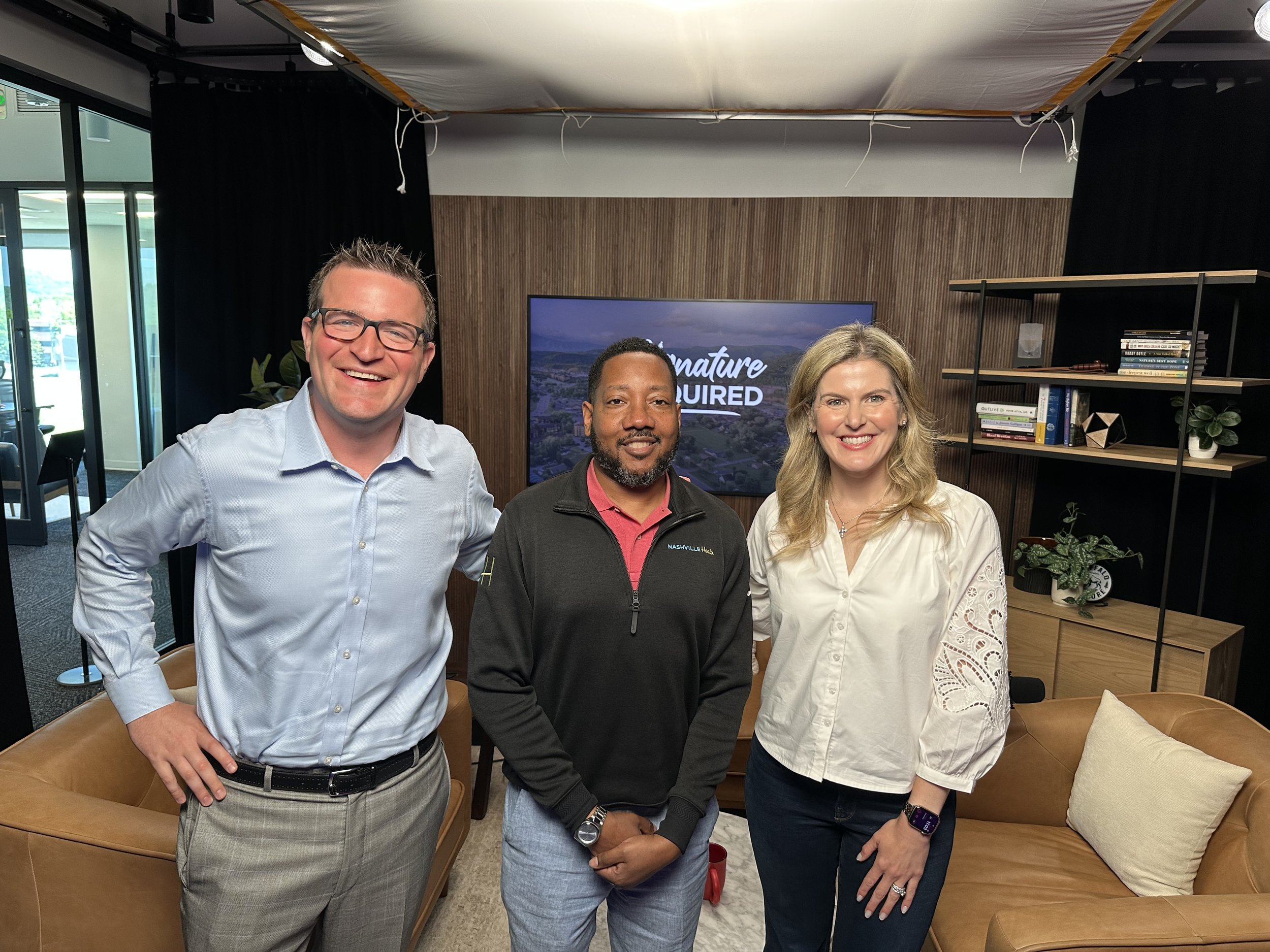
About Mark Yancy
Mark Yancy, CEO of NashvilleHealth, is a rising leader in population health and workforce wellness. Named one of Nashville’s Top 100 Most Powerful People and a 2024 Disruptor, he spearheaded the Workforce Wellness Report with the Nashville Chamber, bringing new insight into the pressures facing workers. He also leads the Nashville Wellness Collaborative and the Heart of Nashville Initiative, improving chronic health outcomes in underserved neighborhoods. His guiding philosophy—“take care of the people who take care of us”—drives NashvilleHealth’s focus on equity, access, and data-driven solutions.
About NashvilleHealth
Nashville Health was founded by Senator Bill Frist to improve the city’s health outcomes after national rankings placed Nashville last among peer cities. Today, the organization brings together more than 20 partners—across healthcare, business, education, and government—to address health disparities and strengthen community wellbeing.
Through initiatives like the Heart of Nashville project, NashvilleHealth works directly in East and North Nashville to lower high blood pressure and expand access to healthcare, healthy food, safe housing, and transportation. The Workforce Wellness Report has given employers new insight into behavioral health needs, affordability challenges, remote-work shifts, and workforce strain—helping inform smarter investments in employee wellbeing. NashvilleHealth plays a key role in connecting businesses, nonprofits, and city leaders to ensure Nashville’s resources work together, not in silos. Yancy emphasizes that the city’s future depends on supporting the “surviving side” of Nashville just as much as the “thriving” side.
-
Spencer: Mark Yancy, CEO of NashvilleHealth. Welcome to Signature Required. Thank you for having me. I was talking to you just before we started. You have the best voice for podcasting and radio. That I don't do too many of those that I'm intimidated by the guests that I bring on, but I have a feeling that you may get an offer by the end of this to be able to do something famous, maybe National Geographic.
Spencer: Yeah.
Mark:That's the, that's the, that's like the goal. Like I wanna like marry like a, a cheetah, chasing an antelope or something like that. If I could do that, I'd have the world better tail.
Spencer: Yeah. So give us like. The wildebeest was running from the threat.
Mark: Let me think about this. Um, so the wildebeest, beset by the river and the embankment turns around only to find.
Mark: The cougar is hot on the hil wouldn't be Cougar. It would be like a cheetah Cougars. South Africa, I mean in South America. So National Geographic, just understand, I do know that cougars are not in Africa. It would be like a leopard. Absolutely. You know the
Carli: difference between a cheetah and a Leo, right?
Carli: I mean if we're And a Jaguar
Mark: Correct, correct. Jaguar course or a South America Cougars are North America. I'm just saying if they're watching, we don't want to. I don't wanna lose it. I don't wanna nail it on the voice and lose it on the kn. This is for you. Yeah. I believe this is for you. Yeah, exactly. I, I hope so.
Spencer: They're, they're gonna give you a great script, mark. You'll be in good shape. Yeah. Okay. Alright. Good deal. Good deal. Good deal. Uh, well, thank you for being here with [00:02:00] us. So, um, most people listening will have no idea what NashvilleHealth, uh, means, what that is. So maybe start there. What is it that NashvilleHealth, uh, does?
Spencer: What are you the CEO of.
Mark: Yeah, the, the fastest way to say it, and it's tough to say anything healthcare related fast, but the quickest way to say it is that Nashville, as you all are probably, uh, aware is, is healthcare capital. Um, and that's great. You know, that's healthcare services, that's beds. hat's when we've got a private equity and VC portion that that's actually going really well with several different entities.
Mark: But if you look at our community health profile against the cities that we compete with for people, we're the sickest by far. And so it's our job to kinda reconfigure all of that talent that's caught up in the healthcare capital and kind of aim at a different target, which is how healthy are people when they're not in the hospital, which corresponds to how do people show up at work?
Mark: And Then given that Nashville as a basis has a lot of shift based employers. It's really important for people to be [00:03:00] healthy for the health of our economy. So we tie to that, uh, to make sure that people know it's not just altruism. We are really concerned about making sure we have a bright economic future by being healthier.
Mark: Hmm.
Spencer: And so former Senator Frist Yes. Was the original architect Yes. For NashvilleHealth, right? Yes. I was going back to 2015 looking at some of the Tennesseean articles that were announcing some of the support for why NashvilleHealth was needed to begin with, and I couldn't believe some of the stats Yeah.
Spencer: That were in that article. I mean, it was, one of them was, the infant mortality rate in Nashville is worse than in Cuba.
Mark: Yeah.
Spencer: Like. Some obesity statistics, some smoking statistics, and so I could only hope that, all right, that was written in 2015. We're 10 years later from that. How have the stats changed?
Spencer: What are some of the eye-catching numbers that [00:04:00] make compelling. The reason for Nashua Health to still exist 10 years later. Yeah,
Mark: unfortunately, there's, there's this event that happened, you know, COVID that really actually made everything worse. I mean, in terms of your healthcare. If you, if you all think about the two of you, you know, I don't even have, I just met you all today formally, and I know you went to the doctor less.
Mark: From 2020 to 2022, like I don't even have to ask you that, you know? Yeah. Mm-hmm. And just imagine if you do have a chronic illness, that deferred care, whether it's hypertension, whether it doesn't matter what it is, things went unaddressed. And so you see this spike in COVID that has made a lot of those, uh, statistics worse.
Mark: And having said that, there is some rebound that's occurring now, but we still need to exist from that standpoint. You made an interesting point about, you know. About how we are behind other nations and some of our metrics and outputs. But you know, writ large the United States is actually in that period.
Mark: Like if you compare us to the rest of [00:05:00] the Western world, be it Canada, be it the uk, be it any countries in the European Union, our health statistics are worse. So we do need to exist. But to your point, and to Senator Fris, hope you really don't want there to be a NashvilleHealth existing. 20 years from now, you want it to be so baked into the ethos of the city and the region that some of these things are just part of what we called our structural assets.
Mark: But until we get to that point, yes, we, we are needed. And that was his thought process for founding it. And, and if anyone's medicine and for he is as advertised, he is a genius and he is also very passionate about things that he doesn't have to care about. And this is one of those things.
Spencer: What's been some of your.
Spencer: History. So take us back before CEO of NashvilleHealth. Yeah. Where are you from? What were you raised in, in order to be able to be CEO of NashvilleHealth. Yeah. Like that's, it's a big, it's a big opportunity coming from the senator.
Mark: It, it is. And, and I'm, I'm, you know, blessed to have it, but I'm a [00:06:00] Tennesseean, but originally from Memphis.
Mark: My wife is also originally from Memphis. Spent, you know, almost all of our time there. Um, worked for corporations that were not in Memphis. I've had to do a lot of traveling. My wife has worked for corporations. I've been international, so we had to do a lot of international traveling, so always kind of coming in and out.
Mark: And Nashville was always one of the, to the point of the healthcare capital conversation. Mm-hmm. Yeah. With me being, uh, with, you know, healthcare administrator, hospital administrator, uh, and hospital operations, healthcare operations. Always coming into Nashville for some type of meeting. Um, but I am classic healthcare administration, hospital administration.
Mark: That's what I came up in. If there's a difference is that most administrators have a master's in health administration or an MBA and I on purpose got a master's in public health. I was always. Fascinated with what was happening outside of the hospital, and I just kind of figured like I stick around the hospital long enough, I learn how to run it.
Mark: Like I'm really more, I need a degree that's gonna gimme something that doesn't reinforce this, which made me [00:07:00] probably a little bit different, but that was a huge pivot from the standpoint of. It opened me up to epidemiology, which is of course is like the study of infectious diseases and chronic illness and how those things move and why, and because of that, I became kind of like an outpatient administrator.
Mark: Uh, so I worked for Methods Healthcare, which is probably best like the ascension of Memphis and other healthcare systems. And then I worked for DaVita Kidney Care, worked for Anthem. All of these things, managing these operations that were outpatient, people coming in and us coordinating care. And that trajectory led NashvilleHealth to me.
Mark: And here I am. I can give a little bit more, more, uh, specifics on that, but that's the, the overall how I got there.
Carli: I'm curious because our podcast serves a lot of people that are moving to Tennessee that are trying to understand why is Tennessee what it is? Yeah. And we keep throwing out this idea that Nashville is a healthcare capital, right.
Carli: But. Help somebody that we take that for granted. You know, since we came out of Vandy, all of the job [00:08:00] searches we were doing, everything led back to healthcare for a really long time. Yeah. Can you explain why is Nashville. An epicenter for healthcare. What does that actually mean on the national stage?
Carli: Like, what do we have here that we take for granted?
Mark: So, you know, there's a couple, it's more than one reason, but I'll give like a, a couple key reasons. One of 'em is HCA. Yeah. Uh, HCA was founded here. HCA is the largest hospital services organization in the world. It's an international organization. So if you're talking about beds.
Mark: Uh, and, and the, the brain center of healthcare beds, HCA really is that, and that alone anchors a lot of that here in Nashville. A lot of people don't know. Of course, you, you are familiar with Tristar and all the hospitals that they have in that division, but that division is actually not the. Bigger division that they have, like they have a bigger presence in Texas and Florida and internationally.
Mark: So that's one reason. Then when you have, uh, a lot of hospitals and hospital beds, a lot of derivative industries that feed that [00:09:00] pop up. The other example, but not the only example would also be the fact that, you know, a lot of our payers, our insurance companies are here. Um, one example of that would be if you're talking like Medicaid, um, the three, what we call managed care organizations for Medicaid are headquartered here.
Mark: So not only do you have the services portion of healthcare, you have the payment portions of healthcare, and if you have both of those at the same time, you can really create this robust health industry. Going out and it has, then you have Ascension St. Thomas, then you have Vanderbilt and all of those things.
Mark: And so that is why, um, but those are a couple of key reasons for why healthcare is, is such a big deal here.
Carli: So we are a healthcare capital, but as we were just saying, the data. Shows that our population when they're not sick or in surgery or in a hospital stay is really quite unhealthy compared to our peers.
Carli: But you are running a data service, right? You work on the workforce wellness report that's trying to measure [00:10:00] this in several different. Aspects. Can you tell us a little bit about that? So
Mark: there's probably, I can, there's probably some things that all of us kind of feel, you know, from living in Nashville that you can start to tie back to some of the things that are data backed.
Mark: You know, one of those things is like for, and I'm sure, 'cause you all are just kind of found out as you were talking, like, you're not native to Nashville. Um,
Carli: expenses. I'm not, you're
Mark: not. Okay. You are, we're
Carli: a good ying and yang in that way. Yeah. Good deal.
Mark: Good deal. Um, but you know, Nashville from my perspective, is a very, very vehicle bound city.
Mark: Like, if it, it's hard to, you know, exist here without a vehicle like you, you, Nashville is pretty much drive everywhere. I think that's that fair, Spencer. Yeah,
Spencer: that's right. I mean, yeah. Tennessee in general is not known for its walkability to be able to get from one place to another, whichever city that you're in.
Spencer: It's kind of in the culture of like, yeah. We drive,
Mark: so, so to that point, I would say that Tennessee's [00:11:00] already at a disadvantage. And I think Nashville's probably the worst example. I gotta love Nashville. So I have nothing but good things to say about it. But if I had a criticism or something that I noticed when I started living here, it was that I think Nashville's actually probably worse.
Mark: Than even other areas of Tennessee. For example, in Memphis, there are contiguous sidewalks for the most part that Memphis is a grid. You know, there's, it's north, south, east, west, thoroughfares, and then a loop. So it's very easy to understand. And when you have that, you can have sidewalks that actually are part of that contiguous, like you could walk.
Mark: You wouldn't want to do it 'cause it would be be too far. But like if you took the street Winchester, you could walk from almost downtown, almost out to Collierville. Which is, which is a long way.
Spencer: Yeah.
Mark: Um, I haven't found a contiguous sidewalk in Nashville yet. In fact, a lot of streets don't have sidewalks.
Mark: Yeah. Why am I saying this? It's not, you just said it's not a walkable city. Well, if it's not a walkable city, it's likely not a bikeable city. Mm-hmm. You know, sidewalks and bike lanes have a correlation with one another. [00:12:00] Um, and we were missing some of that. And so that's anecdotally, I think we feel that, but then there was a report that came out that said, we're 99th out of a hundred cities in like pedestrian and biking danger.
Spencer: Yeah. Mm-hmm.
Mark: Okay. So not only, so we're tying data to that feeling that you have and just from a physical activity standpoint, that has to come out. Somewhere, and some of that is in chronic illness. So that's one example of, of how you can kind of toss some things that you feel to some data that basically says these are things that people don't ordinarily tell of health, but if you're not biking and walking, you're likely sitting still or in a car.
Mark: So it, it makes, starts to make sense.
Spencer: How about an alternative take mark that, uh, biking and walking is actually what's dangerous because you're gonna get run down on the road a hundred percent. So maybe we do less of the walking and biking. Do you feel like that's gonna improve our healthcare here?
Mark: Well, it will in the short term with what we have.
Mark: What you would want to say is long term, we need to [00:13:00] work on the fact. To having, you know, safe bike lanes, safe walking lanes, because as it stands you were correct, but, you know, you don't, you know, you don't, you don't want to short the accident for the long term or like, now I don't have good cardio health.
Mark: Mm-hmm. Mm-hmm. Long term because I'm scared of getting run over short term. So you, you're, you're correct.
Spencer: Yeah. So what, what. If you had to put it into a paragraph, what is it that NashvilleHealth really does? Like what's the mission for what you do? Yeah,
Mark: it's kinda like a 1, 2, 3. I mean, it is hard to put into a, a short statement, but one is identifying through data where our challenges are in terms of where we are, the sickest.
Mark: The two would be then doing a program or a demonstration that. If this certain thing, a non-medical determinant of health, better bike lanes, better walk lanes, better green spaces, better access to physical activity, if it's a food desert or a food swamp. If people actually had access, you know, if people could make the healthy choice, the easy, easy choice, like to eat better, I can have fresh [00:14:00] foods and less processed.
Mark: In my environment. So we'll do a demonstration that will simulate that. If that simulation then gives us data back that says, when people do have access to this, they are healthier. We would then work with the city, the Chamber, and others and say, well, we need to introduce a sustainable asset here that's here permanently.
Mark: So you don't have to have a program to simulate it. And it makes the easy cho, the healthy choice, the easy choice, essentially. That's probably the quickest way I can say it. Um, not only that, it's also tying some of these health outcomes to our economy. It's not just altruism. Yes, I want the two of you to be healthier, but you all would not be able to do this podcast on a regular basis if a chronic illness was in the way all the time.
Mark: Mm-hmm. So your personal economy needs to be larger and will be larger if you're free from chronic chronic illness, which then contributes back to the total economy. So the workforce wellness is just a representation of that. If we're all healthier. The economy's bigger. Obviously if I'm healthier and I [00:15:00] show up to work because I'm not sick, that economy's bigger.
Mark: So there's always a way to tie this back to this actually is prosperous for us to be healthier.
Spencer: So it sounds like that. There's an a, a research aspect to what you do that you're generating data. Sounds like there's a education slash communication, maybe marketing component to taking that data and then educating people about it.
Spencer: Um, given that Senator Frist was the original founder for NashvilleHealth, is there a political or a legislative component to it? How do you take the, the data and the, the education and then actually see something happen as a result of it? Yeah. So
Mark: Senator First is a master. You let the data speak for itself.
Mark: Okay. You know, um, those that are interested in it will gravitate towards it, but it, and if you're not, it will give you kind of the story to it. You made a really interesting point around like the story. [00:16:00] Piece of it. Um, you know, I, I make this analogy and I don't know if it works, but I say all the time that, you know, the best doctor or physician you've ever had, either for you or for your kids, is the one that walks in and talks about in partnership language about this is what we're need to target, but how can I work with you and your everyday life to make this a reality for you?
Mark: To make the the healthier choice, the easy choice. They don't come in the room and talk about pharmacology, a and p anatomy, pathophysiology, all these things that they inherently know and have to go to school for. They understand that's the technical language that I have to understand to be able to make that partnership language work.
Mark: And so we, from a public health standpoint, kind of, if that's a micro in the macro, we say it in this way, like we have to understand all of these things that are about epidemiology and disease states and incidents and prevalence. But when I go talk to someone like an employer, to your point about the workforce wellness report, I'm not speaking in those terms.
Mark: I'm speaking in terms of most of your workers are shift based. [00:17:00] If they're not healthy, they don't show up. That's physically healthy, or if they do show up and yet they have a chronic illness, you're gonna pay for that in their insurance premium. Mm-hmm. And the claims, right? So I speak in that term. I don't talk incidents and pre with them if it's about mental health and mental wellbeing, and knowing that Nashville has a higher incidence of, of, of self-reported mental illness or mental anxiety and depression every month.
Mark: As opposed to Austin, Denver, Atlanta, so forth and so forth. While I can understand that, technically what I'm saying is we need to work on this because people also miss work from those particular things. Absenteeism leads to inevitably, if it's enough of it to recruiting and retention challenges. So it's really to your point about the narrative transferring what would seem to be technical information that's just.
Mark: In public health or community health and saying, this is bigger than that. You gotta talk in a language that miss, that's that that makes your end user say, this is about my every day. Hmm.
Carli: Sounds like you're a translator. You're [00:18:00] taking multiple languages and adapting to who you're talking to. You're a storyteller.
Carli: That's also a translator. Where do you see that be the most challenging? Is it trying to take the data to an employer, or is it trying to take it to the legislature? Or is it to the people themselves like, Hey, we need to walk more and move more. Where do you find your job to be the hardest as you're translating?
Mark: Um, uh. It's very astute point you're bringing up. I, I would say you have to put kind of the onus back on yourself, you know, to say, well, where am I going? Mm-hmm. Well, today I'm going to talk to, you know, metro government. All right. You know, what, what are they concerned with? You know, leaving an impression that the people that live in power and work the city, like the essential workers of the city, you know, like the, the, the blue collar people who have called Nashville home.
Mark: All this time, or the Spencers who've seen Nashville from the beginning to the end who feel like, well, I, I'm glad it's changing, but at the same time, this is not the same affordable Nashville that it was when I was a kid. And I've seen some of the [00:19:00] changes from that. And so in my mind, if that's the case and you're trying to make that.
Mark: That, that moment I'm probably gonna talk about housing, affordable housing and how when you don't have that, it relates to health. Mm-hmm. You know, you interrupt people's family structures. When people have to get pushed out, you interrupt the relationship they have with getting to the doctor. When they get pushed out, you interrupt the ability for them to, you know, see that same dentist they've already, not to mention the commute time.
Mark: Back and forth. That doesn't mean because you move, your job changed, but literally, the way I just said, that would be the way I would talk to someone in metro government. But you gotta put the onus back on yourself to say, how do I communicate? My wife is great at this, by the way. She's, and I run it by her all the time.
Mark: Now, communicate to your audience. Don't communicate to yourself. And I think that's one of the, you know, I, I won't, I'll say mistakes or challenges that we've had. This version of society is if you are a financial expert, how do you actually make that make sense for the everyday person? If you are a medical expert, how do you make that [00:20:00] make sense for the everyday person?
Mark: I think sometimes we, we talk to each other inside of our industries and not to the end user.
Spencer: Mm. We have a saying that we've said a number of times Yeah. On this podcast that, uh, we've stolen from Albert Einstein, which is that if you can't explain a concept to a 5-year-old, you don't yet understand it well enough yourself, and.
Spencer: That is a real challenge in something that is as technical as healthcare. Yeah. Because you know, you like epidemiology saying that, before, I didn't know what epidemiology, I had a couple guesses of what it was, but you're like, of course it's this and this and this, and it's like, oh yeah. Okay. But a lot of people, when they're explaining something, you know, it's acronyms and words and phrases that it's like.
Spencer: I'm gonna sit here and nod my head like I know what that is. But in reality, coming behind it and saying, Hey, let me approach you with the heart and the spirit of an educator can [00:21:00] really make the difference between somebody feeling comfortable to ask a question and just saying, well, you know, I'm not smart enough, or It's not my area of expertise, I'll, I'll let somebody else worry about it.
Spencer: Yeah. So are the main people that you interact with. On a level of understanding what you say, like is it, is that the default where, you know, mark is generally sitting across from people that are in the healthcare world, so you can kind of speak that language? Or are you more often having to. Have a more intense translation where you're having to talk to a lot of people that are outside the healthcare space, but you want to convince them of why it's important they understand it.
Mark: Uh, a very, you know, thoughtful question too, and, and as you were thinking I was. Thinking about our board and the fact that probably half of the board is that healthcare leadership audience. But Senator Fritz early on was actually, this is very, um, you know, thoughtful and a student on his part [00:22:00] started bringing in people that were not healthcare leaders from like the financial services industry, the music industry, uh, sports industry from the standpoint of like, help us.
Mark: Challenge this, help us challenge the way we're communicating about this, because if you just put us in a room as healthcare leaders, you're gonna, you're gonna end up using vernacular and vocabulary that works for us, but may not work beyond that. And again, if we're gonna get the city healthier, you can't just speak to people from a healthcare standpoint.
Mark: So, for example, we have, and I'm gonna, you know, mess up and not name. Everyone, but I'll name a few and, and I have a, a wonderful board, but whether that's Wanda Lyle, who was a former, uh, managing director for UBS here in Nashville Financial Services, or Ken Levitan, who's been in music management in Restauranting, or John Esposito, who was a former chairman of, uh, warn Warner Music, uh, so far.
Mark: And so as Sean Henry, who is, is now who just joined the board, who's over the Nashville Predators. Yeah, they're. Inclusion in the [00:23:00] board meeting and in those conversations help you to break what you're talking about, which is make this make sense to me, mark. They've asked me that before.
Spencer: Yeah.
Mark: And honestly, when they go out and talk about it, it lands better because they're not using, they're using almost, they're closer to the end language of why it's important to you.
Mark: So that's one way in which we have to do that.
Carli: I was gonna say, if you want our son Solomon to practice on, he's five and I'm happy if you wanna try to. Explain it to him and see if he can get it. He's a smart little dude. I can, I can offer him up.
Mark: I think that's an, well, to that point, Solomon's gonna lead something in the future and Solomon's gonna have to, you know, I, I have a whole lot of faith and, and then like.
Mark: Like the younger generations, hopefully looking at what we're doing and saying, I'm not gonna do that. Or if when we do things right, saying, I am gonna do that that way. So you need to send Solomon on and, and let's, let's see what happens. Maybe he needs to be the translator for his generation.
Carli: Well, and you're married to a woman in healthcare, right?
Carli: I am. You both are really successful in [00:24:00] healthcare, so I imagine it's probably hard to get away from healthcare talk. It's probably at your dinner table. It's on family vacation. It's everywhere you go. You can't, you can't escape it here.
Mark: Yeah. You, it's funny you're saying. And hers is far more technical than mine.
Mark: Like she's in, in research. My, she's a scientist, so she's in medical device, uh, science and Oh, big words and biologic research, basically like what's, I'm gonna
Carli: need a key if we continue this conversation to understand you'll,
Mark: you will. But, but to that point, that's why she has to make such a big deal out of making the language work for the audience.
Mark: Mm-hmm. Because the things that she does is about, well, what are the next healthcare products and drugs in the future that are gonna make a difference for us? So you're right, we do have to do that, but we really do challenge. Each other to say, you know what? We can't talk about this the way we talk about it.
Mark: How do you talk about it in a way that you all, who are not necessarily in the health industry would understand? Um, he's saying that
Carli: so nice for us who are clearly not going to have any idea what they're talking about. How do we help? These people get it,
Mark: but that, thank you. It's [00:25:00] two ways. It's so kind.
Mark: Okay. Yeah. But it's two ways, like literally like the things that you all are moving every day. I just don't have a reference point for 'em, you know? And even down to like, like media, like I'm still learning, you know, the nuts. And it's one thing to sit on the podcast is, I mean, like the instructions you gave me on the top about, and I'll will just say like about reels.
Mark: Mm-hmm. Like I was listening and I was like, I. Hadn't thought about that like that. That makes sense. So we all have to kind of be translated for each other from what we do.
Spencer: Yeah, you know, mark, I'm a competitive guy and when I hear that Nashville out of a hundred cities is either 100th like the worst or 99th on just about every metric, that just surprises me so much.
Spencer: Because Nashville is winning at so many things. It is. Nashville is a foodie town. It's, you know, people moving here all the time. Like there's a lot of good momentum that. Senator Frist back in 2015 when he announced this, echoed the same thing. He was saying, this is [00:26:00] a white hot city and it has only become more so in in 2025.
Spencer: So when you look at the, the data, is there something that you can point to that helps drill down? As to why Nashville is struggling more than, you know, Atlanta and Denver and all these other places. Yeah. That, that, that you talked about.
Mark: We're still bringing that picture all the way together. But when you look at some of the things that would say, all right, well, why do we have, you know, a lot of people with high blood pressure in this area?
Mark: And then the second thing you say, well, what's in this area? Or what's not in this area. When you compare it to an area that has lower blood pressure that's only a few miles away, then you start to make some connections. Oh, there's not a grocery store in this area. Oh, there, there's a low vehicle ownership in this area.
Mark: Mm-hmm. Now, keep in mind. We're just talking about how, how difficult it is to move about. So think about if there's no grocery store, you don't have a [00:27:00] vehicle, you're gonna take a bus and a connection and a bus to get to the grocery store to get vegetables and then get that back. Yeah. Or are you going to default to the nearest, cheapest option?
Mark: Yeah. To eat. You know, the, the challenge though, really is to describe that, but not in a way that makes people feel like, oh gosh, we're so limited. Like what? Like, this is terrible. It's really more so what are we leaving on the table? Mm-hmm. Like if, if as great as Nashville is, we could be greater. Like, like as, as, as wonderful as we're doing, you know, there's this opportunity here.
Mark: Mm-hmm. I mean, think about the way Nashville's growing from a business standpoint. If Nashville had the ethos to say, we make sure that every business makes a contribution into the people that power these, these industries, essentially. Um. I'll let you ask a question to that. Why I say that? 'cause I, that would kind of be a long answer, but as a stopping point, what are we leaving on the table?
Mark: [00:28:00] Yes, we are being great. But why? How do you not know that we could be even greater?
Spencer: Hmm hmm.
Mark: I.
Spencer: I want to think about the right way to, to parse it out more. 'cause when I, yeah. When I think about Atlanta close by and I think about the cross sections of economic and say, does Nashville have meaningfully poorer economically population centers than Atlanta?
Spencer: Or is it, is it a long. Uh, racial demographics where it's like Nashville has this, this concentrated aspect where we see it present the most, or is it some type of other factor? I'm just trying to see if there's something that that helps. Understand because I, I hear you talk earlier about COVID and say really the factor that was significant [00:29:00] was the drop in the regularity that people could go and see their doctors.
Spencer: 'cause the irony that we're here in Nashville and it's some of the best healthcare in the world. Yeah. Available. Yet the population that's on the doorstep of the hospitals is some of the sickest,
Mark: what you just said is the reason why NashvilleHealth exists that like, I'm gonna copy and paste that into something, that last sentence you said.
Mark: So it is important to situate though none of us in America are doing well on health. Comparatively speaking. Yeah. If you want to be competitive. Mm-hmm. Canada does better than us. UK does better than us. You know, all the EU countries a little better, so we're already at a disparity right there.
Spencer: Yeah.
Spencer: Mm-hmm.
Mark: All right. Then Tennessee ranks no better than 45th on any state metric around health outcomes. Okay. Then Davidson has. Hotspots that are worse in Tennessee. And then that looks like some of these neighborhoods that we just talked about where you may not have green space, you may not have access to fresh fruits and vegetables and so forth.
Mark: [00:30:00] Like that's the, that's the, the limiting part of it, God. But the opportunity part of it is going back to other way. What if we in Nashville Creative, a by Nashville for Nashville way of looking at that and say, well, if we work in that neighborhood and we figure out what gets people healthier there.
Mark: What's therapeutically there then becomes how do we make sure these other levels never get to that? And so the opportunity goes back up. Like you want to be able to say that Nashville is piloting or leading the way in this way, but other cities will pay attention to it. The, the, the cap on that, that keeps it from just being a healthcare organization, that Chamber has data that says when they look at.
Mark: Metrics about which city to go to when they're competing like a, like a a job. They want to expand or relocate. Major corporations, major corporations, they will look at these things that we're talking about and say, I'm gonna pay this in my claims, or I'm gonna pay this and people not showing up. All things being equal.
Mark: Why don't I go to Atlanta or [00:31:00] Austin? Yeah. Mm-hmm. So that's the reason why we have to make it work. But again, that's not a terrifying conversation to me, that's a competitive conversation. Mm-hmm. That's a competitive conversation about what are we leaving on the table to make sure that that does not become a factor that limits us in growing the way that we have.
Mark: Mm-hmm.
Spencer: And I guess the upside to Nashville getting its butt kicked in terms of health is that in any turnaround situation, like Carli and I have had to come into a lot of businesses where everything is on fire. Yeah. And when just a little bit of it. Goes out. Yeah. You find a solution. It's amazing. The needle can start moving.
Spencer: You know, it can, you know if, if you gotta go from fifth place to third place, sometimes you have to move herculean types of of efforts, because that's competitive air. When you wanna go from 45th. The 35th, you just kinda have to get a couple things right and start moving.
Mark: It is very insightful. I've been in those situations too, where you've gotten in the area or inherited that was [00:32:00] not doing well and while no one likes to have to solve that challenge.
Mark: Mm-hmm. It's, it's one of those things where, one, I would submit that you all, I'm gonna guess that while you wouldn't wanna relive it, you probably learned more about how to operate and how to work with others. Than you did when a space where those things weren't happening. Would that be
Carli: Yeah. Dumpster fires are very informative.
Mark: Yes. Yes. They, they are, they, they are mainly because your brain is like, how do I put it out? And then how do I prevent this from happening again? Which is not a lesson you can get. Without that. Mm-hmm. So to your point, you know, it really is about those things. And look, Nashville has a ton of things going forward, but, you know, to make the conversation not so, just, just around health cities go through these revolutions.
Mark: Mm-hmm. If you and I went to, like, Detroit's doing wonderful things now, but we know Detroit had a really bad downturn. But city, if you and I went to 1952 Detroit, we think it's the greatest economy in the world. Yeah. Uh, if, you know, you and [00:33:00] I went to, you know, took a trip. Been a time machine back to New York in 1975, you wouldn't want to be there at all.
Mark: Uh, New York is no longer like that. The the point is you have to recognize cities are changing beneath your feet. Every day. The question is, do the leaders that are in those cities have a forward thought about how do we actually grow in a way that situates our, our residents in a way that they want to be here?
Mark: They feel good about being here, they're healthier, they feel good mentally about being here. That city's always gonna outperform a city or either catch up to another city. To your point, that's not thinking like that. We just see health. As one of those things that you can be future thinking about wellness and wellbeing to put yourself in a position to where you don't have to do that, but cities change like this.
Mark: If we rest on our laurels and believe that this Nashville will always be the Nashville, you can almost guarantee that it won't.
Spencer: Mm-hmm.
Carli: I'm curious for an [00:34:00] example, so when you were talking about kind of the three pillars of what you do, is it data and then education or really trying to put into action?
Carli: What the data tells you, and then maybe a legislation piece or action from there. What are you guys working on? You talked about blood pressure in certain communities. What are you guys actually doing right now with the data and with all this information to get to the hope to say? What is our opportunity?
Carli: What are you trying?
Mark: So we have a partnership right now with, uh, the Metro Government, uh, mayor O'Connell and the health department, uh, around the city's first wellness opportunity zone, which is kind of taking the language of like a tourism development zone and kind of flipping it and saying, we're looking for opportunity here for people to get healthier.
Mark: Uh, 37208 has a really, really high hypertension rates, like 47%. Um, but it's also. A food desert, like it does not have meaningfully accessible, you know, foods, but yet the foods that are there that are, that are, [00:35:00] are easy to get high processed, high sodium. Yeah. So right now we have a partnership with Matthew Walker, Comprehensive Health Center, where we have foods and nutrition that is available there in place.
Mark: Transit that's available in place, ability to get to a physical activity that's in place, and if folks get healthier from that, we will work with the city and others to introduce sustainable asset there so that that can continue going on. I say that as an example. Like that's, that's an example. That's, that's not the be all, end all.
Mark: That's an example of what we're doing to say that when we do do a demonstration, we don't want it to get better for just the life of it, and then you don't have something that's in place. You want to be able to say the city is putting assets in place. The same way you would say, we want a bike lane here, or we want a green space here.
Mark: We need a food cafe slash food pharmacy here. These are things that if you start to put 'em around the city. People can make the healthy choice the easy choice. And if they can do that, I mean, it [00:36:00] just intuitively, I think we all know that you'd rather live in a city that has those access points rather than not.
Mark: So that's a, that's a good example of one thing we're doing now that's a a, a hyperlocal government regional, public nonprofit. Partnership.
Carli: So I have to ask, if you're playing Nashville ly, right, and you have to build on all of the pieces that you have money on, and you got your magic wand and you could just build up, would you be building grocery stores or would it be by clients?
Carli: I know you'd say all of the above, but what is the thing that if you wanted to win the game of Nashville ly, would you be building on your properties as quick as possible?
Mark: Um, I take an alternative answer to that, that, that hopefully gives you the same thing. I would work on leaders such as us being on the same page, which is what we're doing about working together.
Mark: Mm-hmm. And having a muscle memory around working together such that we have a framing, uh, uh, a collective language about what it means to work together. Like what is an anchor [00:37:00] organization? Which one of us is gonna play that role? What's, who's gonna be the funding organization? Who's gonna play that role?
Mark: Who's gonna be the primary food nutrition organization? Who's gonna play that role? We what you really need, like cities are going to change for the better when the leaders that are already there. Develop a framing for working together to solve challenges across it, because none of us, if we are like, we're all happy about being in Nashville, most of us feel good about staying here, and we don't have to abide by a two year term, a four year term.
Mark: If you get that right, you then start to have the folks that you talked about from a legislative standpoint have to pay attention. Mm-hmm. To the fact that city leaders are moving in a way that says, I want everyday residents to be healthy, because that's not only better for them, it's better for me. So what I would build is this incredible ethos of cities of leaders from across different, different organizations and sectors working together.
Mark: Because if you do that, you'll be able to solve all those problems in a meaningful way. [00:38:00] Hmm.
Spencer: Yeah, mark, that reminds me. What I hear in your answer is, we know exactly how to fix this. It's not a mystery of what we need to do. We need the leadership and the messaging and the marketing that flows through into the political willpower to make it happen.
Spencer: We understand where it needs to be and how it needs to be done, but we have to have sustained leadership that can transcend from whatever, you know, political cycles, legislative cycles, that can help stack some building blocks so that way we're not starting at zero. Every two or four
Mark: years. Yeah, I think that's exactly right.
Mark: I mean, everything is local in the end. In in the end. Mm-hmm. Yeah. You know, your lessons come from, you know, what happened in a local context and who were the leaders that were, you know, paying attention to that local context. So I think that's extraordinarily true. I also think Nashville has. You know, it's, it would be good to get your take on [00:39:00] this.
Mark: I feel like Nashville is always willing to take a meeting, always willing to, to listen and hear things out. Mm-hmm. I think we have to make that work to our advantage. You know, now you need to be compelling, you know, if you get that, that five or 10 or 15 minutes. But I do think there's a spirit here that lends itself to that.
Mark: I do think what kind of competes from that though? Nashville is doing so well, and there's so many new things coming here. It can be distracting. Yeah. I mean, like if you, if you are a city leader that doesn't have your history in Nashville and you were brought here from the outside, and as an executive, someone's gonna tell you or, or help you Mm-hmm. This is maybe where you wanna look to live, or this is who you might wanna talk to here. And if you're not careful, you know, you're in a pristine office building when you get here, there's always somewhere to go, you know, to, to get a fine dining experience. You can kind of miss out on the whole process of, well, what's happening with the people that are powering Nashville?
Mark: Yeah. Yeah. And I do think that, I mean, that's an advantage, but [00:40:00] it's also a little bit of the thing you gotta worry about, you know, when you bring people in.
Spencer: Mm-hmm. Mm-hmm. Yeah, it's like shiny syndrome where it's like you can get fixated on what's shiny and what's good, but that's not everybody's story and everybody's experience and that it can mask some of the underlying pieces.
Spencer: when I think about Nashville being.
Spencer: You know, 100th out of 100 in a bad way. That hurts
Carli: your feelings every time you say it. Look at, I know every time he said that, he gets sadder. And
Mark: to be clear, we were talking about like that metric is like the biking and walking metric Uhhuh. But, but I mean, the others are not, but I will say this, they're not good.
Mark: Yeah. So you, your, your, your context is still right. It should
Carli: hurt our feelings we live here. Yeah.
Spencer: Is, is there a handful of cities that come to mind to you that you've had the chance to learn from? You know the mark of that city. Yeah. Or the leadership of that city that maybe they don't do everything right, but they get this health aspect.
Mark: I'm glad you asked this 'cause this is the first time, and I'll give you something that's [00:41:00] so easy for the audience and you all to pick up.
Mark: Have you all seen Blue Zones on Netflix? Mm-hmm. No? Okay. Um, wait,
Carli: do you narrate it?
Mark: Uh, I wish I did. Is
Carli: that your voice? I, I, I
Mark: wish I did. I, I, uh, I we're partners with them. Okay. But, um. This is the first time I can say, go watch Blue Zones. Like that's the easiest way to do it. Blue Zones focuses on those cities and sometimes it's communities.
Mark: It may not be a city, um, internationally, like all over the world where people are the healthiest and like what's happening in those cities that are making people healthier. My take from it. Is that the healthy choice is the easy choice, you know, and it, it kind of makes that point. But if you watch it, it'll show you why it is these lifestyle factors, these environmental factors.
Mark: It may be your engagement with nature. It may be the fact that you live in a place where you can go take a walk outside and it's not a street. You know, but [00:42:00] thankfully we have an answer to that.
Mark: Well, 'cause Chattanooga, our very own, Chattanooga is one of the first three national park cities in the world. Yeah. And I believe some of those metrics are around similar things to what you.
Carli: Describe, so a state as a whole, I think Tennessee is working that direction, especially cities like Chattanooga, but it sounds like we gotta get Middle Tennessee aligned on some of these different metrics. In terms of, and you touched on one that I'm is always a buzzword for me, which is mental. Health, mental wellness, is that one that your data is catching to?
Carli: Yes.
Mark: There's a chart that we have that I could send you that basically has like, you know, life expectancy, infant mortality, physical inactivity, obesity, um, you know, mental. Mental health reported of the month. You know, mental health days reported of the month, and those are one of the things that's situated on it The way I try to frame it just so people can, can kind of think about it.
Mark: You know, Nashville is a growing economy with more sophistication. Uh, but at the end of the day, the [00:43:00] economy is powered by healthcare, entertainment and tourism leisure restaurant. You know? Right. And when you get behind that, it's valets, concierge servers, housekeeping, and adminis, you know, um, cooks, chefs, waiters, servers, you know, medical assistants, all these people that punch a clock, okay?
Mark: Mm-hmm. So, you know, we know that typically those jobs from a wage standpoint are gonna face more pressure when prices go up, but yet these are the folks that are powering the economy. That we're all resting on. So you kind of have to make sure that you, you envision that when you envision health. I think sometimes people want to envision folks that may not be working and may not be doing this, but you're really talking about your city's ability to be healthy in the field, a great workforce.
Mark: So it just makes sense to actually. You know, situate that to say this is what we're after. We're after having the type of [00:44:00] of health context that makes people want to be healthy because it's good for business. Mm-hmm.
Spencer: I think that's a really good distinction. And if the city doesn't have that workforce that commutes into Nashville.
Spencer: And admittedly doesn't make the wages that it takes to live there. Yeah. So they're already in a spot where they've got a job, but the budget is tight, the timing is tight. And so what are they gonna do? They're gonna do what's easy, what's convenient, and trying to make the healthy choice what is usually harder to make.
Spencer: Anyway. The convenient one. Yeah. Makes a lot
Mark: of sense as a priority. It does.
Spencer: Uh, mark, we wrap each podcast where I read three short fill in the blank sentences. Yep. And you fill in. The blank with a word or a phrase that you feel like completes the thought. All right, here we go. What [00:45:00] keeps me up at night is blank.
Mark: What keeps me up at night is my yet to be unborn grandkids inheriting a world that either I didn't fight to make better. Or either it's not better, but it's not because I didn't try to make the, the, the effort for it to be better.
Spencer: Hmm, hmm. That responsibility. Yep. Hmm. When we talk about wellness, we can't ignore blank.
Mark: Um, um, when we talk about wellness, we cannot ignore that. We're gonna have to make a personal sacrifice to get. A greater opportunity for others. You know, it's kind of the, the social contract thing. Mm-hmm. Yeah.
Spencer: And our last one, our greatest opportunity as a city [00:46:00] is blank.
Mark: Hmm. Our greatest opportunity as a city is for the leaders that live here to work together, to, to eat together, to imagine a better future together.
Mark: Hmm.
Spencer: Mark, it's a real treat to get to have you here. We have the privilege, like Carli said earlier, of interviewing people that are professional translators and it's not from English to another language. But it's from an area that they have true mastery in. And there's a fun statistic that says that you have to do something for 10,000 hours before you can be considered a master at it.
Spencer: And we heard from your career trajectory that. I think 10,000 hours, you've done that five times over, uh, at least to become an expert [00:47:00] in your field, to be able to help lead Nashville into a place that. It deserves to be, it should be, and that we all have a collective responsibility to make sure that it gets to.
Spencer: And so it's fun to see your leadership. It's easy to see why Senator Frist and that organization has seen you as a great leader, uh, for NashvilleHealth. And it's gonna be fun to see what you get to do with such an exciting city that has all the promise in the world ahead of it. But does have to have people show up for work in order to make that a reality.
Spencer: 'cause it's not gonna stay that way if we don't figure this out. That's right.
Mark: Thank you for
Spencer: being here,
Mark: mark. Thank you. Well, Spencer and Carli, thank y'all for creating such a great forum. I've, I've enjoyed it.
Spencer: Mark Yancy for NashvilleHealth. It's a really interesting interview with [00:48:00] somebody that has to go from a former senator of the United States to a shift worker, brand new to Nashville, and those that employ them, and he's gotta be able to communicate and tell a story that makes sense. Mm-hmm. At the highest level of education and experience.
Spencer: Down to a level that hasn't had that opportunity and be compelling to both. And I can see why NashvilleHealth has selected him as a leader to be able to cover that really wide bell curve.
Carli: Well, and it takes a unique person, right, because he's leading, as you said. But if you think about it. So many key stakeholders, and you made an excellent point on the podcast where you said, we know how to fix health.
Carli: It is not rocket science, right? We know the metrics, the low hanging fruit of what to do. It's [00:49:00] just having somebody that their whole. Ethos, their whole life is devoted to pulling the right people together to communicating the problem effectively and getting it done. And he's the man for that job. And I really appreciated that.
Carli: I also really appreciated the talking about the various metrics. I feel that Nashville isn't walkable. I feel that even just with our kids, I mean, I've clocked six, seven hours a day in a car just trying to get. Kids from a sport, from school to a sport to where they need to be. And plus, you've got all these things and I feel like I have a really lucky life that they go to a great school and that I can go pick them up.
Carli: I have a vehicle that works, they get to do the sports they wanna do, but even I'm in a car for six hours a day trying to just make everybody's life work. And even in best case scenario, that hits at the mental health issues. And I live in the community where they go to school and where they do these sports.
Carli: So I just found it really relatable and really important to think about the [00:50:00] commute, to think about the people that are making our city actually run, because I think it's really easy to think about the big businesses that are coming in the country. Music stars, the flashy new experiences in restaurants.
Carli: And to his point, to forget about the people that are making every single aspect of what makes our city great. What is their quality of life?
Spencer: Mm-hmm. Seems like NashvilleHealth marries part, think tank like researcher group. Sure. That really gets in the weeds and could bore you with the data. Some think tanks stop there and they're like, okay, we're content with boring you with the data.
Spencer: Like we're academic and smart and that's just how we're gonna do it. Yeah. Those
Carli: are my favorite,
Spencer: but then they're a PR shop on top of that. To say it's not enough and you can kind of see the fingerprints of. Former Senator Frist in that is that you need a message and you need a message that is well supported by data, but then you have to make it [00:51:00] compelling.
Spencer: People have to hear it, and then you gotta actually do something about it. And while NashvilleHealth doesn't have legislative authority, they clearly have the eyes and ears of those that are in authority to be able to equip them with what they need when they get that five, ten minutes. To make a compelling case.
