
AJ & Rory Varden on Marriage and Partnership in Entrepreneurship
Rory and AJ Vaden, co-founders of Brand Builders Group, talk about personal branding, entrepreneurship, and what it really means to build a meaningful business together.
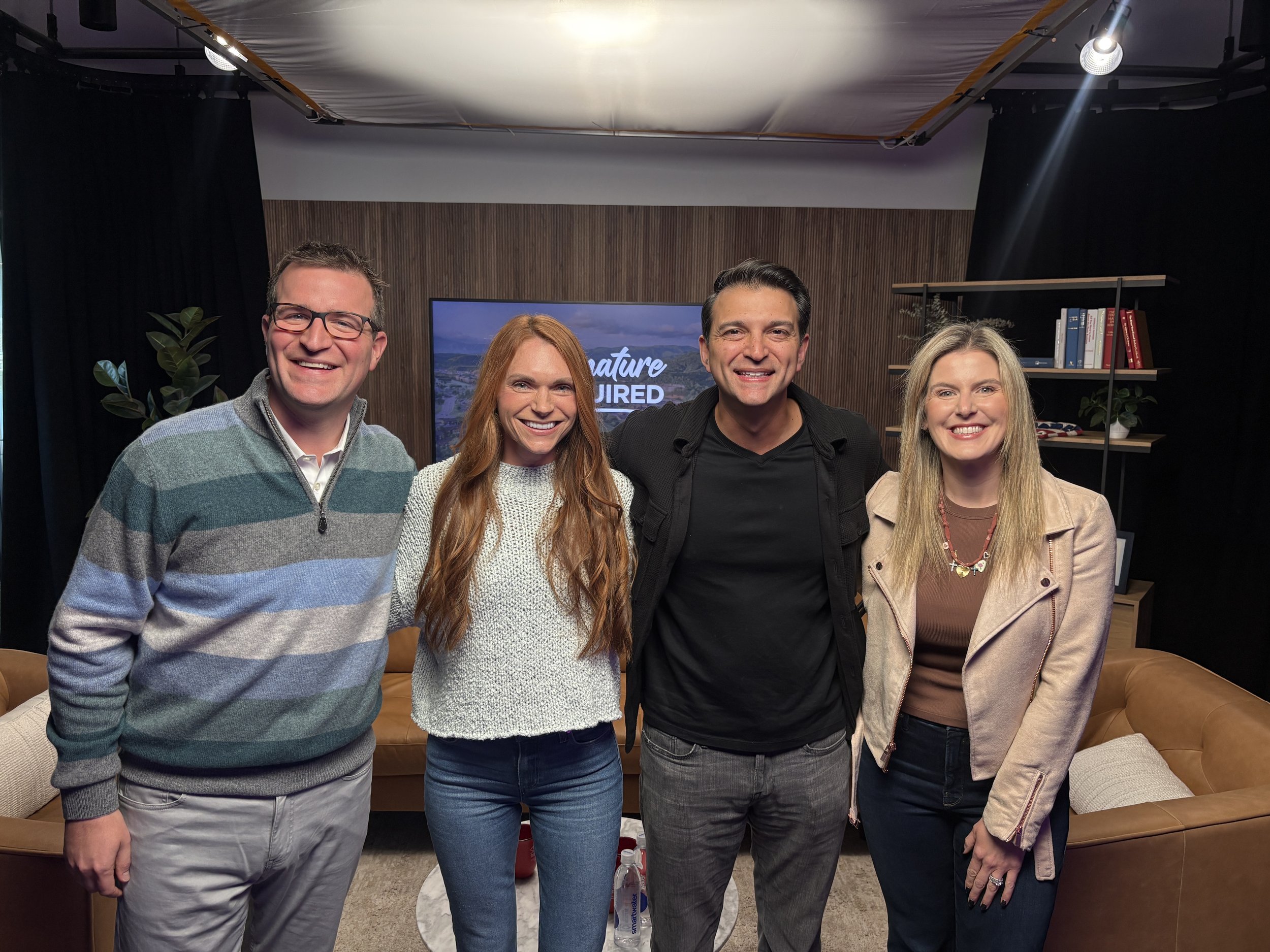
About Rory & AJ Varden
Rory and AJ Vaden are the co-founders of Brand Builders Group, a personal brand strategy firm built on the belief that your story has the power to help someone else. After spending more than a decade helping grow a national consulting firm to eight figures, they made the decision in 2018 to walk away together and start over, choosing their marriage, their faith, and their mission over comfort and security.
That leap of faith became Brand Builders Group, now serving thousands of mission-driven leaders around the world. Rory and AJ are bestselling authors, keynote speakers, and parents of two based just outside Nashville, helping people clarify their calling and use their influence to create meaningful impact.
About Brand Builders Group
Brand Builders Group was founded to help mission-driven leaders become known for what they stand for and build a business around the message they are called to share. BBG is built on the belief that the best ideas don’t win, the best communicated ideas do, and that influence is most powerful when it is rooted in service.
Through coaching, courses, books, media, and a publishing imprint, BBG helps entrepreneurs, authors, and leaders clarify their story, grow their audience, and turn their reputation into meaningful impact and sustainable revenue. At its core, Brand Builders Group exists to help people use their platform to make a difference, equipping them not just to be seen, but to be trusted — and to serve the people they were always meant to reach.
-
Spencer: Rory and AJ Vaden, Founders of Brand Builders Group, welcome to Signature Required.
AJ: Thanks for having us.
Spencer: We don't often get to interview couples, so usually Carli and I get to tag team one person, but we've got two that we have to deal with now, and I, I don't, I don't know, it's gonna take us a little bit to figure out how we talk to two people the same.
Carli: I'm so excited 'cause we get asked all [00:01:00] the time, right? All the time. How do you stand working together? How do you work together and live together and podcast together? And isn't that just a little too much? And so I can't wait to get it into it with you guys 'cause we rarely get this privilege.
AJ: Wow. Uh, that's, I said this before we hit record, but it's like couples interviewing couples. It's gonna be a good time.
Rory: One of the things that I love about working with AJ is most. Spouses never get to see their spouse operate in a professional manner, right? It's like they, they, you know, we're home for eight hours, we sleep together for eight hours, but then that other eight hours you're apart.
Rory: And I love getting to see my wife perform in just a professional capacity. And, uh, we met as business partners before we fell in love. So this is all we've known is building family together. But even before that, we were building businesses together.
Spencer: It is a really fascinating piece that most couples are fighting.
Spencer: Back to back where each is shooting in their own direction. One is shooting north, one is shooting south, but you can feel that each other are there.
Rory: Mm-hmm.
Spencer: But rarely are you given the opportunity to shoot in the same direction because it's one thing we, and
Rory: hopefully you're never shooting at each other.
Rory: That's what we're trying, that's what we're
AJ: trying, trying to only periodically not trying to avoid. At least sometimes. Yeah. Just sometimes
Spencer: That's right because you come home from work and when it's just you, you're trying to relay someone that you met, some conversation that you had something that was funny and you know, it's kind of like trying to describe a dream to somebody.
Spencer: It just. Sounds silly, no matter how well you try to describe it. And so to have the opportunity to do it together is a real privilege and it's unique. And I also like that in a podcast format, it's different than a traditional corporate environment. 'cause I know a lot of people that see Carli and I work together and say, oh my gosh, I could never work with my spouse.
Spencer: Like, we would [00:03:00] kill each other. Mm-hmm. And I think that that can be true in some frameworks of their giftings, but when it's more in a setting like this where you're getting to be interpersonal and conversational, it's, uh, a different feel. Like have, have you all, 'cause that's such a, a part of what you all do is yes, there's corporate tactical stuff, but you all also do a lot of the touchy-feely things too.
Spencer: Does it work in both planes or is there one strength more than the other in what you do?
AJ: You know, I think that's a good question. Uh, I've always likened. Being in business together, like, honestly, like being in marriage together. This is just our, it's a decided choice of who do I wanna partner with. And I'm sure many of us have heard, uh, this at some point it's like, marry your best friend.
AJ: We did. And it's like, I hear people say that to me all the time. I can never work with my spouse. I'd kill 'em. And it's like, would you kill your best friend? I mean, would you?
Carli: Ideally not.
AJ: And so I think there's a lot of it of making [00:04:00] a decided choice of, I, I've decided to be in life with this person. Mm-hmm.
AJ: How do I transpose the personal components of what I love about this person into the business components? And I don't think doing work together is any harder than parenting together.
Rory: Mm.
AJ: Or doing anything else together. And so I think we have learned through lots of trial and error and lots of mistakes of where do I take the lead?
AJ: Where does he take the lead? Mm. Where are my strengths? Where are his strengths? And quite honestly, that's still a really fun endeavor that we're on. Like we learn something new about each other all the time of, huh, I didn't know you operated that way. I'm so glad I found out before X, Y, and Z. Um, but that's a part of the discovery process that business partners should do, that spouses should do.
AJ: And we just get to do both at home and at work. But
Rory: I think, I think. A lot of people don't realize that anyone who runs a household runs a business, runs a business business. Mm-hmm. And [00:05:00] running a household well is like running a business. And so. I think some people go, okay, I'm gonna do more of the professional work and I'm gonna run the household, and that, that can be fine.
Rory: That's still working together. Like in the way that we view it. It's not like, okay, one person does the household, one person does the business, one person does the kids. We just go, there's all this stuff that has to get done and we have to figure out a way to do it together. And that is both in the business and outside of the business.
Rory: And, um, so it, it really is, it's a partnership and, um, you know, yeah, we married, married my best friend and I, I. FI think there's nothing that replaces that idea of knowing that someone has your back and you're gonna be there no matter what. Especially when it gets hard.
Carli: Hmm. I think it took us a minute.
Carli: 'cause we met when we were 19. So yes, I married my best friend, but I've told the story before, but I was the most unlikely of [00:06:00] entrepreneurs. That was not what I was planning to do. Never signed up for entrepreneurship. But we came out in the worst market ever. He, we graduated Vandy in oh eight, trying to find something in finance for Spencer.
Carli: It was a nightmare. And so he is like, I'm gonna do my own thing. And I knew he was the guy, but I didn't know that inter entrepreneurship was like the thing. Right. And so we did that, and then we started, you signed up for a rollercoaster ride,
Rory: Carli,
Carli: it's just like, it's like a parachute jump, right? And then we had kids right away.
Carli: And so we're building our business, building our family at the same time. And it was terrifying. And I think early on, the mistake we made, and now I'm super transparent about it, is I almost felt competitive. Like if he can do it, I can do it. Mm-hmm. And if I can do it, he should be able to do it right. And so I was actually the first hire and fire in our fledgling early company because we put me on payroll.
Carli: Pregnant with two toddlers in the house and you know, who doesn't do math when they're pregnant on no sleep is me. It's just not a good life skill and [00:07:00] people don't like getting paid the wrong amount. Mm-hmm. We learned that. Mm-hmm. And so I was the first hire and the first fire because I thought I could do anything.
Carli: I'm smart enough, I can pull myself together. And it wasn't my gifting with where I was in that time of life. Mm-hmm. And so I think since our secret has been, Spence and I are like left and right brain, we are totally different creatures. I don't ask him to do the things that I know are super easy for me to do and vice versa.
Carli: I in fact, like couldn't tell you our Comcast password. Mm-hmm. Like I promise you there are things that I just am able to let go.
AJ: Yeah.
Carli: Because they're his and he lets go because they're mine. That that's a good partnership. Yes. Mm-hmm. And that's how we make it work.
Rory: Mm-hmm.
AJ: You know, it's interesting that, you know, you say that 'cause it's, that is probably, and the areas that we have grown.
AJ: The fastest and the best, both personally and professionally, is letting each other lead in our strengths.
Carli: Mm-hmm.
AJ: I'm a highly type A organized slightly OCD individual. We were just talking about [00:08:00] that and I
Carli: highly respect that about you. Yes.
AJ: And it's like, I wouldn't, you couldn't pay me to ask Rory to do any organization in the house,
Rory: and I'm a mess.
Rory: And so it works out really great. You gotta marry, I make the messes. She, she organizes them.
AJ: But what I have learned is like in the past I was so, I was pushing so hard for, we have to have equal work.
Carli: Mm.
AJ: Right. Yeah. I'm a working mom. Like,
Carli: well, don't you think that was the message to us for a long time too?
AJ: That has be gotta be equal work, equal, like keep a
Carli: tally.
AJ: And that's actually where most disputes, conflict, interpersonal issues all came from is this whole idea, but has to be equally distributed. Mm-hmm. Has to be, I do this, so you need to do this, I do this in the home, so you have to do this in the home.
AJ: Uh, and it's like, well actually that's what didn't work, was trying to make it equal. It's the parts that were the unequal parts of doing what you're naturally good at, the things that you enjoy, the things that come easy to you, even if you do all of them. Mm-hmm. You do it better faster and you have more fun.
AJ: And so I think it's finding that in each of us, [00:09:00] and that's what's worked. At least. I think so. Mm-hmm.
Spencer: Mm-hmm. So I want to talk about what y'all actually do together, which is the brand builders group. Um, there's so much that we can do, like the. Title. The headline of the business I think is intentionally broad in that you could define building a brand in a ton of different ways, but one of my favorite ways that you all help build people's brands is helping scratch an itch that most everyone in life has said to themself at one point, which is, I should write a book.
Spencer: Most everybody has said that to themselves and to the attempt, to the extent that they try it, they regret it, and a lot of times, right, of like, oh my gosh, I'll never do that again. So I would love to hear you all start to explain Brand Builders Group to those that don't know what it is, first, through the context of [00:10:00] helping people on that journey of writing a book.
Rory: Yeah, so Brand Builders Group is a personal brand strategy firm. So we don't do branding for companies. We exclusively work with individuals, people that we refer to as mission-driven messengers. These are experts. They tend to be authors, speakers, coaches, consultants, or they're professional service providers.
Rory: They're an expert of some type, and they really wanna make a difference in the world. Um, you know, our new book is called Wealthy and Well-Known because our clients care about money and they care about impact. They're not trying to be rich and famous, though. They just want to make a difference in the world.
Rory: And, you know, they know they need money to operate that, but it's, it's really about impact. And so a book is probably still the best way to codify a person's philosophies and beliefs into this. [00:11:00] Commoditized package that, you know, you can hand this to someone and go, here's who I am, here's what I've learned, here's what I've been through.
Rory: And you know, I've, I've now written five books. Um, this most recent one AJ and I wrote together, which was also a new, a new journey, um, of writing together, which was wonderful. And I think we help people figure out who they're most. Well positioned to serve. And you know, one of our big findings is that you're most powerfully positioned to serve the person you once were.
Rory: And so we help clients figure out how to extrapolate their uniqueness. And one of the things that we do is help them codify that in a book. And then what we're really well known for is helping people market and sell the book, which is what nobody knows how to do. So that's the, but the book is just one piece of a whole [00:12:00] ecosystem that builds a, a personal brand.
Rory: And so we talk also about speaking social media, podcasting, you know, email marketing funnels, uh, you know, sales and building sales teams. All oriented for just personal brands. But a book is a very. Important part of the, of the journey. And, uh, we've worked with some of the, the biggest authors in the world, all the way down to people who are just self-publishing their first book and just, you know, have an idea and a passion.
AJ: Hmm. One thing I would add, if I can, um, about why we're so passionate about books, and we say this a lot to people in our community and just friends, to be honest, it's like the book is the last thing you do, not the first thing you do. And if you haven't thought to yourself, I should write a book, then very often when someone hears your story, if you tell a testimony, they're going, you know what?
AJ: You should put that in a book. Mm-hmm. Right? And I think a lot of that is because there's something capturing about it, but it's the last thing. [00:13:00] It's the conclusion, not the hypothesis. And where most people make the mistake is they write it too early and they don't have the ideas most fully vetted out, or they don't have the stories fully expanded or they're not willing to share.
AJ: The parts that actually capture a reader. But we fell in love with books a long time ago and I was re reminded of why books matter.
Rory: Mm-hmm.
AJ: And if you just think about it for a moment, how long does it take someone to write a book? First of all, it's a historical document for most of us of stories that expand our entire lives.
AJ: Experience, expertise, education that expand over decades. But then you just think about the actual time to sit down and write. And for some it's weeks, for some it's months, for many it's years.
Carli: Mm-hmm.
AJ: And then you think about how much prep time do most people do to, not you guys, of course, 'cause I'm sure you did hours and hours, but how much prep do people do for a podcast?
AJ: Or how much prep do they do [00:14:00] for a blog? 'cause people act like people don't read books anymore. There's blogs, there's social media, there's podcasts, and I'm like, I don't even prep for a blog or social media content piece. I don't even think about it. I just turn on the camera and see what's ever on my mind.
AJ: If you're sitting down and writing a book. That is not what you're doing. It is thoughtful. It is intentional. It is researched, it is documented, and that's what has the power to change a life. I've never heard anyone say A podcast changed my life. A blog changed my life. Social media posts. This real, I saw it changed my life, but I hear people every day including me, going, that book has changed the trajectory of my life.
AJ: And I think that's the power of a book because it's the culmination
Carli: mm-hmm.
AJ: Of so many things into one summarized document. And that's why we love them so much.
Carli: Well, and there's something about a book that you can pass along.
AJ: Mm-hmm.
Carli: There's this value of you can read and you can digest it, and then you can be like, Hey, this touched me.
Carli: I want to hand this to you. And when you were talking, it really resonated. [00:15:00] I feel like there's a book in me someday. I know a lot of people that feel the same way, but there's this old adage that I think is true is you kind of gotta wait for a few people to die to tell your story sometimes. Is that what you're finding with people when they don't have their stories fully formed or they're not quite ready to write it?
Carli: How much of it is the personal journey? Has it come to conclusion? And how much of it is stories include other people and there is this sensitivity of writing what you learned and including other people's stories when maybe it's not yours to tell?
AJ: You know, it's interesting. I would say what I have found, and your answer might be different, is most people don't know how to say what they wanna.
Carli: Hmm.
AJ: It's like they know that they have a message that they wanna share or there's a story that's impactful, but they don't know what the point is for the reader.
Carli: Hmm.
AJ: And so there's some sort of roadblock of, I know I wanna do this, but I don't know exactly what I wanna say. And that's why some books would make [00:16:00] better blog articles than a book.
AJ: Right. It's a hundred pages. That should have been one page. Mm-hmm. And that's because they're expanding on the same thing and sometimes it's 'cause they're not willing to go there. Or I think often it's because they haven't sat down and actually said, this was a story that happened to me. What is the message I have for someone else?
AJ: What's that universal message?
Carli: How can it serve?
Spencer: That's
Carli: it. They're still
AJ: in. And that's what I have found is most people who get stuck in the process can't actually articulate what it is they wanna say outside of. What they think they wanna share. And that to me is what I have seen.
Rory: I think that's the biggest mistake in general that people make with a personal brand, is they think it's all about them.
Rory: And so they either go on this sort of vain promotional tour, or they hide and go, Ooh, I don't want to try to be vain. And I, I don't wanna look like I'm attracting attention. Uh. Or they do, they or [00:17:00] they don't, you know, they, they, they do share things, but it's so self-centered. Mm-hmm. And building a personal brand, it should not be self-centered, it should be service centered.
Rory: And the time to write a book is when you have something to say that can help someone else. Mm-hmm. And so one of, one of my speaking mentors is a gentleman named Craig Valentine and he was the 1999 world champion of public speaking. And he taught me in speaking, 'cause that's one thing we do a lot, is stage presentations.
Rory: And you know, we coach people on that. We speak all over the world. And Craig said. The goal of a story is that you tell an I focused story with a you focused message. So you, you, you tell a writer a centric story, but a reader centric message. And that's what most people, they can, can't translate their expertise.
Rory: They can't translate their life story into how to make this useful for somebody else. And so we just, we developed a system and a process for taking [00:18:00] people through a journey that automatically does that and extrapolates, you know, their life stories and their lessons out of their head into a body of work that can be transmitted and be useful for other people.
Carli: Hmm.
Spencer: Yeah, Rory, that's where I was going next, because the feeling that I have, hearing those answers and thinking about writing a book makes me. Five times more intimidated to write the book after hearing those, like, those are deep philosophical questions and if I have to have answers to those things, like I'm definitely not ready to write a book.
Spencer: Like, and I think that's part of it because what I hear in your answer, AJ, is that there's discipline that is required. Mm-hmm. That some mediums of expression are best somewhat on the fly. You want that authenticity that is just only natural and you lose it if it's rehearsed in a book, it sounds like is [00:19:00] at the other end of the, uh, spectrum that while authentic, it has to be structured and engineered in a way.
Spencer: So is that fundamentally what you all. Help people do is you pose the questions and intimidate the heck out of them with the questions, but then help but with a smile. Help them through that with one
Rory: smile.
Spencer: Yes. But then help them through it. Like is that part of the process?
AJ: Yeah. Like one of the things that I think people get confused on all the time is one, what is a personal brand?
AJ: Mm-hmm. I think a lot of people naturally associate with this word brand or branding with marketing. They think logos, aesthetics, fonts, typography, they think social media posts, they think all the visuals. Mm-hmm. Mm-hmm. And when we talk about a brand, it's
Carli: none of those things,
AJ: right? It's, it's the, we say, we call it brand DNA for a reason.
AJ: It's the DNA of what mu what makes you who you are, which is undeniably and possibly. [00:20:00] Copyable.
Carli: Mm-hmm.
AJ: Like it, you're already undeniably unique, Justin of that. And what we're all we're doing is we're asking a series of very purposeful questions in a very strategic order to bring out the things that you've gone through, the stories that you've, you've gone through, the experience have you had, and we're, you know, the benefit of us is we are just far enough removed from who you are that we can hear things that you can't hear yourself.
Carli: Mm-hmm.
AJ: And that's what our team is trained to do, is to listen for the congruencies, to listen for everything that has a natural through line and a thought pattern that sticks out to us, and we would present it back to you. And so it's, it's conversational in and of the structure because it's your story.
AJ: It's like, we don't build it for you, we don't create your thought leadership, it's yours. We're just pulling it out of you based on the stories and experiences that you're willing to share. And so it is, it's a [00:21:00] strategic questioning that we do with a really thoughtful process, with a big smile no matter how hard the question is.
AJ: And you know, it's amazing how many people when presented with the question in the right way are going, I've never thought about it that way. Mm-hmm. Or what they think is, and here's what happens most often for all of us. We underestimate the power and the value of who we are and what we've done. That across the board, I don't care who you are, you think, well, nobody cares about that.
AJ: And I'm like, yes, they do. Like that's unbelievable the amount of stories that we've heard people tell or experiences and expertise. And I'm like, how could you possibly think that's so insignificant? It's not even in your bio. And it's because it's so common to them. They don't realize how truly extraordinary it is.
AJ: And that's what happens a ton is by being the unbiased outside party, we're able to hear things that people can't see [00:22:00] or even remember about themselves. Hmm. And then we just present it back to you.
Rory: You bring up a good, you gave, bring up a good point about, about the fear. Mm-hmm. Is, so there's two things we help people with.
Rory: One is the logical structure, the process to help, help pull them through it. The other is the emotional coaching to help people move past these fears. And one of the things that we discovered is there is no fear when the mission to serve becomes clear. Mm-hmm. When you're focused on, I have to write a great book, I have to say something meaningful, I have to do something that sounds smart.
Rory: All this fear and pressure shows up.
Spencer: Ah.
Rory: But the moment you say, what can I share that would be useful for someone else? All of the fear goes away. So service is the number one thing we have to help clients orient towards because if they have a [00:23:00] heart posture of service, it not only helps them move forward, it clarifies exactly what should be shared and what should not be.
AJ: Mm-hmm.
Rory: Because they're relentlessly dedicated to serving the person. And so it's not so much what's gonna be good for me, it's going, I've lived through these, God has put me through this, these series of struggles in my life. And from that I have learned these certain lessons. It actually becomes selfish to not share those with other people who can benefit from them.
Rory: And that's why we say you, you're most powerfully positioned to serve the person you once were. So when you really latch onto that and you, you let go of, oh, this isn't about me. Hm. It's just about the audience. Mm-hmm. Now you've got something magical that can, that can really affect the world, and that's how you also emotionally push past the [00:24:00] like perfectionism and the like imposter syndrome and all these other weird emotions that kind of like come up that would normally hold someone back.
Carli: As you say that, it's like there's an unlocking in my heart and I immediately know that to be true because in experiences where we've done events or different things, there are the moments where you get in your head and you feel like you have to be on and go and do, and I'm gonna serve darn it. Like, and then there are the moments where it just comes from your soul and you can't help but push the extra mile.
Carli: And I think there's something deeply spiritual about what you're doing, which is that. I've had a paradigm shift through struggles we've had in the last couple of years, whether they be professional or personal. It's like, I just don't believe God wastes an ounce.
Rory: Amen. Amen.
Carli: There is not a story, there is not a tear that I have shed that he can't use.
Carli: And I think a lot of times there's this ego where you wanna polish up the story or even get to the end of [00:25:00] it and be like, but see that silver lining? Now I know why God did all of that, but the truth is you don't always get to know. Mm-hmm. All you can do is share what you learned, why you were in that struggle bit by bit.
Carli: And I think that's the scariest thing for people to do, is they wanna be the expert and they wanna tie it with a bow. But I think the authenticity of what you're trying to bring out of people is needed so much more in this world. I wanna read that book.
AJ: Right. You know, and that's a great reminder if we all just sit and think about the people or the stories or the interviews that we've heard.
AJ: There's an automatic draw to someone who is willing to share the struggle.
Carli: Mm-hmm.
AJ: Uh, I have never in my life ever had anyone come up to me after a podcast or a keynote and go, aj, I just loved hearing about all those success stories. I loved hearing about all the awards and accolades. Could you please tell me more?
AJ: That has never happened in my life. Sure. But when you're willing to share the nitty gritty, [00:26:00] vulnerable, like this was the worst of the worst. Right. This was the day I got fired. This was the day my mom died. This is the day that I thought I wasn't important. This is the day I lost my identity. Those are what people, all of a sudden they're like, whoa, whoa, whoa.
Carli: Mm-hmm.
AJ: I can't believe they just shared that. Like that's me.
Carli: Mm-hmm.
AJ: And that's what makes not just a great book, but that's what changes a life. Those are the great stories that people latch onto. 'cause they're like, I'm not alone.
Carli: Mm-hmm.
AJ: And you're relatable. And like that is what that vulnerability is what people latch onto.
AJ: It's, I think people build connection and the struggle.
Carli: Mm-hmm.
AJ: Not the victory. The,
Rory: the, the story is the struggle. Like the struggle is the story and not a manufactured fiction story, but like your actual biographical nonfiction story. And, you know, it is, we believe it is divine. Like, part of why we're so passionate about this business is because [00:27:00] we believe that what breaks your heart breaks your heart for a reason.
Rory: Mm-hmm. Because you were divinely created to do something about that. We believe that the, the struggles you've experienced were a, a part of your life because it shaped you, right. The, the pain and the problems that you have overcome have shaped you and made you and molded you into the person that you needed to become so that you could one day reach back and help.
Rory: Someone else going through that, and all of a sudden that creates a context for all the pain you've experienced. When people go through pain, they our natural instinct to say why, right? Mm-hmm. Like, why, God, why is this happening to me? But what if The better question was not to ask why, but to say who, who is, who is gonna benefit from the pain that I am enduring right now?
Rory: Who is gonna be the beneficiary [00:28:00] of receiving the lessons that I am I am learning? Because that, that is our purpose, right? You, you know, there's the, the famous Simon Sinek book, and we're both huge Simon Sinek fans. We love Simon Sinek, you know, but he says, start with why. One of the things we tell our clients is, no, you don't start with why.
Rory: Why? If you ask, why am I doing this? Why, why, why are we in this business? You almost always get convoluted, unclear answers. The real hack is to start with who. Mm-hmm. Is to say, who am I meant to serve? Who am I writing to? Who am I talking to? Who am I podcasting for? The moment you get clear on who you're serving from a tactical perspective, every other single downstream business decision becomes clear.
Rory: You know where to market, what to say, what to sell, how to price it, because you know exactly who you're trying to reach, but also from a spiritual standpoint, [00:29:00] it gives your life purpose to go, I'm living for someone other than me. And, and there's that, that intersection of both your, your career and your calling that happens when you ask who.
Rory: And that's, that's really one of the very first pit stops that we take people on is clarifying their who.
Spencer: I, I wanna ask you all a brave or like, challenging question to see if I can help give some insight for some people that might hear the concept of developing a personal brand and just recoil at that right away and say, you know what, culturally it's not gonna be about me.
Spencer: I'm not gonna talk about me. And the concept of developing that is just really too much mm-hmm. To say. [00:30:00] And, and some of those people interestingly, have the most to add, the most to say mm-hmm. Their experience, their humility is what has allowed them to be a trustworthy person, to be vulnerable. And so even as a precursor, before you ever get to talk to somebody.
Spencer: If you're talking to someone that hears a title of wealthy and well-known and says, oh, I couldn't even begin to relate that to me, and then further to say, I don't know that I'm comfortable with a personal brand. How would you talk to somebody like that? That so much depth and richness is there. Yeah. But is never gonna see the light of day.
AJ: Yeah. So I think it's really important for people to understand our definition of a personal brand, which is the formalization, the digitization, and the monetization [00:31:00] of your reputation. Everyone has a reputation. Yeah. Thus, everyone already has a personal brand.
Rory: Hmm.
AJ: Personal brand is a new terminology. The I, the concept of personal branding is not new.
AJ: The terminology is new. Right. Brand deals have been happening for decades. Right. I remember as a kid sitting in front of the TV watching Michael Jackson do his dance moves to Pepsi commercials. Mm-hmm. That was an NIL deal. Now, NIL is a new term, but brand deals are not. It's the same thing with a personal brand.
AJ: It is your reputation. And I think the biggest mistake that people make is not, you know, what is a personal brand or do I need one? It's thinking they don't have one.
Rory: Mm-hmm.
AJ: Like a personal brand is simply what people think about when they think of you.
Rory: That's
AJ: interesting. And if you're not intentional with that, then you get one by default.
Rory: Hmm.
AJ: And people come up with whatever they [00:32:00] want to because you're not proactive in sharing your beliefs and your values and your message and your story and your expertise. It's like any of us could sit here and go, if I was gonna go to the best new restaurant in Nashville, Tennessee, who would I call?
AJ: Right. And I immediately think of two people who are complete foodies, and I'm like, that's who I'm going to. Right. That's a personal brand. Like if I'm looking, if I'm looking for a new hairstylist, I personally do not go to Yelp or Google to go best hairstylist in Nashville.
Carli: Mm-hmm.
AJ: Who do I go to my girlfriends who have amazing hair and go, who does your hair?
Carli: Mm-hmm.
AJ: Right. Those are personal brands. That is what I think about when I think of those individuals because it's what they talk about. That's where they spend their time. It's what they post about. They're already telling me this is who I am, this is what's important to me. The act of personal branding is just putting the thought and intention behind your reputation so that when someone thinks of [00:33:00] you, it's absolutely aligned with what you want them to think of and what you want them to know about you.
AJ: That is the difference.
Rory: Mm-hmm. So this is a great example too, of how, when I said earlier, there's like, there's a logical side of this, a logical reframing, and then there's an emotional side. Yeah. So AJ just gave you the logical reframing, here's the emotional reframing. I think a lot of people who say, I don't wanna build a personal brand because I want to be humble.
Rory: I, I, I wanna have humility. I don't want it to be all about me. And they're operating in the belief, in the mindset that by, by being humble. That humble means hiding and that if, if, if nobody's hearing about me, that's me being humble and they think perhaps that's a spiritual quality.
Spencer: Yeah.
Rory: That they're not seeking attention for themselves.
Rory: But I would suggest at least offer for consideration to say, is that [00:34:00] really a God-given belief, that being you're supposed to be humble and that you're supposed to be quiet? Or is that potentially a, a limiting belief that is from the devil because all the devil is, is a liar, is the only tool he has. And if he convinces you that you being quiet and hidden is what you should be doing.
Rory: Then you are never a light on a hill, right? You're never, you are never flipping over tables. You are never, you're never changing lives. You're never bucking systems. You're never like, you know, and I'm, I'm obviously referencing to Jesus and you know, we happen to be hardcore Bible thumb to Jesus freaks, right?
Rory: So I just at least speak from that narrative is to go like, you know. Being, being humble is, is not the same as like being quiet or being hidden. Mm-hmm. It's all about who you're doing it for. Are you doing it for yourself [00:35:00] or are you doing it for the benefit of others? Right. I think people would say Jesus is humble.
Rory: He's also the most famous person that has ever lived by a long shot. It's not even clo. There's, there's no one even in the game of fame that competes with Jesus. Whether you believe in him or not. You've heard his name, you know his story. People, millions of people worship him thousands of years after he lived.
Rory: So you go, that's what impact looks like. There's nothing that suggests that impact comes from being quiet and secret and hidden. And if you believe that, I would at least challenge you to go, is that, is that God or is that something else? Because if nobody knows about you. They're not buying from you, and they're certainly not having their life changed by you.
Rory: Hmm. Um, so that's just a, a way, another way to think about it.
AJ: It's not doing anyone any service being the world's [00:36:00] best kept secret. Hmm.
Carli: And I think you touched on something that's probably a really big deal in your industry, but I think it's in the world at whole as you're talking about making sure you know the definition of the thing that you're claiming about, whether it be personal branding or humility.
Carli: If you're gonna make a claim about something, know, know the common definition. And I just think our culture is appropriating words. Mm-hmm. It's, they're just semantics are changing every day, folks and things that used to mean one thing means something completely different today. And so really looking and digging down at like, what do I believe?
Carli: Why do I believe it? I'm not gonna throw out these words without getting a definition and then seeing them in context. And that's true in scripture. That's true across religions and worldviews. I happen to be a Bible thumping Jesus lover also. So this is like. My soapbox that I preach in our house and when I used to do ministry work is it's like, what does it mean?
Carli: And we throw around all these words, humility, [00:37:00] but that we are righteous, that we are redeemed, that we are justified, that Jesus is sent from heaven. What does this, what do we mean? Mm-hmm. And the world is gonna tell a lot of people what they think we mean. And it's our job to make sure that we define what we mean in a humble way.
Carli: But it does nobody a service to let people paint Christians or believers that are intelligent with a story to tell, with a business that serves people, to paint us as one way in a corner without knowing the truth about what we're saying.
AJ: And you could really take that exact same thing and go and for your business.
AJ: Mm-hmm. And for your family and for yourself. And that is in, in our world, right? Mm-hmm. That is. Building your personal brand. It's taking the culmination of all of your life experiences, all your experience, all your expertise, academically, firsthand, all your stories and wrapping them up into who you are.
AJ: That is a personal brand.
Rory: And you know, and, and, and that's the [00:38:00] way we define personal branding, right? You notice in the very beginning you were like, tell us about, and I said, we serve mission driven messengers, so we serve a very specific type of person, right? We, not every personal branding firm out there would agree with what we say, but this is how we do it.
Rory: And part of why we're working with people like John Maxwell, right? And er, we, Irwin McManus is a client and Matthew West, and also at my lead and Lewis Howes and Amy Porterfield, and all of these, uh, you know, Jasmine Star and Trent Shelton. It just goes on and on. Cody Sanchez, these people who are making huge impact.
Rory: Is because they align with what we believe and what we believe is this isn't about you, it's about your audience. Um, but that it doesn't, but you, you are gonna be seen in the, as a byproduct of, of reaching people. But that's not the end goal. The end goal isn't about you. It's it's about them. And you know that, I think [00:39:00] service is the greatest, most inspiring form of motivation there is.
Rory: It's like money ambition drives you for a while, but then, you know, you, you get a certain amount of money and it's like, ah, more money is not that inspiring. You know, competition drives you for a while, but then it's like, well, well you're number one or someone knocks you off or whatever. Like that kind of runs out.
Rory: Uh, you know, so ambition. Competition, they fade. But mission never fades. You never get tired of helping someone else. It never gets old impacting another person. And you never get satiated going, my work is done. I have now impacted the exact number of people I was meant to impact. So you can serve one person and feel deeply fulfilled and also a drive to do more.
Rory: And, and you could serve a hundred [00:40:00] million people and not feel like you're doing enough, but still be excited about the impact you are making. And to us, I think that's invigorating. And you know, I think we realized after we exited our first company, that we felt like God was was saying. Help me multiply the message, right?
Rory: Help, help, help the good guys be heard, help bring more awareness, and, and not just to build our own personal brands, but to really multiply the messengers and try to apply what we've learned to other people who have something good and meaningful to share.
Spencer: Hmm. Rory, you used a phrase twice so far to say that you're most powerfully equipped to serve the person you once were, and I wonder if you can spend a little bit more time expanding on that, because there's part of me that hears that and says.
Spencer: Man, the person [00:41:00] I once was, I don't want to go back to being that person. I have things that I don't want people to know about who I was at that person.
Carli: Is it the jorts that you used to wear? Is that the part that we're not revisiting?
Rory: Can we get a picture? Uh, can we drop a
Spencer: shot?
Carli: The show notes,
Spencer: I'm sorry, the last 20 seconds of the podcast just cut out for everybody.
Spencer: But, um, you know, so there's, and there's also a part of me that, that it comes across as a little, like the only framework that I can imagine as like a self-help book to say, okay, here are things that. You could do better because I've learned it and I know that you're not trying to like pigeonhole people into to that framework.
Spencer: So can you just help like expand that sum? Yeah.
Rory: For
Spencer: people that, that hear that, but are trying to figure out what that means.
Rory: Sure. Well, well number, number, number one, if, if you say, I don't want to, or I feel [00:42:00] like, or I'm worried that you're already in the wrong head space. 'cause everything is I, I, I, I I.
Spencer: Okay.
Rory: Right? All that matters is you, you, you, you, you, how can I be helpful to you? But Spencer, you are the epitome of this. We are in a building where you have a set of companies. That you have dedicated your life to building tools and technology and systems and community and culture for people who are doing what you once did.
Rory: You solved problems for yourself, realized other people had these problems and built an empire. Y'all have built an empire around supporting this. That first was, you know, a regional and then it was a company and it was just FedEx. And now you're expanding into all these people who do you know, have routes and different types of businesses 'cause they all have the same problems.
Rory: Like you are the living example of an entrepreneurial success story of doing this. [00:43:00] So it's not to say I have this all figured out, it's just to say, here's what I screwed up and if this can be helpful for you, here's what I created that helped me. And you know, if it's helpful for you, here it is. And if it's not, it's not.
Rory: But. You've got a huge business and it's like the weirdest business of any of our friends. I mean like you help such a narrow, specific type of person and you serve them in such a deep way. So
AJ: I just wanna pause right there. How are both of you able to serve these people in such a deep way? How do you know them so intimately?
AJ: How do you know what they need?
Spencer: Yeah. 'cause we've delivered off the FedEx trucks that literally together. Yeah. Ran
Carli: packages.
Spencer: Yeah. Yeah. We've run from the dogs,
AJ: but that's it. Run from
Rory: the
Carli: dogs,
AJ: hit the mailbox. Literally your most intimately acquainted with the experiences that they go through. [00:44:00] You know what it's like to be them.
AJ: You know what fears they have, you know what dreams they have, you know what their schedule looks like. You know the demands. That's what we mean.
Spencer: That's an amazing framework. You all are good at what you do. That is a really helpful, I know you
Carli: got
Spencer: him. Yeah, you
Carli: got him.
Spencer: Yeah.
Carli: There is this interesting thing, and I, I think maybe you and I have talked about it with different terminology that's, I collect sheep.
Carli: I just had this moment with the Lord years ago in prayer and in this moment and another you collect sheep. I collect like art of sheep, like, of drawing, of sheep, sheep renderings. I guess
AJ: I was literally thinking where in your,
Carli: where in my house you have the sheep in Brentwood, Tennessee, there is a flock.
Carli: No. Um, but I felt the Lord tell me, love my sheep, like my purpose on this earth is to love my sheep. And I, I don't, it's one of the few times I could tell you that, like I heard it, I felt it. It's in me and I have like images and art and I put it different. I even draw sheep every time it says sheep in my Bible.
Carli: Like I draw it as an [00:45:00] anchor because I wanna stay true to what he has called me to do. And so we talk a lot about sheep, I guess, but. And shepherding. And I think when you say, how do we know the pain point of a contractor or last mile delivery, it is a flock that we never asked for. But I'm so grateful the Lord gave us
Rory: Amen.
Carli: And it's, I don't think that you get to pick your flock. I think the Lord puts a staff in your hand and you have no sheep, and you just start grinding and then the flock appears. And that I know is what happened in our story with this business. And as our business is pivoting and we're serving and figuring out what might be next for us, I'm literally praying into who is our flock?
Carli: Like what? What sheep am I meant to love? Because it is a profoundly interesting moment in time when you've had a defined flock, and then the best way to serve them is you've trained their shepherds, right? [00:46:00] So who is your next flock to serve? And so that's maybe the terminology, the biblical imagery that beautiful we used because it came from a moment in time.
Spencer: Hmm. I'd love to just. Hear a little more about your all's backstory. 'cause like the, the wisdom and knowledge that you bring is,
sorry.
Rory: We encourage people to share their personal stories. We don't actually share our own personal stories.
Spencer: That's amazing. Okay. That was well done too. Uh, so I just would love to hear more because you just bring a lot of stuff to the table.
Spencer: It's like, how do y'all learn this stuff? I mean, like, you can read and put it together, but maybe just give us a little bit of the, the, the arc that has you here in Tennessee too. 'cause I think that's also really relevant for a lot of people that listen. Like there's a lot of born and raised Tennesseans that are here.
Spencer: Uh, but there's a lot of people moving here. So just give us whatever you [00:47:00] wanna highlight from that side.
AJ: Well, I think, you know, to answer the first half of that is how have we learned all of this? It's, uh, we learned a lot of it through trial and error. Mm-hmm. It's like from. The day that we met, I was 22.
AJ: You were 23. We were fresh out of college starting our first business. It was, it was the, this was knocking on doors, this was calling through the yellow pages going like, there's gotta be an easier way to do this. Mm-hmm. Like there's gotta be a better way. And then going through the process of writing the first book of like, why is this so hard?
AJ: We just thought someone would wanna like pick it up and trying to get an agent and trying to get a publisher and we're like, we don't understand what's happening. And learning, try to figure out social media and learning the speaking business and going to NSA and listening to panelists who sit up there, who going, well, our just phone.
AJ: Our phones just ring. I'm like, but who? Who's calling them? How do they ring? Like how are you making this happen? Yeah. And you know what we learned through that whole process is it felt like there was this giant black curtain and we were on one side of [00:48:00] the curtain and we didn't know anything. And then there was a curtain and everyone else was on the other curtain sharing secrets with each other.
AJ: And we were. What's behind the curtain? Mm-hmm. Like who has the secrets? And what we realized is that, oh, they're not sharing because they don't know. Oh, they don't really know what their phone is ringing. They, this was a different world for so many people in our space when there wasn't hybrid publishing or self-publishing and the publishing industry owned it.
AJ: Right. And it was so difficult. And there was the ivory tower that's falling, that's tumbling down, and with speakers where it was dominated by middle-aged white males. Right. That doesn't exist anymore. And through those transitions, what we learned over the last 20 years is, oh, they don't know how this happens.
AJ: Who knows? And. I think where Rory is so gifted is he sees and he dreams in acronyms. Like he, he thinks [00:49:00] in, uh, processes and frameworks and he's able to take very diff difficult and complex strategies and simplify them, and very easy to use terminology and memorable frameworks as a gift. Right. That's an artistry that he has.
AJ: And I think for us it was the frustration of why is this so hard? Mm-hmm. Why won't anyone tell us? Like, why are they keeping all these secrets? And then to realize, oh, they're just not telling us. 'cause they don't know. Mm-hmm. They can't articulate it. Mm-hmm. And so the question is, well, who else if not us?
AJ: And so it was a 20 year process of documenting and learning and doing. I know it doesn't look like we've been doing this for 20 years. We look so young babies,
Spencer: just
AJ: fresh face babies. But it's been 20 years. All right. It's been 20 years. Uh, literally cold calling, door knocking, trial and error testing, te learning.
AJ: Mm-hmm. Reading, writing,
Carli: failing,
AJ: paying, failing. Uh, we've spent [00:50:00] so much money doing all the things to learn, all the things, to be able to consolidate and condense them and to what we know provide.
Carli: Hmm.
AJ: So it literally has been the process of going through it. And when we say, you're most powerfully positioned to serve the person you once were Right.
AJ: That's what we're doing for our audience, is that person who says, I wanna write a book. And we're going, oh, we know exactly how to help you. Or the person who says, I wanna speak on stages. We know how to help you. Or the person who says, I wanna generate more leads, uh, the right leads. We know how to help you.
AJ: You know, it's like that's why they're, they're our target audience, because I'm like, we have been in your shoes. We are in your shoes. We know exactly what you're thinking, exactly what you need, and we know how to help. Mm-hmm. And that's why they are our target market.
Rory: Mm-hmm.
AJ: What would you add to that?
Rory: Not much. That was, that was really good. That was good. I mean, I, I. I remember the first time I sat in an audience and watched a speaker on stage who just delighted me, made me [00:51:00] laugh, made me cry, blew my mind, inspired me. And I remember having thought, I want to be able to do that.
Spencer: Hmm.
Rory: Right. And then it was years and years and years of learning the psychology of laughter and how to tell stories and how to come up with frameworks.
AJ: Y'all, Rory used to do prac to practice 'cause he is a practitioner would, uh, sign up or open mic nights at comedy joints. And I would go Really? And I would go and
Rory: I'd be like, very hard was worse. Oh my gosh. It was bad. We have some footage
AJ: of it that I'm,
Rory: oh, it's so hard. It's so hard because one, you know, we, one of the things we teach is present the art of presentation.
Rory: Yeah. And, and a subset of that is the psychology of laughter. And why are we so good at teaching it? Because I am so terribly unfunny. But I have learned
AJ: some basics,
Rory: the system of what causes an audience to laugh. I can't make people laugh very much in like small settings, but in a room people are always like, I had no idea You were so funny.
Rory: [00:52:00] Because it's, it's, it's a system. And, and the key to the system is surprise. It's, that's the whole thing is misdirection. Well, in a comedy club, they're sitting there going, all right, dude, like, crank out some jokes. That's next. Yeah. You know, make me laugh. And so the whole, the whole premise of what makes a laugh is like, it's the hardest in that environment.
Rory: Whereas, you know, speaking at your event would be a cakewalk. Everyone's like, they just expect you to be some normal industry speaker or something. And it's like, you have a few things in there and they, they laugh. So, um, yeah. But yeah, so I did study that and I, you know, I remember the first time walked into an airport and looked at a book on the shelf and it had a New York Times bestselling, you know, New York Times bestseller sticker on there.
Rory: And I was like, how do you get your book in this airport? And how do you get that New York Times bestseller on the cover? How to get that sticker right? Like, um, and you know, we, we hit the New York Times with this most recent book, a second, my second [00:53:00] hit, AJ hit on her first book. Um, so, but we've had 22 of our clients have hit the New York Times bestseller list in the last couple years.
Rory: A hundred of our clients have hit the national bestseller list. And it's just because we had a dream and then we reverse engineered it into a process after trying a bunch of stuff that didn't work and we're like, well. You know, we can tell you 995 things that don't work, and we can tell you there's only five things that really matter.
Spencer: Yeah.
Rory: And if you do these five things, you're gonna get the same result. And then we just repeat it again and again. And, and anyone who, anyone who has endured heartbreak, that's where your credibility comes from.
Spencer: Hmm.
Rory: Your credibility doesn't come from your degree and how much money you make, your credibility comes from the fact that you have walked the path and you know what it's like to cry and celebrate and hope and be crushed and [00:54:00] bounce back and you figured it out and, and that's where the credibility comes from.
Rory: And so I think the question everyone should ask themselves is, what challenges have I conquered? What obstacles have I overcome? What setbacks have I survived? What tragedies have I triumphed over? Therein, somewhere in there lies your uniqueness. And all we did was create a process to help facilitate people through that, to really grab that uniqueness, and then a process to extrapolate that into a book, and then a process to go, how do we take this book to the world?
Rory: And then a process for how to turn it into a business. And it turns out our flock. There's a, we never thought that would be our flock.
AJ: Mm-hmm.
Rory: But God handed us the stick, said, figure this out. And you know, now we have our own little weird group of people who are weird like us, and we're, we're going, Hey, if you're weird [00:55:00] like us, we can help you and we can serve that one narrow group, mission-driven messengers in a very deep way.
Rory: Exactly what you guys are doing
Carli: as you talk about your people and what you've overcome and how you're serving, I have to take like a little bit of a hard left here because I would say your top two sheep are your boys. Right. That you get to shepherd. And how I'm struggling with this in our own lives. So like, please enlighten me.
Carli: I would love your wisdom here. It's like you can
Rory: just turn my mic off right here. I got, I I'm not, I got no parenting wisdom.
Carli: Well, but you say, and we know it to be true, that it was the running from the dogs. It's the hard things that you've done. That you can serve from. But darn watching my kids go through hard things, ugh.
Carli: Is literally the worst, worst thing I've ever walked through. And that sounds all about me, right? Like, but it is so much harder than even living it.
AJ: Mm-hmm.
Carli: Is watching the thing you love most in this world, walk through it. Ugh. And so [00:56:00] how does what you are teaching every day and know to be true in your business and you're helping people build these brands and these bestseller books on this truth?
Carli: Does it inform how you're parenting these days? 'cause I would love
AJ: totally
Carli: some feedback.
AJ: I think there's three things that I would give that are quick snippets. Number one, great advice given to us by some dear friends who said, do not save your children from their testimony. And that really just hung onto that of going, they too are called to endure for God's purpose.
AJ: And who am I to? Interfere with God's plans in their life. So do not save them from their testimony. Um, and I've just really prayed into that and I have like, even though ours are little, they're six and eight, they have their six and 8-year-old struggles and it's so hard to not interfere. And I constantly have to pray and hold my, it's a discipline to go do not [00:57:00] interfere, do not, do not mess up their testimony.
AJ: Mm-hmm. And it's a genuine prayer. The second thing, and something I talk to our boys about all the time is God created us, created us to do hard things, not for the sake of doing hard things because of what it builds in us. It builds a character of endurance and discipline and it, it builds perseverance that is not produced any other way.
AJ: And if anything, as a mother, I want to produce healthy Jesus loving men. I have two boys. And that means they need to be willing to endure. They need to have bravery and courage. They need to know right and wrong. Uh, they have to go through obstacles to be the kind of man that I wanna raise. And that part is selfish.
AJ: I want to look at my men one day and go, wow, you're awesome. And I played a small role in that, right? And I think a part of that is like, what are the hard things you need to do today, [00:58:00] right? And age appropriate, but make them do it. And be a part of the journey. And I think a part of that is us also stepping into hard things.
AJ: Uh, I love hot yoga for one reason only. It is so hard.
Carli: Mm-hmm.
AJ: It's one of the hardest physical things that I do. And at the end of it, I'm like, collapsed, can't breathe. And I'm like, I'll never do this again. And two days later I'm like, register. And somebody asked me, they're if you don't like it, and I'm like, some that don't like it.
AJ: And they're like, why do you do it? I'm like, it's one of the only things that I do that challenges me so much mentally, mental, mentally and physically, that makes me go, I can do hard things.
Carli: Mm-hmm.
AJ: Really hard things and come out better. And it's a microcosm of the bigger life things. Uh, and then the third thing I would say to this with how we're using this to shepherd our kids.
AJ: Is actually the title of the book. And you brought this up earlier, and I would be remiss if I didn't call it back to this. Uh, we had no idea how [00:59:00] controversial the title would be when we picked it. And that was like a complete miss to me of like, oh, there's gonna be controversy with the, the title. Okay.
AJ: And one of the most beautiful things that I, that I think that I'm gonna be able to teach my kids through what we do is those two words on the cover of that book. What does it mean to be wealthy and what does it mean to be well known? And for us, uh, wealth has nothing to do with money or time. Right. And I think Roy and I spent a lot of time, we share this story, uh, in our early years thinking if we just had more money, then things will work out.
AJ: Once we have more money, we'll have more time and we'll have more peace. And then we had more money. And we had no more time and we had less peace.
Carli: Mm-hmm.
AJ: Then the conversation was, if we just have more time, ah, we got it wrong. It's not more money, it's more white space. We need more margin. We need a freer calendar.
AJ: And then we realized, huh, that's not it either.
Rory: A lot of our friends sold their businesses and became very depressed and miserable, and they had all [01:00:00] the time in the world identity crisis. They literally were the most unhappy they'd ever been. Wow.
AJ: And what we've both really come to realize is it's not time and it's not money, is that to be truly wealthy just means you have an abundance of peace and that's available right now and you don't need more dollars in your banking account, and you don't need more hours on your calendar to have peace.
AJ: It's available right now. And that is really how we define wealthy. It's, uh, peace is the new profit is what Rory says, and that's what we believe in our home and in our business. Um, that we're a, we are an impact maximization company, not a profit maximization company. And so helping my boys know that it's not about money, and it's not even about freedom of time, it's about peace.
AJ: And that comes without those two things. You can have it with it and you can have it without it.
Carli: Mm-hmm.
AJ: And then to be well known is not about fame or notoriety or being popular, which is a real big topic for my eight year olds and I am talking to him all the time about baby. You are already well [01:01:00] known.
AJ: You are well known by your creator. You are perfectly and wholly known just as you are in this very moment. And you're famous in this household. Everyone in this house knows your name.
Carli: Mm-hmm.
AJ: Right? And I think it's a reminder of, uh, why are we trying to attract the attention of strangers or people we don't even call friends.
AJ: Instead of dedicating time, love, and attention to the people in our immediate circles. And most importantly, remembering that we were made by our creator and we are fully known right here. And so taking our work and what we do and the title of this book was intentional, didn't realize it was gonna be controversial, of going, this is not about money and this is not about fame.
AJ: This is about peace and identity, and that's what we are passing on to our boys.
Carli: We
Spencer: preach. Wow, that's sensational. I just am so thrilled to have the wisdom that you all have shared here to be able to just speak to a lot of people that I think [01:02:00] have these questions but don't even know that they have these questions.
Spencer: Like, I think it gets back to kind of the core part of the whole message that you've been talking about is that, you know, we've all, all of us have been at that life stage where. We feel like we're the outsider. Mm-hmm. And we can't figure out the solution. And we don't know why, but we feel like we should know by now.
Spencer: And that's the very beginning part of, I think what gives us that answer for who, like, who are we serving? And to get that answer right is an essential part of what makes our life on mission
AJ: a hundred percent.
Spencer: And you have just done an amazing job of being able to describe that and distill that into a message for everybody.
Spencer: I'm super appreciative. Thank So,
Rory: thank you, Spencer. I, one last little thing on that. I would say if somebody is listening and they feel like a calling on their [01:03:00] heart to share their story or like, you know, just share their, their message in some format, whatever the format is, podcast, social media, books, speaking, whatever.
Rory: We believe that that the calling that you're feeling on your heart to share that story or testimony. Is the result of a signal that's actually being sent out by someone else who needs you, and that person needs you way more than you need them.
Spencer: Yeah.
Rory: And if you just think about that for a second, if you go for you, this could be a hobby or a side project or maybe like a fun family piece, but for them they are seeking and searching and quite possibly on their hands and knees, praying for answers to questions that you know, like the back of your hand.
Rory: And to say, I'm not gonna answer that call because I don't wanna look vain or I don't wanna appear selfish or self, it's like, you would [01:04:00] not do that if they were standing right here. You'd go, how can I help? How, how can I be useful? And, and so our hope is just to kind of facilitate that transference and make that kind of connection happen.
Rory: Hmm. Um. You know, we believe that you were divinely equipped to do it, and that only you can answer that call for a certain type of person.
Spencer: Hmm. We land each podcast with, uh, three short fill in the blank sentences that, uh, we give you. There's a, a little blank at the end. You can finish it off with a word or a short phrase, uh, and, uh, you all can divide up.
Spencer: There's three, so Okay. Two is going to one person and one is going to the other. But if you'll just repeat the short phrase that I give and then fill it in. You got it. That'd be great. Okay. All right. So I won't make you all committ in advance of who's gonna do it. Y'all can kind of look at each other and say, okay, you do this.
Spencer: Okay. All right. You ready? I'm ready. Okay. Number one, the hardest [01:05:00] part of building a business together as a couple is blank.
AJ: The hardest part of building a business together as a couple is knowing when to turn off the business.
Spencer: Hmm. Entrepreneurship is worth it because blank
Rory: entrepreneurship is worth it because every great entrepreneur is solving a problem.
Rory: And if you're solving a problem for other people, and then that is part of your purpose and that's what makes it worth it.
Spencer: Mm-hmm. And number three, one day I hope our kids describe our story as blank.
AJ: One day I hope our kids describe our story as faithful and obedient.
Spencer: Mm-hmm. I really take away from our time together [01:06:00] that there's a number of ways that the enemy can neutralize what we are here to accomplish.
Spencer: Mm-hmm. And I think you all did a really good job of helping. Break a paradigm for me is that one way of neutralizing it is believing that we don't have a reputation. There's not one, we shouldn't create one. And that's not something I'm gonna be involved in. Right. And another way of neutralizing it is believing that not having a brand, that not having a reputation is in some way noble is in some way spiritually high-minded.
Spencer: And to hear the dismantling of those two in a way that makes it clear that, yeah, we don't mind a little controversy of wealthy and well known. Maybe we didn't do it on purpose, but it's funny [01:07:00] how those things get utilized to be a lightning rod. Mm-hmm. But then to give you the opportunity to say, ha.
Spencer: We've been talking a lot about definitions of words today. What does wealthy mean to you? Mm-hmm. What does well-known mean to you? And then you got them right where you want them I see why you all are really good at what you do. Thank you for being here with us. It's been a real treat.
AJ: Thank you guys. Thanks for having us.
AJ: Thank you so much.
Spencer: Rory and AJ Vaden, founders of the Brand Builders Group. I loved this podcast. Mm-hmm. They do a great job of marrying together some really arcane, hard to understand non-intuitive thoughts about someone's [01:08:00] brand. Mm-hmm. And what that means, which. Usually, I think people will say brand means like a logo.
Spencer: Mm-hmm. Right? I mean, that's where they'd go. So they marry some really non-intuitive stuff about a brand with a clearly spiritual calling, and that is a rare combination. You usually will see either a very powerful spiritual calling, but no real understanding of the brand and reputation. You kind of give that up to whatever people are gonna say or think about you.
Spencer: Mm-hmm. Or they have a great understanding of their brand and promote it in a big way, but there is nothing spiritual about what they're doing. So I just love to see that. 'cause they feel like real Kingdom warriors in. A very ninja like way
Carli: Ninja Kingdom warriors. Yeah, I like that. Kingdom ninjas,
Uhhuh.
Carli: We should give 'em a t-shirt.
Spencer: Yeah, [01:09:00]
Carli: no, I think the best thing I can see is say is at the end they were talking a lot about what wealth means and that wealth can be translated and how much peace do you have. And I take that to mean when you lay your head on the pillow at night, are you waking up at 3:00 AM which I do when my mind races or do you have peace that you did everything you could with what you had that day to push forward God's call on your life.
Carli: And it was so palpable and congruent with who they were just sitting on the couch. Um, that I feel peace just from being in their presence. It almost felt better than a therapy session or a Peloton ride, honestly. It was. It's rare to meet and we've met really great people and this is no slight on anybody, but rarely do you meet one person, let alone a whole couple that is so aligned.
Carli: And authentic in who they are and who they say they are, that it just oozes out of them like the ance and, and I really [01:10:00] appreciated that time together.
Spencer: Mm-hmm. And it's really easy to be performative and showy when you are talking about a brand. Yeah. Especially because the fundamental question that most people think is, well, if I'm hiring you to help me build my brand, then how is your brand looking?
Spencer: Mm-hmm. So by definition you feel a lot of pressure to be performative and to be perfect and to have it all together. And I thought they did also a really good job of leading with the vulnerability that it's only out of the places that you have struggled and failed
Carli: mm-hmm.
Spencer: That you're best able to serve others.
Carli: Mm-hmm.
Spencer: And. That's not the message that I think most people building a brand would talk about, because I think they would be more inclined to go the opposite [01:11:00] way to say, what are you very best at? What does everyone compliment you on? And think that you are at the top of the heap and in reality, people don't want to hear more about that.
Carli: You know, I'm cracking up over here. Right. Because we totally accuse you of having a vulnerability box and like you don't like stepping outside. And I think that's something the Lord's really been doing even in your life. Yeah. Over the last couple of years. I mean, your Enneagram number, and we can talk about that another time, but there's a scripture that they're always like, for your health, it's in my weakness.
Carli: I am strong. And when we started even talking about personalities and all that, you're like, oh, that makes me wanna vomit.
Spencer: I still hate that phrase, but it's so true.
Carli: But today, I think. It's, it just is a testament to the power of vulnerability and authenticity in that space to show that it is so much, lemme say it this way, [01:12:00] vulnerability is such more a magnifier of purpose than strength.
Carli: And it's the upside down, topsy-turvy way that the Lord ordered the universe is that our strength does not multiply strength. It's our vulnerability. And I think it's really hard because the world tells us, and I know I've fallen into this trap like yesterday. Mm-hmm. So not like recently, like literally yesterday, is that you feel like when you're a leader and you're stepping out in front, that you have to perform, that you're doing a service to people.
Carli: If you put your shoulders back and get it done and do it with excellence, and you can still. Be authentic and vulnerable about where you are that day and be excellent. Mm-hmm. You don't have to be performative. And that's something the Lord is doing in my life right now. And he articulated it so well that when you're focused on who you're serving, the performance washes away and your soul focus [01:13:00] is on the service and the who instead of the me.
Carli: Mm-hmm. And I literally felt my shoulders relax, even sitting in the podcast chair, because sometimes even here, it's hard to let that go. And I, I felt my body immediately relax as that reminder today.
