
Tasia Malakasis on What It Takes to Scale a Startup
Tasia Malakasis shares how she is shaping the future of entrepreneurship and sustainable mobility while helping startups scale innovations in transportation, energy, and logistics.
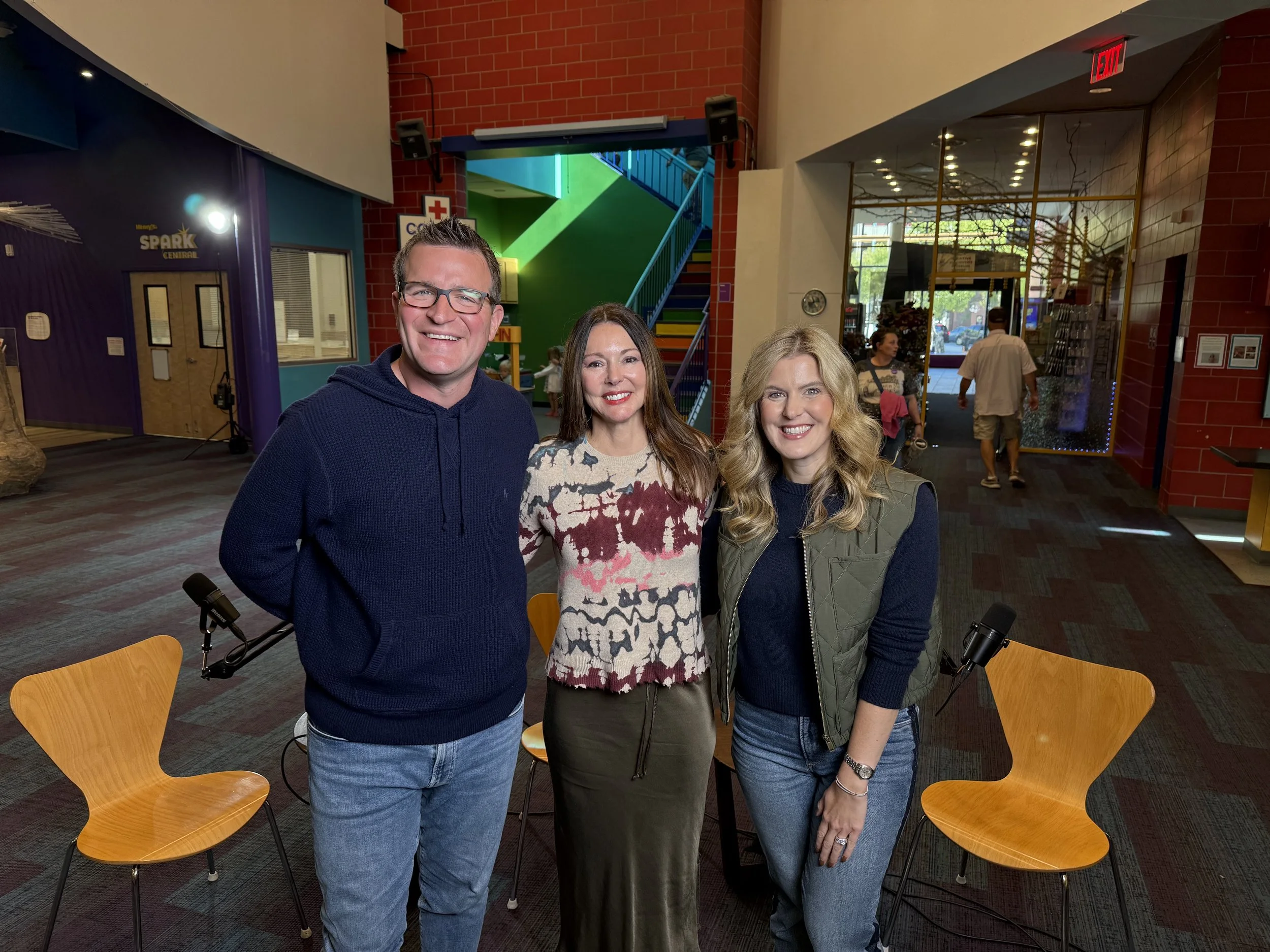
About Tasia Malakasis
Tasia Malakasis is CEO of The Company Lab (CO.LAB), Chattanooga’s leading startup accelerator. A former tech executive turned celebrated food entrepreneur, she acquired and grew Belle Chevre into an award-winning artisan goat cheese company and authored two cookbooks with Southern Living: Southern Made Fresh and Tasia’s Table: Cooking with the Artisan Cheesemaker at Belle Chevre.
Tasia now leads CO.LAB, where she helps entrepreneurs scale innovations in sustainable mobility, transportation, energy, and logistics.
About C0.LAB
Founded in 2009 to revitalize Chattanooga’s Main Street, CO.LAB is a nonprofit startup accelerator that supports early-stage founders by connecting them with mentorship, resources, and pilot opportunities. The accelerator runs two 6-week programs per year—expanding to three in 2025 and four in 2026. While relocation to Chattanooga is encouraged, it is not required, and 20% of teams have permanently moved to the city. CO.LAB’s accelerator model connects founders with corporate partners to solve real-world innovation challenges, and in 2023, under Tasia Malakasis’ leadership, the organization shifted focus to sustainable mobility, defined as the future-forward movement of people, goods, energy, and data. The program supports startups in sectors such as electric and autonomous vehicles, smart city technologies, logistics solutions, and energy systems, providing founders with long-term mentorship, resources, and a “lifetime commitment” of support even after the program ends. CO.LAB is helping entrepreneurs turn bold ideas into real-world solutions while driving economic impact, innovation, and community growth across Chattanooga and beyond.
-
Spencer: Tasia Malakasis, CEO of The Company Lab. Welcome to Signature Required.
Tasia: Thank you so much for having me. I appreciate it.
Spencer: We are in a super energetic location behind, and like most of our listeners end up listening to what we do, but some of them are watching. Can you describe the setting of a little bit of what we have around us here?
Tasia: Yes. So we're in the Chattanooga Creative Discovery Museum and you might imagine that there might be little ones running around and if you can't imagine it, you can certainly hear it. I'm sure. So lot a great setting though. It's amazing.
Spencer: Tell us some about what The Company Lab is, what do you do at The Company Lab?
Tasia: Yeah, so The Company Lab is a 501 (C) (3) startup accelerator, and for people who don't know what an accelerator is, we work with startups to help them take their business to the next level.
Tasia: So there are different levels at which you could join an accelerator, whether that's from the ideation stage or maybe at the stage where you've got your business going, but you're not really sure what to do next. We actually work at this, um, this stage of scale. So when you, you've got your business in place, you've got your team in place, you've got your product, and you're ready to start selling, that's when you come to us.
Spencer: So from a entrepreneurial perspective, Carli and I have been entrepreneurs since the beginning, and inevitably we get asked to come alongside people [00:02:00] that are in every stage of the entrepreneurial journey. and usually the first question that people ask is like, where's the money gonna come from? I mean, that's usually the bottom line is that's where they're kind of trained to think.
Spencer: So when you are bringing people in. Where are they at in the stage of entrepreneurship and their journey?
Tasia: Yeah, so, and I'll, I'll answer that question, but I'm gonna try to answer it so I'm not using insider language, but what, I'll start with insider language and then I'll explain it. So we're at the pre-seed seed stage.
Tasia: So if you think about the scale of where you are raising capital, most people start with friends and family rounds. Some people call it friends and family and fools. So when you're a. Or maybe even before that that's, you know, you're bootstrapping. Then you go to friends and family, then your, your next level of capital, it could be non-dilutive in terms of grants, or if you're doing equity raise, then that's a pre-seed [00:03:00] seed stage.
Tasia: So anywhere from a hundred thousand dollars to maybe a. $3 million for that, that first raise, really where you are when you're, when you're thinking about institutional capital. Now there's lots of other pieces in the capital stack too. So if you're bankable, you've got, you know, you can look at loans and again, there's some non-dilutive grants, but the space that we're in, we're, we're helping teams that are at that pre-seed, seed stage for looking for institutional investment.
Tasia: And I hope that's not too techy, but
Spencer: I, I, I think that makes sense. 'cause a lot of people that I sit down with. Some of the best advice that I can ever give them is that entrepreneurship might not be for them. There's a lot of people that I think have dreams of entrepreneurship, but in truth, there's a lot of scenarios where the entrepreneurship pathway can be super destructive to one financially, uh, to their career, all sorts of different things.
Spencer: And so I wonder from an education standpoint. [00:04:00] How do you come alongside a lot of people that want to come and have dreams, um, but. Maybe refine that idea long before they get into a spot of the friends, family, and fools, where at some point they prove why that, saying, is very true.
Tasia: Well, it's a, it's a really interesting question and we were speaking earlier that.
Tasia: My favorite people in the world are entrepreneurs. It's my clan. And the reason is is because they're bold enough to believe that there's a problem, and I personally, I can go solve it. I know how to do it. Despite the odds, despite the statistics, what they should show, which are 80% of all new businesses will fail.
Tasia: They're willing to go out and do that. I wouldn't necessarily encourage anyone not to follow their dream or their passion, but I would, my education to answer that question would be more aligned towards, do you know what it's going to take in order to get you there? And there is [00:05:00] math in that. You really can break that down into what those steps are and what that capital requirement may be.
Tasia: And there's lots of different ways to get there, but absolutely there are stresses. You, you've gotta be a great starter and you've, and you've gotta surround yourself with really smart people too.
Carli: There's something about entrepreneurship. I've said it before, but it feels like jumping off a building and building the parachute as you're falling to save yourself from hitting said ground.
Carli: Right. And so I imagine in your work at the CO.LAB, as you guys call it, is it half financing and half helping them with them steps, but also part therapist as people are walking through for the first time. Taking outside money, figuring out how not only this is gonna work for their business and their potential employees, but for their family and their livelihood.
Carli: I'd imagine you have to do quite a bit of coaching in the stage that you're entering.
Tasia: 100%. And I would say it's a [00:06:00] great time to be an entrepreneur because now we have this whole thing of executive coaching and. Is, which is in a way just therapy for business people, right. Is very in. And so most executives, no matter what level they are as the rising, they're thinking about that coaching.
Tasia: There's a lot of coaching and there's a lot of psychology in it too. And I love your analogy about jumping off a building. I would tell people it's like jumping off a cliff. But when, when I also have told people who've come to me, I'm like, I've got this great idea and I wanna sort of work on it halftime while I'm doing this, my other full-time job.
Tasia: And I'm like, you know, it's dangerous to jump off a cliff and hold on at the same time. Right? So you also have to get to that point where you're really ready to give everything to it because it, that's what it will take. It will take everything and more,
Carli: we call that burning the boats. It's like if you wanna take the island, you have to burn the boats.
Carli: 'cause the only way to get off the island is to be successful enough to build new ones. Right, and that's the next stage after the parachute part is the burning the boat. Part of entrepreneurship,
Tasia: [00:07:00] which is why I think that there is a personality trait to, for entrepreneurs too, right? Those are the people who are willing to say, I'm going all in and I don't see failure in front of me.
Tasia: I may see obstacles, but I don't see failure. There's, you've gotta kind of have that. Idea that I'm gonna make this happen. And it's a, it's a bold idea no matter what it is, whether it's, if it's a cat food company or if it's silicon chips, they're all bold and it takes a lot of work.
Spencer: Give us an idea of the scope and the reach for.
Spencer: The organization, how many people, how often, like, give us some scope. How long has it been in existence just for those that haven't heard of it.
Tasia: Yeah, so CO.LAB's been around, um, almost 16 years. We'll have our Suite 16 next year. So we started as a generalist organization and in Chattanooga we were really the first entrepreneur support organization that this.
Tasia: That he had. So we saw people from Main Street businesses to high tech venture backable businesses, and we [00:08:00] supported them all. Today there are probably eight other organizations in town that support entrepreneurship in some form or fashion. So when I took the role, the board was like, we need to own our own lane.
Tasia: Being a generalist is not what we need to do and we wanna focus on tech. And so we stood up a program focused on what we're calling. Sustainable mobility and way we define sustainable mobility is the future forward movement of people, goods, energy, and data. So we're looking at startups that are in those four categories, people movement.
Tasia: So you think about electrification, automation, goods, movement. You guys know that very well. Um, on the energy side, you're not really going anywhere in the future for movement of people or goods without considering energy as we automate. And then data. So we're, um, really nerdy now focused on quantum on that data side too.
Tasia: There's some interesting things going on in Chattanooga with Quantum too.
Spencer: Carli and I have had a chance to spend a fair amount of time in Chattanooga, and there is real innovation that [00:09:00] is happening here and that hasn't always been Chattanooga's story. I mean, we've had the opportunity to talk to some true historians that taught even a born and raised Tennesseean a lot about Chattanooga that I had no idea about.
Spencer: Um, why Chattanooga as well? Like, I think that's an important part of the discussion. Was there intentionality behind why it was started here 16 years ago?
Tasia: Yeah, I think 16 years ago, when you think about what was happening in the entrepreneurship space, like accelerators really didn't exist before then.
Tasia: Like so when I was much older than you guys, but when I was in college, there weren't entrepreneurship programs. If you were a business person, you weren't called an entrepreneur, right? Like I feel like that fever sort of took hold really right about that time. Y Combinator started, I think maybe 17, 18 years ago, so that that started popping up in universities and communities and how do we support economic development, not just thinking about how do I bring an employer who's gonna hire [00:10:00] 2000 people, but what about, what about the people who are starting businesses that may hire 10 or 20 and those grow?
Tasia: And from there. So that was, that was sort of the genesis around that. But for Chattanooga, for us around this mobility program, it's absolutely based on what we do well in this city. So we've been called the Silicon Valley of Freight. We've got 300 plus freight logistics businesses here. Volkswagen makes their EVs here.
Tasia: They, Volkswagen has their battery lab. We have battery tech companies. EPB on the energy side, didn't know a utility could be innovative. Amazing what they do. TBA is here and, and now again, on the, on the quantum space, there's the. Access to resources in this field are unparalleled. So that's the reason why we're focused there.
Carli: So it sounds like you have a really well defined scope of who you're looking to support, what you wanna do and why. So can you help us understand a little bit about how you go about that? Like who are you supporting, what are you giving to them? You've mentioned [00:11:00] coaching, but. Are you finding the resources for financing?
Carli: How are you going about serving these initiatives?
Tasia: It's such a great question. So by and large there are three. The way I like to talk about the business and are supporting this, there are three legs to the stool. At the heart of it really is the startups and supporting those startups. The other leg of the stool are our corporate partners that are here, corporate or research partners.
Tasia: So we go to them and we sit with them. Let's just say that's Volkswagen, or it's EPB, and we say, what are your innovation goals? What are you trying to solve? What are the, what are the things that are future forward for you? Then we go take those innovation goals and we go recruit startup. We go find the best minds and the best companies and the best ideas and, and match them with our corporate partner and say, would you be willing to pilot our first customer with them?
Tasia: They don't get into the program unless they get a yes from our corporate partner. The third leg of the stool is the community. So how do we create through the use of innovative startups and our innovation goals of our core partners, a smarter, better, [00:12:00] faster? Community in which we live using these technologies.
Tasia: So that's, that's really how we work with, um, with the startups and getting them to customer capital's a whole other thing. But yes, that's in there too.
Carli: So that's really interesting. So you're not just marketing, trying to get people to come to you, you're really seeking out the best and brightest to solve these defined problems.
Carli: And find the best minds to do it is what, if I'm hearing you correctly? Yeah, 100%. That's
Tasia: exactly right. So we want to see the startup be successful, uh, uh, matched with a corporate partner who can buy from them, right? You get a, you get a case study with Volkswagen for your autonomous technology. That's a game changer for you.
Tasia: As a startup, it's a game changer potentially for Volkswagen and then also back into the community. So we really see that as the, the, a firm structure for support.
Carli: So it sounds like you're trying to help them build the parachute or de-risking some of that to help make them more successful. We were talking before.
Carli: The [00:13:00] number, the percentage of startups that fail is staggering. It's why a lot of people don't try. And it sounds like you're trying to find the people and make it easier for them to try by building this longevity, hopefully through partnership into it.
Tasia: Absolutely. The partnerships are key. And especially if that partnership is with a customer, right?
Tasia: So if I can get you to first customer or to, you know, with a pilot opportunity with the leading innovator in the space, that's, that is. That's meaningful. Now, a lot of accelerators act, I think in in similarity to an MBA, right? You can go through a curriculum and I can teach you some things that you need to know, but really what you need to know is how do, is this gonna fly in the marketplace?
Tasia: Is someone willing to pay money for this? And if so, then how do I take that then and scale it to the rest of the market?
Spencer: Inevitably, when we interview and bring somebody on that. Is helping change lives and move things in directions that a lot of people listening [00:14:00] aspire to. The question immediately becomes, well, is this something that applies to me?
Spencer: Can I get involved? And so can you talk some about the cohorts and the sizes you were defining the scope and the goals of the organization, but just can you walk through for someone that hears this. And wonders, like I'd move to Chattanooga. What's involved? Talk to us about the cohorts.
Tasia: So we have been running two programs a year.
Tasia: So, and they were three months in duration. The cohort size is small, very concierge approach. So we will take no more than six teams per program. We are running our first six week program started today actually. Okay. So I just. Did a welcome for our cohort. So we've got a team from Silicon Valley, we've got one from Philadelphia, we've got a Memphis company and we've got one from India.
Tasia: So we're from all from all over, but they will be here with us for six weeks working on their, you know, working for their pilots, working on their capital raises and, and also, you know, through [00:15:00] some, some curriculum and support.
Spencer: What does it take to be considered in that cohort? Like how many applications are you getting and.
Spencer: What's the winnowing down process? 'cause that sounds like. The crew that's coming in there is anything but a bunch of local Tennesseans. It's bringing kind of the best and brightest from around the nation.
Tasia: Yeah. And what we want to do, I mean the entire goal is to get them into this ecosystem and have them understand the importance of what we're doing here.
Tasia: Right. So that we've got a, a wealth of resources. And the message is if you're building a business in the mobility space. Again, and those people goods, energy and data, you need to be doing it in Chattanooga, Tennessee. So we go look for them and we bring them into this, and hopefully those smart startups are gonna go where their customers are and they're gonna stay where their resources are.
Tasia: It's not required that they relocate here, but we have had teams from all over the world relocate to Chattanooga based on again, those resources.
Carli: So in preparing for this podcast, I started nerding out. On your [00:16:00] bio and the things that you have written over time, it's rare we get someone that we get to interview that I just kind of become a girl fan of immediately.
Carli: And that was you on the whole drive to Chattanooga. I was like, Ooh, this is so great. Oh, I love her story. So take us back. Right. What was the beginning of your career like? Because I think your story is so interesting, but also so relatable because you didn't start your journey in an accelerator, right?
Carli: You started where,
Tasia: yeah. So not only did I not start in an accelerator, I don't even think they existed. So I started my career in the early nineties. And this was at the time that the internet was becoming widely adopted and we were trying to figure out what we do with it, right? So before there was commerce, there was content.
Tasia: And how do you monetize content? The same way that we've always monetized content through advertising. So I started with an ad tech. Company in sales. They had, and, and this was in Atlanta, had a sales office all over the country. You know, the major markets, Chicago, New York, [00:17:00] la. Turns out I was good at sales because all you had to do was talk to people.
Tasia: And I thought, wait, what? You get paid this much money just to go talk to people I'm in? So that's how that career started. And at the time you could move up really quickly. So from there, we sold that business, all startups my entire career, sold that business and then worked for another, um. Ad tech company is VP of sales for a small, they were publicly traded, so I'm carrying a bag now for Wall Street, which was a lot of fun.
Tasia: Then that company was acquired, went to New York again in Ad Tech. That business was acquired by Google for $3 billion. Then we went with some alumni. Then I'm now, I'm in Philadelphia building another ad tech business. I'm head of product and head of marketing now, and that business was acquired by Gnet, which is a newspaper business.
Tasia: So you think about how ad tech then. Changed. So I'm reporting it to the publisher of USA today, and I'm leading this three day innovation meeting for them because I've gotta go around now to the, all these newspapers across the country and tell 'em [00:18:00] about the internet. You guys know what happened to newspapers, right?
Tasia: Yeah. So I'm leading this three day innovation meeting and I asked the team, what was your last innovation? And they said, we were the first newspaper with a full color page for weather. I'm like. Oh, amazing. Oh, wow. And I'm like, great. When was that? They're like, 10 years ago. I quit after the end of that meeting.
Tasia: And I'm gonna tell you what I did, Carli, because it's, um, a, it's a departure from, it's a, it's a departure. So my real love is food. And I was taught that by my grandmother and my stepmother, who was in Greece my whole life. And I thought, if I'm gonna work this hard, what do I really love? And it was food.
Tasia: So I went to culinary school in New York, realized really quickly, I didn't wanna be a chef. But while I was there, I found a cheese company. I found a cheese product in this high-end cheese shop in Manhattan, and found out it was made in my home state of Alabama. So when I left USA today. I called [00:19:00] the owner of this cheese company, bell Chev, and I said, I just quit my job and I'm coming home to make cheese.
Tasia: So I did. I went home and I worked for her for free for six months and acquired the business from her six months later, and then took about scaling that business from high-end cheese shops in the country, mostly in California and New York, to Kroger's and Costco's and Publix and Whole Foods and et cetera across the country, and had the best time doing it.
Carli: Wait, wait. We do have to pause. Hang on. Yeah, I know 'cause I'm going too long. So you, no, you went from leading innovation workshops with newspapers to. A cheese farm essentially in Alabama. That was the juxtaposition. Yeah, it sounds
Tasia: like a movie. Well listen and it kind of was. Now I didn't think there was anything that interesting, but the media picked up on that.
Tasia: Like crazy New York Tech gal goes home to Alabama to make cheese and everybody had this vision of me. In a sundress and a bluebird on my shoulder with goats falling [00:20:00] me. And I mean, like literally I was in, in better homes and gardens holding a baby goat in a sundresses. That's the, you know, like, no. And so that, that was apparently a very interesting story.
Tasia: And at the time to be the maker was. Appealing to people. It was, you know, after the financial crisis and people are reevaluating what they wanna do with their lives. And so here's some lunatic who left a well paying job to buy a cheese company. Let's talk about that. So yes, that's the, that was the story, Carli.
Tasia: But
Carli: I wanna laser focus in on something that, yes, you are in a sundress holding a baby goat, which is so charming, but you spent six months. S jumping outta that airplane with no parachute. Did I read? You were, yeah. I mean, you basically interned for six months to find out if you wanted to buy this company.
Carli: That takes some nerve to do that.
Tasia: Yeah. Yeah. Deserve or passion. Sure. I mean, yeah. And that's why I go back to, I think entrepreneurs have that trait. Like, if this is something I really wanna do and I'm gonna work this hard, I might as well be doing it, doing [00:21:00] something that I love. And we spoke about this earlier with our children.
Tasia: I wanted, I also wanted my son to see who was young, his mother doing something that she loved and. So part of, I think that maybe this is not a diversion about female entrepreneurs, but I do think that there is that driver about what kind of life do I want? Do I wanna be the one who runs the show? Do I want to be the one who's creating something new?
Tasia: Or do I, and there's nothing wrong with following at all. Everyone needs people who can follow, but. I think entrepreneurs are the ones who really wanna lead and say, I'm gonna go, I'm gonna go change things. So I took this high-end fancy, you know, upscale goat cheese and, and took that into the main street market and that took a lot of, you know, and that took a lot of convincing too.
Carli: Yeah. Well, especially being a female maker, as you say, going to the giant brands, you're saying you're trying to get into Kroger and all of these major chains. I mean, at that time the ecosystem wasn't female [00:22:00] maker led. Like maybe we're seeing more now in, you know, the twenties. It's like that was really fresh.
Carli: I'm sure you had to break down some doors there. So yeah, you were trailblazing that in that time. How did that feel? Was that really interesting or was it second nature to you? 'cause you kind of always did
Tasia: Well, I think being, I'm gonna say this about myself, but being the village idiot sometimes is a. Is a benefit when you're starting your own business.
Tasia: Like I knew that I thought at one point I'm leaving everything that I know from my previous career and starting something and I will know nothing. I thought I'm leaving it all behind and that was not true. But I didn't know much about this industry, right? So I had to learn that. But not knowing what everybody else.
Tasia: Would tell you not to do, then I would just go do that thing. And so that was very helpful. I didn't know what I wasn't supposed to know. And so being a little naive about the industry was good. So I just knocked on CEO's [00:23:00] doors and said, here's what I'm doing. Do you wanna be a part of it? It didn't always work out well, but it did in the end.
Tasia: I love that. So where did you go from there? Well, I got smart, which I had to, I had to get smart and I learned on my own dime, right? And I, and I learned more about the industry. I'd left software and that whole space, very fast moving. And I came into the grocery industry, not fast moving, not innovative.
Tasia: They're old companies mostly, and not a whole lot of. You know, fast moving, fast paced environments for acquisition. So that was, that was challenging, but I, but I rolled with it.
Carli: I love to ask this question of people in your shoes. What would you go back and tell that girl right after you acquired that company and were starting to go out and sell?
Carli: What do you wish you knew then that you know now? Nothing.
Tasia: Not a thing, and here's why. Because I think if I would've known anything differently, then I wouldn't have gone [00:24:00] in the trajectory that I did. And I think sometimes learning from mistakes is the most valuable teacher, so. Now, that's an odd thing for a person who's running an accelerator to say, because I'm there to help people overcome obstacles and not, and get there faster without having to overcome those.
Tasia: But sometimes, sometimes those failures are the best thing that could ever happen to you. So I, I wouldn't go back and tell her anything else. I'd just, I'm cheering for her right here in the future.
Carli: I actually needed to hear that as a mom of teenage daughters too, is like this idea that you can't. Stop them from every mistake they're gonna make.
Carli: Even if you know they're gonna make 'em. And
Tasia: you don't want to,
Carli: and you don't want to. Because my greatest mistakes led me to this day and the grit it took to overcome them. So I think in true in business, as in life, stopping those changes, the whole ripple effect of what you're doing. Yeah. Yeah. So how did you go from cheese maker?
Carli: Maybe it goes hand in hand with cookbook author, I don't know. But how did that come about?
Tasia: You know, so it [00:25:00] goes back to. The whole story about leaving, you know, this kind of high tech world and coming to rural North Alabama and becoming a cheesemaker, the, the media had a lot of fun with that and that, you know, landed me in most, I think almost every magazine that was geared towards women in the country.
Tasia: So from southern living to country living to, you know, even Forbes and Wall Street Journal, New York Times. So someone approached me about writing a book, and I thought, well, I mean, sure, why not? They were like, we want you to write a cookbook and we want your stories in it. I'm like, of course I'll do that.
Tasia: And so I did that for a small publisher. It's my first cookbook was, um, Tia's table cooking with the Artisan Cheesemaker at Behove, and then was doing a lot with Southern Living, which is, was just down the road in, in Birmingham, Alabama. And they asked me to do a cookbook with them, and I, I said. Sure, why not?
Tasia: I'll run a business, raise a child, write books on the [00:26:00] side. Of course I will. And that was Who needs sleep? Yeah, nobody needs sleep. It's fine. Yeah, no, sleep is overrated. And so that was a lot of fun. Now, what was really interesting, Carli is writing the first cookbook with a small publisher that doesn't have a test kitchen and have all kinds of resources to go into Southern Living.
Tasia: It was a whole other ballpark, and that was, that was a lot of fun.
Carli: I bet. It looked fun. I was reading the cookbook the whole way here. Yeah.
Spencer: I, one thing I want to understand a little better about the story is the transition from culinary school where you were like, it became pretty clear that becoming a chef wasn't your goal, um, to such a significant passion towards goat cheese that led to a move and a pickup from New York.
Spencer: To Alabama. 'cause I think that's the hardest part that maybe if I was listening to this, I would try to connect with, because I think most people would say, you know, if I only had [00:27:00] the passion for anything that it would take to make me move from New York to Alabama for cheese, like. That's tough. Uh, and so help me understand how you discovered that passion.
Spencer: Was it something specific about that product or was it something that transcended that, that led you to really, what, what feels like from an outside perspective, like a. A, a turn upside down of life to go work for free for someplace for a long time.
Tasia: Yeah. And it was a turn upside down moment, but I'll, I'll give you a little more color to that story.
Tasia: So I, I started at the Culinary Institute of America with a week long course. It was called Career Exploration. So I'm in this class with. A bunch of other disgruntled professionals, lawyers and bankers from the city trying to figure out, well, I love food. What do I do with it? And so how do you turn an avocation into a vocation?
Tasia: And I wasn't turned off by that. So I enrolled and I, and I was going to courses and I thought, this is what I'm gonna do. And I realized quite [00:28:00] quickly though, that the lifestyle of a chef. It is not conducive to a whole lot, um, other than a lot of hard work now, it's a, it's a beautiful profession and I love the artists that are in the kitchen, but it's nights and it's weekends, it's all nights and it's all weekends.
Tasia: And if I'm, it was a mother and I decided that was not an, a vocation that would help me, give me the lifestyle that I wanted. So when I found this cheese product. In New York, I'm in Dena DeLuca, which was at the time was sort of the, you know, the pinnacle of like gourmet food stores. And I'm looking at cheeses from all over the world, and I find this one that's made in Elmont, Alabama.
Tasia: And now Alabama's known for a lot of things, but it's not. It's, it's not fancy culinary cuisine. I mean, it's barbecue or boiled peanuts. So I was intrigued how this really amazing cheese product from Alabama is in this store in New York. They must have gone through a lot of diligence to say that I want the best cheeses in the world.
Tasia: So I did some research. It was in the, um, ency World, encyclopedia of [00:29:00] Cheese. It had all of these national and international awards. It was considered one of the, top Americans artisan cheese, company in the. In the country, especially on goat cheese. So I'm just, was even more intrigued.
Tasia: Now, my home state of Alabama, how does, how do I take something from this place that doesn't get a whole lot of love, certainly in a lot of areas, and then take that and, and expand it. So I also, in my previous life, I was a product person. So I'm like, I can get behind a product, right? I can market a product and grow a product from a place that I have a lot of passionate about.
Tasia: Now, what's really interesting is growing up in Alabama. I couldn't wait to leave. Right. So it was also kind of a coming home story for me too. Does that help connect those things? It does. Yeah, it
Spencer: does. And you know, I get that question a lot. 'cause you know, we come from package delivery in the FedEx space, and I get asked all the time, Spencer, what was it about delivering [00:30:00] boxes that really made you want to grow and hire and create all these different things and.
Spencer: For me, it was never actually about delivering the boxes. It was so much more about the experience, the opportunity, uh, the transformative power of e-commerce, like larger trends beyond just cardboard boxes. 'cause I never just loved a cardboard box and said I've gotta have a part in that. And so I just really like to spend some time on it because.
Spencer: A lot of people, I feel like deeply want to feel passionate about what their special entrepreneurial idea is. And a lot of times what happens is people default towards what is really simple and what's really affordable, and so they go to the closest thing to them that will cost the least amount of money.
Spencer: And that is almost without [00:31:00] exception. Wrong. Uh, and so I'd just like to hear your story because I think. It came from a number of years worth of family connection and school and exploration and different things that allowed you to make the type of life changing decision that you made to uproot your whole life down there.
Spencer: So I also have to just see it through to the end, like when you show up in Alabama for an unpaid season. Yeah, there just has to be like, I, I would question your humanity if there wasn't a moment to where you were looking around and saying, what are the life choices that I've made that have me in this moment?
Spencer: I'm surrounded by goats and I've come a long way from where I was a handful of years ago. Like, did you have that experience? [00:32:00]
Tasia: Yeah. I mean, obviously there were some moments in my mind where I'm like, what have I just done? But, but I, I really do. And I did feel, and it was an impetus, right? I'm tired of this other industry and there had, oftentimes there is an impetus that gets someone to do something radically different.
Tasia: But it's not like it was the first time I'd thought about this, right? Like, what would my life be like if I could be in an industry that I was really passionate about? What if I could use my hands? What if I could make a really great product that made a difference and something that tastes good? I mean, software.
Tasia: Important. Doesn't taste very good. Can't really interact with it that much. I, I, I was, I was looking for that opportunity. Yeah. So it wasn't
Spencer: impulsive because you do see people make the decision out of impulse and that also. Not always, but frequently does not turn out well.
Tasia: Right. Yeah. There, there was an impulsive moment, but it came with a lot of back thought and a lot of story.
Tasia: I what I, you know, left out of this story is I had met with the founder of the business several times. I [00:33:00] wasn't really sure what I wanted to do with that. Like I found the cheese in New York. I was. So intrigued. I called on her, asked her all about the business. I had lunch with her a couple different times, and she's like, what is it that you want to Shia?
Tasia: And I'm like, I don't know, but I wanna do something like what you're doing. I just love what you're doing and I love the impact that you've been able to make. And so when it came time for me to do something different, I thought, that's what I'm gonna do. And I, and I thought through that. And so when I called her, which I did from DC and said, I just quit my job and I'm coming home to make cheese, she.
Tasia: She probably knew that something was come was up.
Carli: Well, there's something really valuable I think about on for entrepreneurs and all people that lead people, which is everyone, right? Everyone leads something. Yeah. It's to study different types of leadership. And I love in your story, it's kinda like being an overnight success.
Carli: There's no such thing. It was a lot of preparation, and then you had this pivot point of massive action. [00:34:00] That's replicable. That's something that people can see themselves in. And it may not be New York and DC to a cheese farm, but for us it was finance to what my kids called puppy trucks because they used to have the dogs on 'em and delivering cardboard boxes.
Carli: But it was, for us, the same thing. A season of preparation that nobody saw in the dark of night that came from places of uncertainty and instability. And then you hit a pivot point where you say, not another day, not another hour. I have to take massive change, so my future is different, and that's something I think everyone can relate to, whether it be to create a business or to change their family or just to change their lifestyle.
Carli: That's huge.
Spencer: Another part of the story that I just wanna highlight real quick and learn more about is. The opportunity for you to be able to acquire the business because a lot of people too, in an entrepreneurial story feel like that they have to be an inventor, and those things are not [00:35:00] synonymous at all.
Spencer: Uh, and a lot of people make that mistake. And so can you just talk a little bit about the process by which you got the opportunity to acquire the company? Because I'd like to highlight that as a pathway that. You know, Carli and I have spent a lot of time teaching and educating people how to acquire and run logistics businesses.
Spencer: That's like part of our specialty. And so for you, I don't imagine that you had a lot of. Training or schooling about how to, you know, acquire and operate a goat farm. But maybe help me fill in how that developed.
Tasia: Yeah. It's so funny when people would ask me, and I actually did a TED Talk called Happy Accidents because it's not like I had grew up saying I was gonna be a cheese maker, right?
Tasia: I didn't take any cheese making courses in college, didn't know anything about that. But one of the things. That I think also is a distinguishing element of a personality to, in an entrepreneur is knowing that there is a [00:36:00] way, right? So when I found the business and I was talking to the business owner, I, some people were like, well, you should, you should look into that more.
Tasia: And I'm like, yeah, but it's, it's not for sale. Well. Everything's for sale. Right. I mean, and I even, you know, knowing what I've known and working in startups the way that I had in the spaces with the people that I had, I even said, well, it's not for sale. Right? I didn't try. And if you, if you eliminate a possibility, you never even go down the decision tree or a path for that.
Tasia: So it was, the business was not for sale, but I was very active and interested in, in working with her in some form or fashion, and we worked out. Um, we worked out a deal and it was, it ended up being a really good time in her life and it was a great time, obviously in mine. So, so that worked out. Now I had also had a very successful career before that, so I had some capital.
Tasia: I was also bankable, so we talked about the capital stack, so whether you're raising institutional [00:37:00] capital or if you've got other forms of that, I mean, it was, it was something that I figured out a path to and had some, and I had some resources that I could. I could put towards that.
Carli: You've mentioned a couple of times your son and I would like to just ask about what it felt like to be a mom in the midst of all of these big decisions that you were making that were on your shoulders.
Carli: Because I think a lot of times I meet with women that say, oh, I make do that when my kids are older, or I'm, I can't do this now. Or, what if, what if, what if? And I. I have to guess that a lot of the decisions you made were for him because of your son, not in spite of him. And so I would love for you to talk a little bit about that and maybe to the women listening that think, I can't do X 'cause I'm a mom.
Carli: Yeah.
Tasia: Carli, it's, it's so important. And what you said is, I did it for him in instead of in spite of him too. But when. I would say probably a year leading up to [00:38:00] this decision of mine to, you know, to become a cheesemaker. Um, I would be sitting in the office at night at, you know, at 10:00 PM with, and you know, I'm, I'm the only woman on the executive team, and someone comes in to a boardroom and where we're all meeting and says, Hey, we've got a meeting with Google, we're leaving in the morning.
Tasia: And I would look at, the mom was like, I don't have a wife. Right. Which is not a very nice thing to say, but I didn't have a wife. Um, and so having, I would say that the demands on that career were very stringent and I couldn't take young sweet Kelly to work with me, but I went. To back home. Built this business, had a creamery.
Tasia: He came to work with me and he could, you know, he could play in the boxes and he could play there. And he traveled with me and I traveled with a nanny with him, and he went all over with, because I could do that. Being again in charge of my own business and how I wanna live that. And so. We, I spoke about this earlier.
Tasia: It was important for me to [00:39:00] show my son that his mother loved what she did and that she was doing it and growing a business that she was passionate about. So we can go to work, any of us men or women, and do something because we think that's the easiest way. Oftentimes being an entrepreneur is not, it's certainly not easier, but it does afford you Things that working for someone else doesn't, and I appreciated that.
Carli: Yeah, I think we think the traditional path has more certainty baked in to the pie, and you find an entrepreneurship, it's scary. But you get to create what certainty pivot points matter to you, and it's just changes the whole game. I mean, we can be working, we've got four kids running all over the place now.
Carli: Spence may have a really big call that he takes from the car and then go watch our daughter, serve out a match and then get back in the car. But they can wave to him through the front windshield and know that he was present at their moments, but he is also being productive. And the same goes [00:40:00] for me. Um, it just changed the ball game and I just wanna encourage people that think kids make it, that you can't.
Carli: I think they are the greatest inspiration to get out there and do the hard thing and to make a difference.
Tasia: I, I agree with that, and I think if you, if your children watch you doing something that you love, I think that changes. I think that changes everything. And if you, if they see you build something, it's a, it's a beautiful thing and it shows them that they can do it too.
Spencer: Tia, there's a lot of people that listen that maybe entrepreneurship is not for them, but they still want to be involved. And so how can people participate in the CO.LAB in ways that are different than. Turning their whole life upside down and making cheese.
Tasia: There are lots of ways, but a really key way is to join the program as a mentor.
Tasia: So if you've built a business or been in in finance or any part of the business that you would like to pass on, in fact, I know that you all have said that you do some passing on of knowledge for the logistics space and how to build a business [00:41:00] there. I would love to have you both join us as mentors for our teams.
Tasia: That's
Spencer: kind. That's good. And is that something that. You can do via Zoom? Does it have to be in person? Like what does that look like for other mentors that you've had? Yeah,
Tasia: so we do a series of what we call mentor swarms, sort of like speed dating. So we put you with our cohort and you have 15 minutes, which each team member, each founder, and you explore what they're looking for and what they need, where their needs are, and if their.
Tasia: Synergies, and you can continue to date afterwards if you want. But really the first piece is just making that match. And that's a, that is a one hour commitment to go through those teams and then wherever you wanna go from there, that you can, and you can do that remotely too. So anybody out there in the, in the mobility space, people, goods, energy or data, we'd love to have you.
Carli: I love that. Mentor. Speed dating. Who knew, who knew?
Spencer: Um, uh, Tia, we finish every podcast with. Uh, three short fill in the blank questions. Oh. So I'm gonna read a short, uh, sentence with a blank at the end. If you will finish it with [00:42:00] either a word or a short thought that you think completes it.
Spencer: Okay. Okay. Ready? All right, here we go. Number one, the biggest misconception people have about entrepreneurship is. Blank.
Tasia: The biggest misconception that people have about entrepreneurship is that it's hard. It's not a misconception, but it's not impossible.
Spencer: Hmm. That's great.
Carli: Love that. Message.
Spencer: Number two, if I could give a new founder one piece of advice, it would be blank.
Tasia: If I could give a founder one key piece of advice, it would be. Tenacity. Yeah.
Spencer: Grit. Yeah. I love that.
Tasia: Yeah.
Spencer: And number three, Chattanooga is becoming a hub for innovation because blank
Tasia: Chattanooga is becoming a hub for innovation because of the ecosystem that exists here and the people who will do [00:43:00] anything to help you succeed.
Spencer: Tia, thank you for being on with us today. Uh, this is a podcast, quite dissimilar from others that we do. We've had, a lot of energy and a lot of fun, but I do really think that in an ironic way, it captures entrepreneurship. it captures the very grit that you just spoke of to be able to be in environments that, are different and challenging.
Spencer: And that's really in a way what you are fostering at the CO.LAB. you are bringing people from all over into environments that are a significant culture shock from what they are used to. and, you're speaking with an authenticity through it that you've walked in those steps. And so it's really a treat to have you here.
Spencer: I appreciate your personal story too, because I think. Even if the overwhelming majority of our listeners never have a single [00:44:00] interaction with the CO.LAB, there is something to be taken from your journey that I think can relate very personally to them or someone that they love or care about. Uh, and so that's really fun to highlight too.
Spencer: So thank you for being here and joining us on Signature Required Today.
Tasia: The pleasure was all mine. Thank you very much for having me.
