
Brian Clifford on Tennessee's State Parks
Brian Clifford shares how Tennessee is expanding access to outdoor recreation and strengthening conservation while driving economic growth across the state.
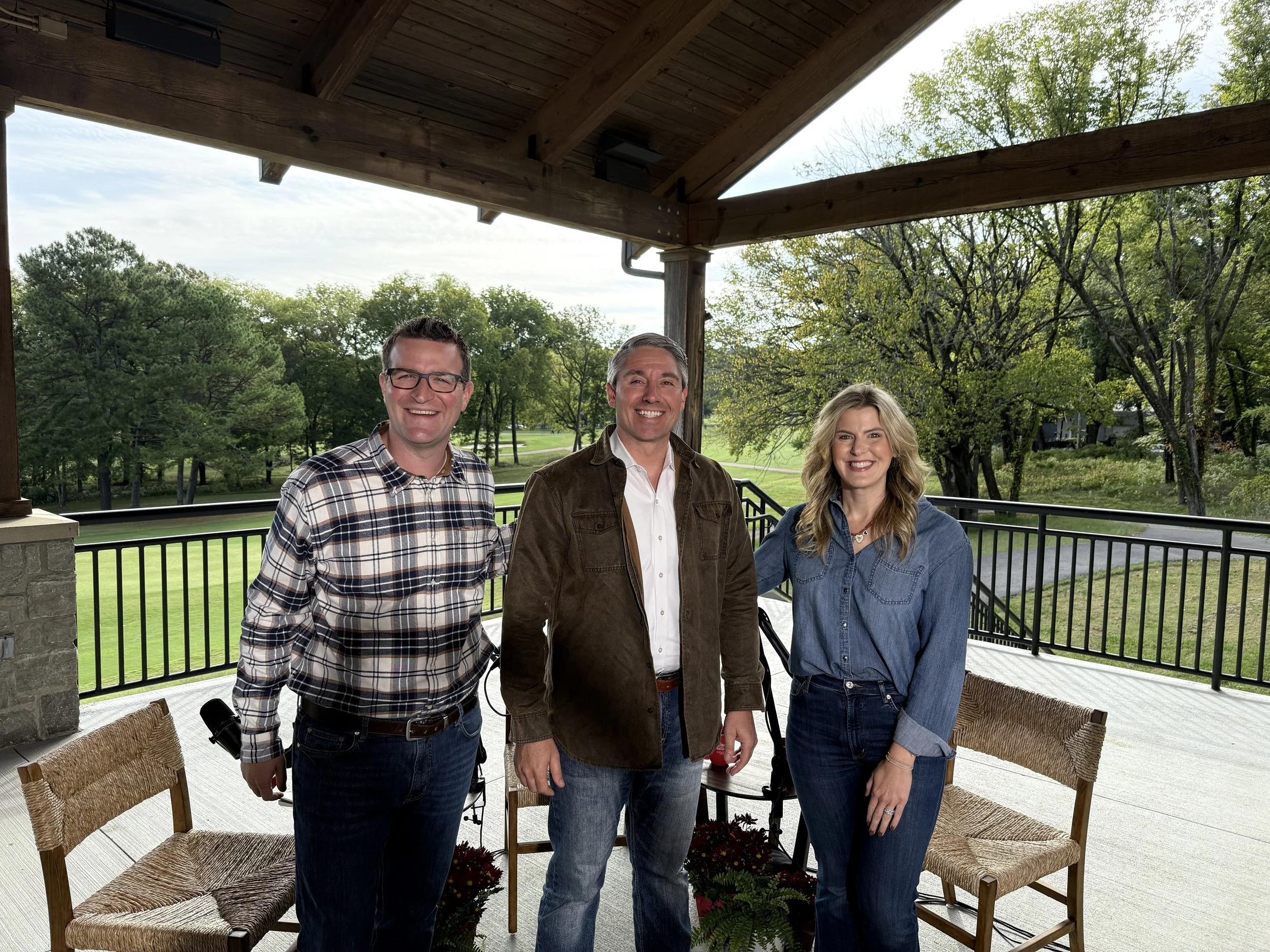
About Brain Clifford
Brian Clifford is the Director of Tennessee’s Office of Outdoor Recreation, created in 2024 by Governor Bill Lee. He leads efforts to expand access to outdoor spaces, grow Tennessee’s $12+ billion outdoor economy, and strengthen conservation and recreation statewide. Clifford previously held leadership roles at the Tennessee Department of Environment and Conservation (TDEC), focusing on policy, partnerships, and park development. An avid outdoorsman and lifelong mountain biker, he combines personal passion with professional expertise to connect Tennesseans to the health, economic, and community benefits of the outdoors. Under his leadership, the Office is launching new state parks, awarding millions in grants, and promoting programs like Healthy Parks, Healthy Person, which lets Tennesseans earn rewards for outdoor activity.
About the Tennessee Office of Outdoor Recreation
Created in 2024, the Office of Outdoor Recreation works to make Tennessee’s natural assets more accessible while driving economic impact. Outdoor recreation generates $11.9 billion annually for the state and supports more than 109,000 jobs. Tennessee’s 61 state parks welcome millions of visitors each year, contributing $550 million to local economies. The Office supports new initiatives across the state, including BluewaysTN, farmland conservation, and youth programs like Junior Ranger and school partnerships, ensuring outdoor opportunities for all ages. With 12,000+ documented caves (the most in North America) and 15 new state parks planned under Governor Lee’s administration, the Office is establishing the most accessible park system in the country while protecting and celebrating Tennessee’s diverse landscapes.
-
Spencer: Brian Clifford, director for Tennessee's Office of Outdoor Recreation, Welcome to Signature Required.
Brian: Great, thank you. What a beautiful day
Spencer: The director of the Office of Outdoor Recreation.I'm really suspicious. That's a made up title, Brian. Are, are you actually a real appointee by Governor Lee? Is this, is this true?
Brian: Uh, it, it is true and oddly enough there are 23 other states that have my exact position too. So we are not alone in Tennessee. We were the 24th state to open an office of outdoor recreation, which for us is a signal that this administration and our general assembly.
Brian: It's hyper-focused on Tennessee's great outdoors and using that to improve our economy and quality of life. So, no, it's not a made up tile and there's actually a lot of work behind it. There's a lot of fun too, but there's a lot of work that we're doing for the state.
Spencer: I talked to a lot of people in preparation for this podcast.
Spencer: Everyone from my 6-year-old son up until a lot of my friends and all of them had their own impression on the Office of Outdoor Recreation. My 6-year-old was kind of like. Is that recess? Like is he in charge of recess? I love that. And, and my buddies, uh, were all like, okay, how do I get his job? Like, what can we do to make it to where I can get his role?
Spencer: So, for those that don't know, exactly what the Office of Outdoor Recreation is, other than just kind of guessing from the title, why [00:02:00] don't you fill us in a little bit on what that actually is?
Brian: Yeah, so it's kind of funny. In, in our office, some of my peers will refer to me as the chief camp counselor of the state.
Brian: Yeah. Nice. So the recess. Analogy, it's, it's actually pretty good. 'cause that's what we want people to think about the outdoors. It's a place of excitement and fun. And we like to say that outdoor recreation breeds conservation. So the more that you get out in the outdoors and you enjoy it, the more you're gonna wanna take care of it.
Brian: And that's a lot of the work that we're trying to do through our office. Mm-hmm. We wanna protect our environment, be conservationists so that our grandchildren can enjoy this great state. Uh, but we want people to have a good quality of life, uh, have a good community, and enjoy getting out in nature for all the benefits that it brings, including significant health benefits that we're, we're learning more and more about every day.
Spencer: I wanna read a couple stats. We're gonna go into more detail on these later, but I just want to go through a handful of these, one after the other just to give a scope for how significant this office, uh, really is. [00:03:00] So, uh, there's 61 state parks in Tennessee as of September, 2025. There's over 12,000 documented caves in Tennessee.
Spencer: That's right. Which is the most in north. America. Most people do not know
Brian: that.
Spencer: I, it, I did, definitely did not know. I, I figured it was Mammoth Cave and like a couple others, but that's a lot more. We're gonna talk about that later. More case
Brian: than any other state in the country.
Carli: Does that mean we have more bats than every other state in the country?
Carli: We do have a
Brian: lot of bats. Okay. Just checking
Carli: to make sure that's accurate.
Brian: Yes. Couple others. Bats are great.
Spencer: They are, yes,
Carli: but spooky, but great. Yeah.
Spencer: Couple other stats on here. The Tennessee State Park visitors inject $550 million into the local economy annually, and outdoor recreation generates 11.9 billion for the Tennessee economy, which includes the creation of over 109,000 jobs.
Spencer: That's
Brian: right, and I'll update it. As of our most recent date, it's actually $13 billion to Tennessee's economy. And 109,000 jobs.
Carli: [00:04:00] So recess makes bank.
Brian: That's right. Is what we're hearing here. It does here. Yes. Yes. Very. It's more than just lucr lucrative industry. Yeah. Yes.
Carli: Sproing in the woods makes money.
Brian: Great careers, great jobs in the outdoors.
Spencer: So we're gonna go into all kinds of questions that we wanna ask you about Tennessee. We have such a unique state and all these things, but I feel like in order to properly put this into context, we do have to know a little bit of who you are and kind of your backstory.
Spencer: 'cause. You know, a, a handful of people watch the video for our podcast, but a lot of people are just able to listen. So naturally people kind of imagine in their mind if they can't see you, who is sitting here talking. And I think the, you know, director of outdoor recreation could look a lot of different ways to different people and have a different backstory.
Spencer: So maybe just talk for a second about your history as an outdoorsman and just your, your past 'cause I, I think it really informs the rest of the conversation.
Brian: Yeah. So I was blessed. I grew up in east Tennessee, in the hills of East Tennessee, outside of [00:05:00] Chattanooga. Uh, a great childhood where I was able to experience the outdoors, uh, playing in the woods, going on trails fishing, jumping off cliffs, doing a lot of things my parents probably were a little worried about, but very adventurous for me.
Brian: And I took that with me throughout my life still today. Um. A lot of folks say, I act like a little kid in my job, which I kind of like, I do act like a kid. I love to play outside. Um, but my career path wasn't always to be the director of outdoor recreation for the state. It actually wasn't even to be in state government.
Brian: Uh, I, I'm a recovering attorney right now. Uh, I practice for about a decade doing business litigation, defending companies against business and employment claims, and then, enjoyed that. Got to what firm. Uh, several firms, Waller Lands Den, which is now Holland and Knight, and then Ler Mendelssohn, which is another one, Nashville based law firms.
Brian: Mm-hmm. Uh, enjoyed that work. Got to help clients, improve their bottom line. Solve problems, get 'em outta trouble. Uh, that was all great. I had the opportunity to [00:06:00] join public service, particularly in the Lee administration, working with the Bureau of Conservation, so helping with the administration and strategy for Tennessee state parks and natural areas and archeology, and just really got to hone in on my passion for outdoors and just turn that into a job.
Brian: Which was great. And so as I continued doing that, I, I got a little sharper in my work. And when we had the idea for the Office of Outdoor Recreation, that was something I definitely wanted to do. So it worked out and here I am today.
Carli: I have to imagine that the leap from lawyer to director of recess is a big difference in your day-to-day life.
Carli: So you were helping your clients doing all that, but. What part of going to law school and being a lawyer do you carry into your job today? It can't all be. Fun and being outside and kayaking down a river.
Brian: Yes. So of course being a director of the office, it involves a lot of administrative work and leadership.
Brian: so the, the lawyering skills and training that I got [00:07:00] translate really well into that. the ability to advocate for a position to be organized, to have conversations, solve problems, those are all things that I have to do in my job. I do a lot of that even though I do get to play outside. And really when I play outside, it's more about getting other people to be outside and engage in the outdoors.
Brian: for instance, we just had a group of leaders in East Tennessee where we took them paddling on the Nolichucky River, and I'll love to tell you about that river. It's amazing. But that's a lot of the job. But the lawyering skills translates more toward the administrative piece, the advocacy piece, and, and moving the office forward in that way.
Carli: So you get stakeholders. Just kind of high on the adrenaline and the endorphins of being outside, going down the river, and then they can't tell you no. Right? Then they sign on the dotted line.
Brian: That's a lot of it. It's a new tool, but they realize they want to sign on the dotted line because we work with local officials, legislators, and we help to show them what the outdoors can do for their communities.
Brian: And so when they get out and experience it, they realize, okay, people are gonna love this. Mm-hmm. And [00:08:00] if we can get them more of it, their quality of life's gonna improve. They're gonna bring in tourism, their economic development's gonna improve. So it's a little bit of drinking the Kool-Aid. But everyone loves the outdoors.
Brian: They just need to figure out a way to experience it in a comfortable way. And that's where our office can really help is show them that there are very comfortable ways to experience the outdoors that anyone in your community can do it. And it may even bring in travelers that wanna come experience what you have to offer.
Brian: Hmm.
Spencer: So I've gotta pay respect to my friends that had the important question of how do I get Brian's role into the future? So I also wonder like how do you get on a governor's radar? For being an outdoorsman and being a good fit for it. Can you just talk through that narrative? Like the governor I imagine has a pretty big Rolodex.
Brian: Yes. How
Spencer: did that happen?
Brian: Well, luckily for Governor Lee, he is an avid outdoorsman. Conservationist. He is probably the best conservation governor we've ever had. He's made record investments into the outdoors. Uh, [00:09:00] he's influenced the legislature. The legislature has made record investments into the outdoors, billions of dollars.
Brian: So. Really it wasn't hard, uh, to advocate for the role. You just gotta do good work, show that what they're interested in is something that you can contribute to. And it just seemed to work out.
Spencer: Hmm.
Brian: So was the governor was already there, there was no convincing him that the outdoors are great. He was already there and advocating it for himself.
Spencer: And how did they find you specifically? Was it something that, there was a role that you said kind of raised your hand for and said, I would be a great fit for this? Or like, how did it come all the way to, to you?
Brian: So I was involved in the strategy and planning process of thinking about what we wanted to do for Tennessee's great outdoors.
Brian: Wow. So helping to come up with Tennessee's strategy and talking through the opportunities. So I was involved in the planning process. So, which helped me kind of map out what we were going to do in Tennessee. And because I had that insight and that involvement and a passion for the outdoors, I think that's what led them to [00:10:00] think well Brian would be a great fit for that office.
Brian: So being involved in the front end, helping to contribute to the collective thought about the outdoors. Um, I helped to bring stakeholders together across multiple state agencies. We now call it the Tennessee Outdoor Partnership. That's a whole story in itself. Uh, but we have a huge public private partnership that comes together every quarter.
Brian: With commissioners and CEOs that all talk about what needs to happen in Tennessee around conservation and outdoor recreation and setting long-term goals. So being involved in that process and helping to coordinate that group, um, I was blessed to be able to help move that forward. So once we had our goals and had our strategy, we opened the office.
Brian: Um, I feel like it was kind of a natural. Indication that I might be the right person for that. And luckily I was, and they didn't push back on it.
Carli: I think what's relatable about your story is everyone has a skillset and everyone has hobbies or passions, right? Oh yeah. I think where the secret sauce is, is figuring out what you're good at and what you love, and how you can use those to serve the [00:11:00] greater good.
Carli: Yes, and I think everyone has that intersection. Pinpointing what that is. So I like stories like yours, like my natural bend would not be towards administrative work and lawyering, nor am I overly outdoorsy. But with what we're attempting to do, I think that our skillset and passions are over lining to try to do good.
Carli: And I love having someone on that has found that intersection for themselves. Yes,
Brian: I, you know, I think everyone's goal is to find something that they can do for work that they love. Mm-hmm. And sometimes people are blessed to find that. It
Spencer: is
Brian: funny, my daughter made the comment just a few weeks ago. She said, you get paid to just do what you like to do.
Brian: And I was like, I really do. It's pretty great, but I get to do it and encourage 8 million other Tennesseans to appreciate Tennessee's great outdoors too. So there's a lot of gratification that comes from it, not just personally, but getting to actually serve 8 million Tennesseans and our visitors that way.
Spencer: Could you talk about your family for a second? 'cause I could also imagine that having a dad like you would mean that. [00:12:00] You are required to do all things outdoors. Like I just could imagine that the adventure that would come along with you and your position would be significant. So, uh, can you talk about your family a little bit?
Spencer: Your spouse, your kids, just Oh yeah. What their interests are.
Brian: Yep. So my wife grew up in the same place I did. She had the same kind of opportunity for outdoors that I did. Luckily that she had some outdoor experience. So we kinda shared a lot of those passions. We both grew up, we went to the same elementary, middle, and high school.
Brian: Aw. Oh wow. And she's a year older than me. And so she went to undergrad first to MTSU, and then I went, she says I followed her there. I probably did, but that's okay. It worked out.
Carli: You knew a good thing when you had it. That's
Brian: right.
Carli: Good for you.
Brian: So she's great. She loves the outdoors. Uh, I have a 12-year-old daughter and a 9-year-old son, and they both love playing outside too.
Brian: We just, you know, growing up just right off the bat, we were always hiking, paddling. From the time they could walk, we'd go on a hike. So they got very accustomed to being outside. And a lot of that was, I wanted to make sure they had an appreciation for the [00:13:00] outdoors. Um, and even now, getting them into things like mountain biking and paddling, they're a little uncomfortable, but I like that because I want them to get over that discomfort.
Brian: So that that's not a barrier for them. In the future, if somebody wants to go mountain biking or paddling, they're not gonna say, oh, I've never done that. They're gonna say, oh, I did that once with my dad or with my mom. I'm okay to go do that with you. And that's just one way I think that all families can look to remove little barriers like that.
Brian: So later in life, that's just one less barrier for them to get outdoors and enjoy nature. So I would always encourage families, of course, even young families, to just take that step, do a little bit, uh, that's uncomfortable, get outside because that will. Pay off dividends down the road for those kids.
Carli: Well, not just do they know how to mountain bike if their friends want to.
Carli: It's the power, the grit of knowing they can do something uncomfortable and live.
Brian: That's great. Yes. I
Carli: think a lot right now, especially in this digital age, there's a tension of patience, right? Nobody wants to wait and build the fruit, grow the fruit of [00:14:00] being uncomfortable, but it does, it bears fruit and it shows you that you can do hard things.
Carli: Yes. So that means I have to try mountain biking maybe?
Brian: Yeah. Well there's a trail system that starts right here in this parking lot. As long as you don't actually brought my bike long and I may use my lunch hour to do that. As
Carli: long as you don't see me attempt this, maybe I will do it in the privacy of Spencer and I at some point.
Spencer: There you go. So let's get into some stories. 'cause I think that is just uniquely something that you can do well because you have such a. Huge territory. And Tennessee is so unique in that you can be in one part of the state and then another part of the state and feel like you are in different parts of the country.
Spencer: Yes. So I just want to first, maybe you start on the Nola Chuckie River, which. It is really one of the most fun names to say, like, if you want to tell that story, I'm totally on board. 'cause we get to say Nola Chuckie a handful of times. Yes. Uh, but I'll also allow you to start somewhere else if you wanna do that.
Spencer: So why don't you give [00:15:00] us a couple stories that'll help give us a flavor.
Brian: Yes, I, I'd love to talk about the Nolichucky, and you're right, Tennessee's geography is pretty unique because we start in the Appalachian Mountains in the east. And we work west to the plateau area, and then you continue to the Mississippi Delta.
Brian: The geography and topography changes dynamically. So even on our rivers, uh, we have a big initiative called Blueway tn, where we're making record investments into recreation waterways. And we've picked 15 rivers across the state, five in each grand division to make these investments, to turn them into world class and comfortable recreation waterways with access development, signage, branding, way finding so people can enjoy these rivers.
Brian: And so. In East Tennessee, you have faster moving a lot of white water. You get to the plateau, it slows down a little bit. You get to West Tennessee, it really slows down and you're starting to turn into the cypress areas, you're going through trees. So there's really a paddling experience for almost anybody right here in [00:16:00] Tennessee.
Spencer: Yeah.
Brian: Um. This week we went to the Nolichucky River and we took local officials out, legislators. We had two mayors, uh, state agencies with TVA, wildlife Resources, department of Environment and Conservation. Of course, our Office of Outdoor Recreation. But the goal was to show them this river really post Helene.
Brian: That river was devastated by Helene.
Spencer: Yeah.
Brian: Access points were wiped out. Davey Crockett, birthplace State Park completely wiped out. Wow. There wasn't a single piece of that park left. And we're going through the rebirth process of David Crockett birthplace State Park right now, but helping them understand that that river can recover and helping them appreciate what it can be going forward.
Brian: And the Nolichucky, uh, coincidentally is, is a Cherokee term that I think translates from what I understand to rushing water. And so, um, the Nolichucky of course, has a very, uh, history. A historic past. Uh, right on the other side [00:17:00] of the mountain there was the original 13 colonies. So the Nolichucky area in Tennessee was the frontier.
Spencer: Yeah.
Brian: And of course the birthplace of Davy Crockett. So you get a lot of the frontier stories, but the Nolichucky's really unique. It's a Long river, but it's actually one of the rivers that has the longest stretch of Class three and Class four whitewater anywhere in the Eastern us. Hmm. Very unique.
Spencer: What are the classes for those not familiar?
Spencer: Like how, how high is the highest class for Whitewater?
Brian: Yep. So your class four, your class fives, those are very extreme. Okay. Your class ones is kind of a ripple, a class two. You're starting to see some whitewater class three, you're having whitewater and some wave action. Four and five are pretty extreme.
Brian: Got it. So this one has a very long stretch of continuous class three and class four. Which adds to the adventure for people wanting to paddle and not just the small stretch for an hour. You can do a multi-day trip of class three and class four waters on the Nolichucky. So it's very adventurous for people to get out there and [00:18:00] experience the whole stretch of that river.
Brian: And it's also got one of the deepest gorges anywhere east of the Mississippi, so a river that cuts through the mountains mm-hmm. With extremely deep gorge and cliff side. So it's, it's very scenic, it's adventurous, and the fishing's amazing.
Spencer: Great
Brian: fish, smallmouth all through that river. Yep. A fantastic river.
Carli: I imagine you have a hard time picking a Spring break location because there's so many beautiful places to take your family. So the Nola Chuckie being one, but what's one place that you guys have made memories together?
Brian: There are so many great places to take, uh, a family in Tennessee. So many great parks.
Brian: Uh, I hate to say I have a favorite, but if I were to pick a park to take my family this week, I would probably go to Old Stone Fort Archeological State Park. Which is very unique. It's right here in Manchester, in Middle Tennessee. It's about an hour and 20 minute drive from here. Uh, but that one park you can get history, adventure, uh, archeology.
Brian: Uh, it has over six waterfalls right there in the park [00:19:00] with Cliffside hiking trails that go all the way around it. But as you move through this park, you're experiencing thousands of years of history. And it's being interpreted for you on site from the Mississippian area, the Woodland Era, industrial Revolution, civil War, all those things happened at this one park.
Brian: And then there's an archeological museum to help showcase some of those great things. So you can go to one park, spend three or four hours with a family, and they get to experience so much about Tennessee's history and our geography, topography, all the cool things that Tennessee can offer in one location.
Brian: And what was the name one more time? Old Stone Fort State Archeological Park.
Carli: Interesting. What if you wanted to go look at a cave? I do love when my kids have the cave field trips. I just think there's something eerie and really fun. It feels like you're entering another planet when you go into a cave.
Carli: So where would you recommend is the best place to see that part of Tennessee?
Brian: Yes. So I think caves are underrated for the general public. Uh, they're a magical place. Yeah. Especially when you take kids into a cave and let them [00:20:00] experience that. It's amazing. One of our newest state parks, Scott's Gulf Wilderness State Park, has an amazing cave system.
Brian: It's near Fall Creek Falls. It's up on the plateau. That's where most of our caves are in the plateau area. But that has a wonderful cave with almost seven miles of pathway within it. And about a mile and a half in, you'll reach a hundred foot waterfall inside this cave. Wow. And you get to traverse, you're climbing rocks, you're going through narrow passages.
Brian: There's a few places you have to crawl. And for families and kids and people with just average ability, that's a great way to get in, experience a cave, and just get a taste of the magic that that kind of underground area can offer for somebody. It's caves are amazing. They're also very sensitive, so while we do like to share them and recreate in them, uh, ecologically, they're very sensitive.
Brian: Uh, there's, there's certain habitats that, uh, are there. Uh, bats of course are a sensitive habitat. But another thing unique about [00:21:00] caves is a lot of our groundwater will filter through a cave system. So if that becomes contaminated or a problem, then our rivers and streams will also receive that contamination.
Brian: And when you think about the Duck River, for instance, it's the most biodiverse river in North America. And experts will contribute that biodiversity to the water that filters through the cave and car systems around it. So it's pulling nutrients from the limestone, another rock into that river, which then feeds the ecosystem in that river, which experts say the Duck River is biodiverse because of the car system.
Spencer: Now, Brian, we were recently at the Jack Daniels distillery, which also provides. The Jack Daniels coming from a special stream coming out of a cave. So I have a lot of, uh, belief in the quality of the water that you're talking about here is that if it's good enough to make Jack Daniels, it must be good enough to be able to do the Duck River as well.
Brian: Yes. The cave and car [00:22:00] systems are wonderful filters for the water for spring water. Yes.
Spencer: I, I have a question about. The discovery of caves or of kind of new features in the state. 'cause there's part of me that thinks that every square inch of Tennessee is mapped, it's explored, it's understood, like there's nothing new under the sun, so to speak.
Spencer: But it also seems as though that there's new things that are yet to be discovered. And I just wonder from your seat in your office. Do you have. New things that come your way to your desk of like, oh, there's this new thing that's been found, or this new intriguing thing that we should explore. Like is that part of, uh, what you do or is it more like, Hey, we understand that there's everything here in Tennessee and it's just.
Spencer: Trying to prioritize what we go and kind of highlight next. Does that, does that distinction make sense?
Brian: Yeah, [00:23:00] a little bit of both. Okay. 'cause there's a lot of things, of course, you know, Tennessee's not a new area for the country. Right? So a lot of the area's been explored, uh, with caves, for instance, most of the caves are on private property, so it's not a place where the public gets to just go explore.
Brian: And the private landowners aren't necessarily mapping all their caves and all their trails. So there, what we say, there's 12,000 documented caves. That's somebody has put it on a map somewhere. There's a lot more than that on private land.
Spencer: Mm-hmm. And
Brian: so, yes, that's kind of a, a, a new frontier of exploration just because it's not widely known or available to the public.
Brian: Interesting. So you have to have willing landowners that say, yes, I have this asset. I would love for you to experience it. There are some of those landowners, but the majority of landowners have their property. They know there's a cave there and they don't invite the public to it, but it's there caves that old private
Spencer: property thing, you know?
Spencer: Yes, yes.
Brian: But we have some great landowners and one thing that we'd like to encourage is more private landowners to welcome public recreation on their [00:24:00] property. Uh, you'd be surprised at how many private landowners get this sense of gratification by showing off their property and letting folks experience the wonderful thing they have.
Brian: There's a lot of those folks, they have some worries about if somebody gets hurt, what happens? Are they liable? So we have some work to do, I think, at the state to make them a more comfortable just through education, but maybe there's even some legal changes we can make to where they're even more comfortable about allowing the public onto their property.
Brian: That's something I think we should explore in Tennessee
Carli: as a parent. You know, Spence and I are in this place where we have a 6-year-old, but we also have pre-teen and teenage daughters, and I feel like. Their lives are so full. Spence and I are looking at each other all the time over the dinner table or like brushing our teeth.
Carli: Like, okay, who's picking up who and who's going to what? And it's because they've got theater and they've got sports and they've got homework. And then heaven forbid you wanna have one family meal. Right. And so as the research is coming out about the power of being outside, the power of being a family [00:25:00] outside and how it helps your mental health overall.
Spencer: Yeah.
Carli: Can you help people like me that honestly, it's not in our day-to-day orbit because we're not hiking every weekend because I feel like we're so busy doing other things, but I'm feeling convicted, like maybe it's the simplest thing that would bring the most benefit. So for families, can you give a little bit of talk to how to incorporate that in our day-to-day life and what the benefits might be?
Brian: Yeah. Well, I think, um, anecdotally we all understand there's some benefits. We all feel good when we get outside. Um, outdoors is probably the cheapest medicine that you could possibly have. It has physical health benefits, it has mental health benefits. Uh, it has emotional and social benefits. Um, we all feel it.
Brian: I think research is still kind of catching up to what exactly those are. But there's definitely studies out there that show that it decreases your stress levels when you're outside. Mm-hmm. I think to the tune of 21%. Just being outside for 20 to 30 minutes, uh, it [00:26:00] decreases the risk of diabetes and heart disease.
Brian: I think heart disease, regular outdoor activities like hiking and biking by 30%. Um, your social and emotional wellbeing, being outside with people builds better bonds between people. Um, it gives you connection with nature. It just helps you feel better. So there's lots of studies out there that show there's great benefits.
Brian: Physical, mental and emotional and social benefits to being outside. And that's something that I think we need to focus on. And there's actually a national conversation going on right now about not only how to track and measure those benefits mm-hmm. But how to encourage people to take advantage of them.
Brian: Our state, for instance, is, uh, noted for being one of the least healthy states in the country. So for Tennessee, it's gonna be great for us to focus more on the outdoor health benefits because it's inexpensive, but it has great returns. So this could be a great way for Tennessee to get healthier by simply going outside, experiencing nature and having a little fun.
Carli: How does your family do it? Are you guys just [00:27:00] out, do you pick a new trail every weekend? Is there a website that I am missing that will tell me where all the trail heads are? Like how do you practically integrate it into busy teen kid life?
Brian: Yeah, so finding time's always a challenge. Yeah. Like you, I have a 12-year-old, a 9-year-old.
Brian: They're both into sports. Uh, that's a full-time job. Mainly for my wife. She has to take them every day and figure out their, their logistical challenges throughout the evening. Um, but just making dedicated time on the weekend, going out as a family. Um, you'd be surprised at what a Google search will turn up and how many opportunities to get outside or around you.
Brian: I get questioned a lot like, well, what parks nearby or what State Park should I go to? And I don't always offer a suggestion, but I think people would be surprised if they simply looked online. They'll find their local park probably has a lot to offer. There's probably a state park nearby. There's one within an hour drive of every Tennesseean.
Brian: So if people just take the time to look, do a little bit of planning, they can have a great time outside with their family. It just takes a little [00:28:00] proactive effort to get out there and do it. Hmm. Not everybody has a park in their backyard, so there's a little bit of effort to get outside. Yeah.
Spencer: One of the stats that we read earlier was the economic contribution to the state and the 109,000 jobs, and I'm trying to wrap my mind around that.
Spencer: 'cause you know, there's 7 million Tennessean and 109,000 jobs is a really significant number of jobs across that many Tennesseans. Help me understand what some of those jobs are, because like if I had to name some, I'd, you know, be like a park attendant and like I'd, I'd start to name like a couple and then I think it'd fall off really quickly to get to 109,000.
Spencer: So maybe just help, uh, us understand how you're employing so many people through this.
Brian: Yeah, that's a great question. And that 109,000 jobs equals about 3% of all the employment in Tennessee. Wow. There are a lot of jobs in the outdoor recreation industry. And I was actually at UT this week talking with the School of Natural [00:29:00] Resources, and they have a major now, or I'm sorry, a concentration for outdoor recreation and park management.
Brian: The kids are having a hard time finding it. They're having a hard time understanding what are those jobs? Yeah. So this question's actually very relevant even for the University of Tennessee right now because there are so many jobs, but people don't tend to think about it. So for instance, in East Tennessee, there's a huge marine manufacturing industry.
Brian: Some of the most notable and major boat manufacturers in the world are right around in the Knoxville area. Sea Ray, for instance. So many people are employed making boats that get shipped all over the world. Wow. That's considered outdoor recreation 'cause they're using that asset to go play outside, to go on a lake, a river, the ocean.
Brian: It's coming right from Tennessee. So there's lots of manufacturing jobs for products that people are building to use mountain biking. Paddles Jackson Kayak is based in the middle slash East Tennessee area. That's another, uh, avenue for employment, uh, guide services mm-hmm. Is a, a [00:30:00] smaller business framework for outdoor recreation.
Brian: Retail is another one, you know? Yeah. Past pro shops mm-hmm. Is probably one of the bigger ones, but they're even small retail shops geared toward outdoor goods and apparel, and that's all considered outdoor recreation industry employment. So lots of jobs. Lots of careers, and I hope that more kids will pay attention to that and know that, wow, I can have a meaningful, well-paying career in outdoor recreation, probably having a little fun along the way.
Brian: Hmm.
Spencer: What does your office look like for those that work closest to you? Help us understand just a little bit more on the administrative side, which is maybe the more boring side, but just some of the objectives of your office. Give us a high level view of what you hope to accomplish over kind of the tail end of Governor Lee's administration, who, as you mentioned before, has been.
Spencer: The most environmentally active governor that this state has seen. It's really [00:31:00] incredible the amount of resources he's devoted towards the creation and reinforcement of parks across the state.
Brian: Yes, it's, it's very impressive. We actually have some major goals that we've outlined in our strategic plan.
Brian: They're pretty ambitious, but they keep us driven. Our first goal is that Tennessee's going to have the highest quality network of recreation waterways in the country. So we're talking about Blueway, Tennessee and the 15 rivers we're investing in. Now, there's probably more rivers we can invest in down the road, but the governor has contributed millions of dollars.
Brian: The legislature approved that to make investments in those rivers. Uh, another goal is for Tennessee to have the highest quality network of regional trails and greenways in the country. So when most people go outside, they're probably thinking about a trail. If they're going hunting, if they're going hiking, if they're going biking.
Brian: Typically to get outside. If you're not on water, you're probably on some trail in most cases.
Spencer: Yeah.
Brian: So having a large focus on trails, local greenways. [00:32:00] Natural trails through the woods, through the forests, but really focusing more on regional connectivity as opposed to one trail system in one location. So that's something that we're gonna focus on over the next several years, but we also want to use those to, to create better tourism in Tennessee.
Brian: So another goal we have is that Tennessee is gonna be a premier destination for outdoor recreation, east of the Rockies. We want people to know that Tennessee is a place to go for outdoor recreation. And when you think about other areas in the world, like Costa Rica, for example. Mm-hmm. It sounds weird to equate us to Costa Rica, but when you think about the topography and the resources they have, Tennessee's not really all that much different.
Brian: They're a rainforest. Tennessee is considered a temperate rainforest. The assets are very similar. We were there six months ago, and all the things that we did outside from whitewater rafting to canyoning to zip lining, all the things that Costa Rica's known for. We can do it right here in Tennessee with very similar [00:33:00] assets.
Brian: So we just need to do a better job of sharing that, appreciating that, and the economy and opportunity will build around that. So tourism is a huge driver for that. And then the fourth goal we have is that Tennessee's gonna have the strongest outdoor economy east of the Rockies. And hopefully it's because of goal one, two, and three that we're able to achieve that.
Brian: Hmm.
Carli: I just think a lot of people are gonna be really surprised by some of these stats. Like, Hey, we're not that different than Costa Rica. Hey, we have more caves than everybody else. Hey, like. What a cool state that we live in. But I think it's also surprising because I think we get tunnel vision in our days, in our lives, and maybe we are outside and in our local communities and in the walkways and the parks near us.
Carli: But to understand who we are as Tennesseans across the whole state, I mean, that's really something to be proud of.
Brian: Yeah, there's really an outdoor renaissance, I would say happening right now, especially in Tennessee, because of our record investments into our outdoor spaces. People have this renewed appreciation for the outdoors.
Brian: Tennessee's not alone in that. It's happening all over the country. We're [00:34:00] just doing a really good job of taking advantage of it and making the investments and capitalizing on it because we know it will pay off dividends down the road for our grandchildren's grandchildren. So Tennessee has done a great job of recognizing the momentum and appreciation in the outdoors and really capitalizing on it.
Brian: And that's a large part of why our office even exists.
Spencer: Hmm. Brian, we've had the chance to talk to a number of different appointed individuals. Elected officials, and I just wonder, is your role the type of thing that extends across administrations?
Spencer: Like is it something that you hope and could see yourself doing? Past the end of Governor Lee's administration, who's term limited and is gonna end in the near future. Um, or is this kind of your last year, your siren song, you're gonna do everything that you can do and then you're gonna, uh, return back to the private sector.
Brian: The goals that we've set do not end with Governor [00:35:00] Lee's administration, and that's the beauty of the work that we're in. They are long-term goals. So there's a lot of things that I still hope to accomplish in Tennessee's great outdoors. There's a lot I hope to accomplish working for the state of Tennessee.
Brian: So I would say there's still a lot to be done. Yeah. I'm not planning to go anywhere. Yeah. I
Carli: love that.
Spencer: Brian, we talked earlier about Tennessee. Being one of the unhealthiest states and Tennessee has a lot of records that we're proud of a lot of things that we do well, and I think Tennessee is pretty focused on being authentic to say that there is areas that we have to improve.
Spencer: So talk about some of the programs and initiatives that you have that are designed to try to reverse course other than just, Hey, we wanna make the outdoors more accessible. Like what are you actually doing to help move the needle?
Brian: Yeah, so. There's a lot of programs that we offer throughout Tennessee State Parks that encourage people to get outside.
Brian: One program that was actually started in Tennessee State Parks is the healthy Parks healthy Person program. And the idea there [00:36:00] was to create a framework that encourages people to get outside and experience the health benefits. So there's a free app that was developed, the state of Tennessee actually built it.
Brian: Um, people can go outside, they track their progress and they generate rewards based on the activities they do. And then they can turn those points into actual outdoor gear or trips in parks, and so it gives them a little bit of an incentive and a reward for getting outside. But another avenue there is medical providers use that app in the framework for park prescriptions.
Brian: So if they think that somebody would benefit from getting outside, they can use this app and this platform to offer a park prescription, go outside experience these benefits. Hopefully it's gonna make some improvement in your condition, whatever that is. Mm-hmm. This app is a way for healthcare providers to do that, which is pretty novel.
Brian: Mm-hmm. Uh, we've since moved it out of state government because technology and government are not great and we realized that. So we were like, if that thing is going to be successful, it needs to get outta state government, get its own life. And now it has its own life. It's a 5 0 1 [00:37:00] C3. It's doing the great work it's doing, and now other states and local governments are paying attention to this and they're wanting to replicate it.
Brian: So I'm hoping that that program continues to be successful and that other states and other cities can replicate it for their own community.
Spencer: Brian, did you consider making some of the points redeemable for some of the state's delicious fried food? Was that part of the, the consideration or that might
Brian: have the, the inverse impact that we had hoped for.
Brian: Okay. All right. Well,
Spencer: I just wanted to know if it was, uh, you know, considered, because, you know, it's like you go outside and then you get to eat. But you're probably right. I don't know that that would be, that's probably
Carli: our framework. Yeah. That's, that's probably not what he's promoting. That's just the patent way.
Spencer: Yeah. Yeah. I will work out for food. But I, I can appreciate the, the program and that's, uh, that's fun to hear. Yeah, that's good to hear. And another
Brian: one I'll mention real quick is we call it Access 2030, but it's really about park accessibility.
Brian: And for that one, it's all about removing barriers for people to experience the outdoors largely focused on people with disabilities. So about 35% of Tennesseans have some [00:38:00] form of disability. That's a huge segment of our population. Mm-hmm. So we're doing things in our state park system and now local parks like a TV wheelchairs.
Brian: Adult changing tables, adaptive kayak launches, colorblind view finders, lots of things like that to remove barriers so that more of our population can experience our parks and our great outdoors. And so we're making it more accessible across Tennessee.
Spencer: It, it's funny you say that, Brian, I was at a park just a couple weeks ago and my CFO.
Spencer: Is colorblind. And that's really a dangerous thing for A CFO by the way, because when you are red green colorblind as A-C-F-O-I bet, like I really need him to know what is green and what is red, because that's, pretty mission critical. But. we were, walking through, a park, just kind of doing an offsite dreaming, thinking about the business, and we came up to one of those view finders and there was a color blind view finder.
Spencer: Yes. And it was like a birdwatching view finder, and we were both just blown away because he. [00:39:00] Never, has seen any type of accommodation for someone that was colorblind. And so we had a real ball with it and we probably talked about that for 10 minutes and Oh, that's great. It's funny that you bring that up because I was like, who in the world had the thought and foresight to put a colorblind viewfinder out here?
Spencer: But he
Brian: really appreciated it. You'd be surprised at how many people are colorblind. Yeah. And that would love to have one of those, especially in the fall. Yeah, that's when they really wanna see those colors.
Carli: I'm so inspired leaving this conversation. Not only have you guys leveraged technology and spun that out so it can be even more successful your conservation work that you guys are doing, and then accessibility.
Carli: I always like to ask people in your position if you. Had to dream a little bit. Like if you had a magic wand and you could say, this is one thing that I could do, that I could make possible, if there was no limit to my time, if there was no limit to my resources. What do you wish if you could wave that, that would be available in Tennessee for the great outdoors?[00:40:00]
Brian: I would love to see a very strong focus on elementary age kids and getting outdoors.
Spencer: Mm-hmm.
Brian: I think we made some movement with like little things like recess time in schools, but I would love to see more opportunity to get elementary grade kids out into Tennessee's grade outdoors. Mm-hmm. Going to a state park, a local park where there's a true experience of nature, not just the playground behind the school.
Brian: But more time outside because I think if we can capture them young, they'll have an appreciation for the outdoors and that they will take that with them going forward and receive the benefits, the health benefits, the mental benefits, the social benefits that the great outdoors can offer. And I think that will help our society in general in a tremendous way.
Brian: But we know we have to start young and we know that's a big lift. And if money were no problem. I would love to see a program in every elementary school in the state of Tennessee that takes them to a park, maybe even an overnighter if you, you know, fifth [00:41:00] graders. I don't know what the right age is there for elementary school kids, but that's what I would love to see.
Brian: Mm-hmm. More youth in the outdoors because I think the dividends, the payoff would be tremendous for our future.
Spencer: You know what I heard in that answer, Carli? Hmm? He wants to be the director of recess. He, that's what I heard right there. That was a full circle answer. That chief counselor. Yes. Yes, yes. Uh, Brian, we end every podcast with three short fill in the blank sentences where?
Spencer: Oh, fun. I'll read you a short prompt and there'll be a blank at the end. You can either fill it in with a word or a short phrase that you think completes the thought. Uh, but if you'll just repeat the prompt back to me and then fill in the blank with whatever you think. Okay. Okay. All right. Here we go.
Spencer: Number one, the program or initiative I'm most proud of in my office is blank.
Brian: The program or initiative that I'm most proud of in our office is probably Blueway, tn.
Spencer: [00:42:00] And Blueway tn for those that maybe have joined halfway through
Brian: is this is the state's investment in recreation waterways to make 'em more clean and more accessible so that everyone can enjoy the rivers and streams that Tennessee has to offer.
Brian: Perfect.
Spencer: Number two, one Tennessee outdoor experience. Everyone should try at least once is
Brian: blank. One Tennessee outdoor experience that everyone should experience, I think is caving. It's underrated. A lot of people haven't done it, so that's, I think, a gap that people can jump into and say, I wanna go experience caving.
Brian: We have more caves than anywhere else in the country. The opportunity for them is endless. Here in Tennessee, I would say experience a cave
Carli: and from like a notorious indoorsy girl, I love a cave trip. It's very fun, it's very accessible, and you don't get sunburned.
Carli: It's great. Oh, that's
Brian: true. Yeah. Yeah. To take sunscreen, that's, but
Carli: usually not [00:43:00] mosquitoes. It's great.
Brian: Yeah. Not even many insects in there. Yeah. No bug spray, no sunscreen. See, super accessible.
Spencer: Uh, number three, spending time outside teaches you blank.
Brian: Spending time outside teaches you self-awareness and confidence.
Brian: I think. Hmm, you're experiencing challenges, adventure. You have to typically do it on your own. Um, and you get to experience things that you don't in your house or in your school, or in your work.
Spencer: Hmm. Brian, it's been a real treat to have you on the podcast today. I love seeing what Governor Lee's priorities are.
Spencer: when you look across the political spectrum, usually when you think about. What side of the aisle is going to invest a lot in environmental conservation. Most people, by default is just gonna say, okay, [00:44:00] that's probably the Democrat side. That's probably the left side. And to see Governor Lee having invested, what is the most profound thing in Tennessee's history for protecting our state and all that it has to offer, that it contributes.
Spencer: You know, 3% of the job creation, comes from this space. It's, it's really fantastic to see your role and your passion for the role.
Spencer: And so thank you for highlighting some of the fun things that Tennessee has to offer here today.
Brian: Yes, this has been great. And your comment about the political spectrums and Tennessee is a conservative state. Mm-hmm. Uh, we like to say that conservation is conservative and this is a way that Tennessee is actually leading the nation among red states, and we're doing a very good job at
Spencer: it.
Spencer: Mm-hmm. Um, and
Brian: I think people are starting to realize it's not a left issue or an environmental issue. Um, both sides of the political spectrum appreciate the great outdoors and conservation [00:45:00] specifically. It can be conservative.
Spencer: Hmm. Well, hopefully whoever our next governor becomes, your role and your office will extend, through those administrations and get to keep aiming towards a lot of those goals that you're doing.
Spencer: Lots of great work to do. Thank you, Brian. Thank you.
